Messages circulated through WhatsApp groups, mosque-linked networks, Instagram reels and X posts ahead of the protest, advising Muslim youth not to participate or even go near the venue. Some posts argued that a protest lasting a few hours could leave long-term consequences for young Muslims if there were detentions, police cases or online identification. The appeals did not oppose the protest’s stated demands, but urged caution because of the political climate around minority participation in public demonstrations.
The protest, called by the Cockroach Janta Party, was organised to demand the resignation of Union Education Minister Dharmendra Pradhan over anger linked to examination irregularities, paper leaks and wider concerns about the credibility of public recruitment and education systems. The gathering at Jantar Mantar on June 6 drew students, young professionals, activists and political sympathisers, marking the first major street test for a movement that had grown rapidly online.
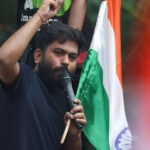
CJP founder Abhijeet Dipke, who returned from the United States shortly before the protest, led the demonstration after Delhi Police granted permission for the gathering. Police presence was heavy around the venue, with barricades and security checks in place. Organisers urged participants to keep the protest peaceful, carry books and flowers, and avoid provocation. The group later issued a seven-day ultimatum, warning that it would expand the agitation across the country if its demand for Pradhan’s removal was not met.
For many Muslim community voices, the question was not whether the education system required accountability, but whether young Muslims should expose themselves to the risks associated with a high-visibility political gathering. The warnings reflected memories of the anti-Citizenship Amendment Act protests, including Shaheen Bagh, where Muslim women became a symbol of resistance but also faced years of political vilification, police action and court scrutiny.
Community elders, clerics and social media users argued that Muslim youth could be disproportionately targeted if the protest turned tense or if provocative slogans were raised by unrelated groups. Some advisories warned against becoming “faces” of a movement that was not centred on Muslim issues, while others said young people should support educational reform through safer channels rather than street protest.
The circulation of such warnings triggered a debate on whether fear had become a structural limit on democratic participation for minorities. Critics of the advisories said asking Muslims to withdraw from public spaces amounted to conceding ground to intimidation and surveillance. Supporters countered that caution was not cowardice, but a practical response to a climate in which Muslim protesters often faced harsher reputational and legal consequences.
CJP has sought to present itself as a broad youth platform rather than a conventional party or identity-based movement. Its name emerged from a satirical response to remarks that portrayed jobless youth in dismissive terms, and the movement quickly adopted the cockroach as a symbol of resilience and survival. Its online presence has drawn millions of followers, particularly among young people frustrated by unemployment, rising competition, examination failures and weak accountability mechanisms.
The group’s demands have centred on education-sector accountability, transparent investigations into exam irregularities, protection for students, and action against those responsible for leaks and administrative failures. Supporters argue that repeated disruptions to competitive examinations have damaged public trust and placed enormous pressure on families that invest years of savings in coaching and preparation.
The Delhi demonstration also drew attention because several public figures and political groups expressed support, while the ruling side and its supporters questioned the movement’s seriousness, funding, political neutrality and national credentials. Videos from the protest were widely shared, with backers portraying it as a youth awakening and critics mocking some participants for weak awareness of national issues.
The advisories to Muslims added a sharper social dimension to that debate. They showed how even a protest framed around exams, jobs and youth frustration can become entangled with questions of identity, policing and communal vulnerability. The hesitation within sections of the Muslim community suggested that participation in apparently non-communal public causes is no longer seen as risk-free.