The complaint, submitted to Delhi Police authorities, accuses Iyer-Mitra of involvement in a conspiracy to disturb public order, discredit the protest and create a false impression that the organisers were associated with anti-national or secessionist comments. The group has sought registration of a first information report under relevant provisions of the Bharatiya Nyaya Sanhita, citing video material and social media posts as part of the evidence it wants investigators to examine.
CJP has alleged that a man identified in the complaint as Mayank Bhandari entered the protest venue and interacted with journalists and members of the public on camera. During those exchanges, he allegedly made remarks calling for the country to be divided into multiple parts. The party’s complaint says the comments were made in a public setting where cameras were present, turning a demonstration over education and examination grievances into a controversy over national integrity.
The group has said the individual was not authorised to speak on its behalf and did not represent its stated demands. It has argued that the episode was designed to provoke outrage, invite administrative action and divert attention from the protest’s focus on examination irregularities, paper leaks and student grievances.
Iyer-Mitra, a political commentator known for provocative social media interventions, has been accused in the complaint of acknowledging online that he had “sent” the individual to the venue. CJP has treated that alleged statement as a key element in its case. Iyer-Mitra has, however, described the episode as sarcasm or an exercise in on-ground political commentary, a position that the complainants have rejected as an after-the-fact defence.
The June 6 gathering at Jantar Mantar marked CJP’s first major street protest after its rapid rise online. The group, built around satire and youth anger, drew national attention after turning the word “cockroach” into a symbol of defiance against what supporters view as contempt for unemployed and examination-hit students. Its messaging has mixed memes, parody and direct political slogans, helping it gain a large youth following within weeks.
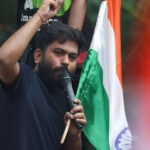
The protest was organised after Delhi Police granted permission for a demonstration at Jantar Mantar. Participants gathered with placards, slogans and cockroach-themed masks, demanding accountability over alleged failures in public examinations. The group has targeted Union Education Minister Dharmendra Pradhan, seeking his resignation over controversies involving national entrance tests, evaluation disputes and paper leak allegations that have fuelled student anxiety across several states.
Founder Abhijeet Dipke, who returned from the United States before the Delhi protest, has sought to present CJP as a non-violent civic platform for students, jobseekers and young workers. He has said the movement will expand across cities and return to Delhi if its demands are ignored. A Pune mobilisation followed the Delhi demonstration, with supporters gathering at Savitribai Phule Pune University as part of a wider campaign.
The complaint against Iyer-Mitra has sharpened the political edge of the movement. CJP says the Jantar Mantar episode shows how student-led protests can be discredited through planted remarks and viral clips. Its position is that one individual’s statements cannot be used to malign a gathering whose stated agenda concerned exams, employment and governance. The party has also maintained that its volunteers were instructed to remain peaceful, carry the national flag, stay hydrated and avoid confrontation.
The controversy has unfolded at a time when online movements are increasingly testing the boundaries between satire, protest and formal politics. CJP’s unusual branding has helped it cut through the noise of social media, but its shift from internet humour to physical mobilisation has exposed it to greater scrutiny from authorities, critics and rival political voices. The complaint signals that the group is attempting to defend its public image through legal channels rather than relying only on online rebuttals.