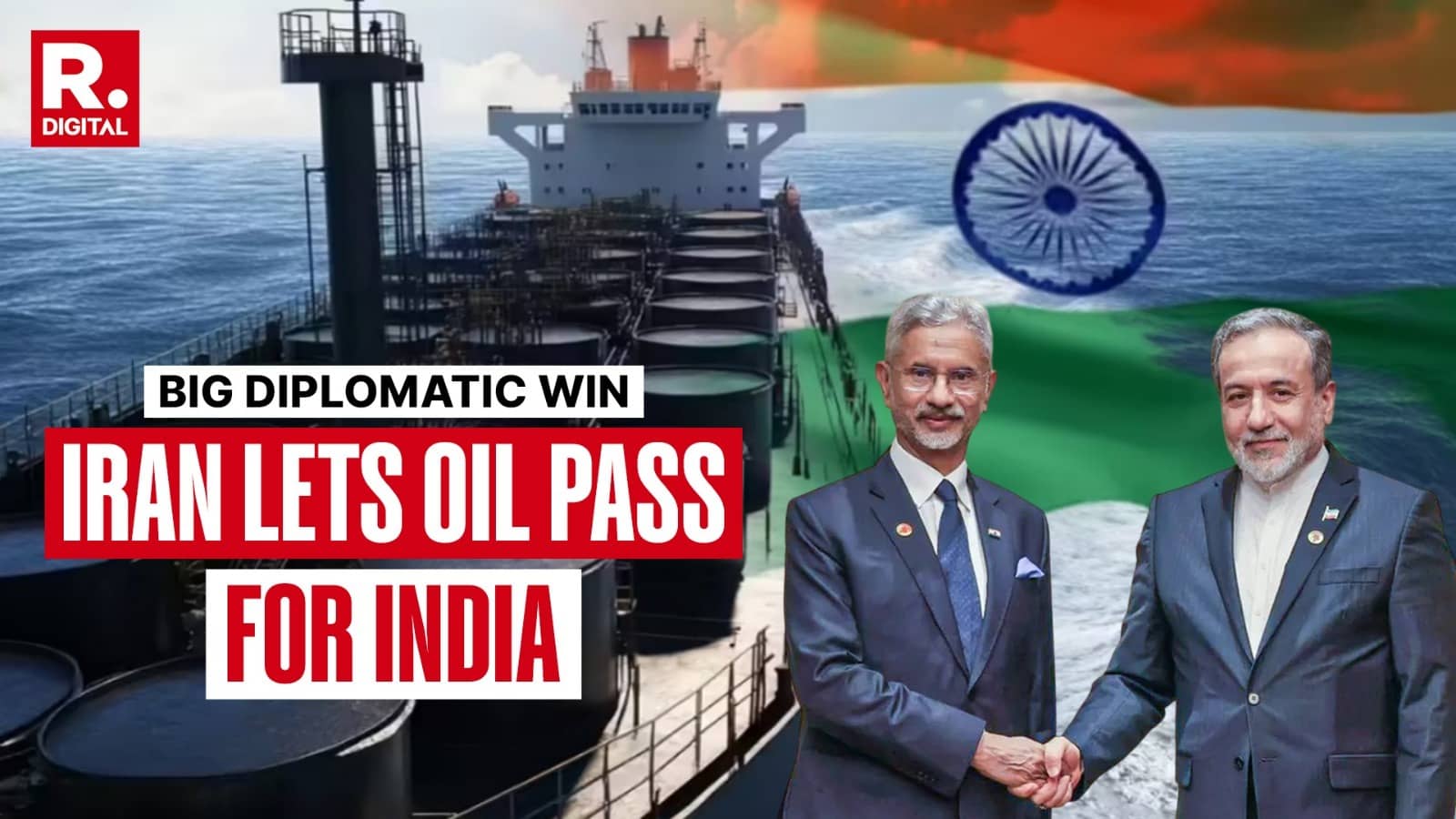
NEW DELHI: Amid concerns over India’s energy security due to the conflict in West Asia, Indian government sources said on Thursday that New Delhi was in talks with Tehran to provide safe passage for Indian-flagged merchant vessels — especially the 28 of them currently stranded in the region — through the key shipping route of the Strait of Hormuz.
Asked if such an effort was in the works, Ministry of External Affairs (MEA) spokesperson Randhir Jaiswal said that External Affairs Minister S Jaishankar and his Iranian counterpart Abbas Araghcchi had three conversations in recent days. “The last one (on Tuesday) discussed issues pertaining to safety of shipping and India’s energy security,” Jaiswal said. “Beyond that, it would be premature for me to say anything,” he said.
On reports that Iran allowed two Indian-flagged ships to pass through the key shipping route, Jaiswal said he was “unaware” and suggested the shipping ministry could answer the query. The Iranian embassy in New Delhi denied that Tehran had permitted the transit of Indian-flagged ships through the Strait of Hormuz. In Tehran, Iran’s Supreme Leader Ayatollah Mojtaba Khamenei said in a statement — his first since his appointment that was read by a news anchor on the country’s state television network — that the leverage of closing the Strait of Hormuz should be used, and Iran’s attacks on Gulf neighbours would continue.
Sources in New Delhi said Iran had not allowed any Indian-flagged commercial tankers to pass through the Strait of Hormuz in the last few days. At a multi-ministerial briefing later in the day, officials said that a total of 24 Indian-flagged vessels with 677 Indian seafarers were currently located west of the Strait of Hormuz, and four vessels with 101 Indian seafarers were stationed east of the strategic waterway.
India receives at least 30 per cent of its crude oil imports and 60 per cent of its gas imports via the Strait of Hormuz. India is dependent on imports for around 90 per cent of its crude oil needs and 50 per cent of natural gas requirements. Earlier, in the Lok Sabha, Petroleum Minister Hardeep Singh Puri responded to concerns raised by Leader of the Opposition Rahul Gandhi.
In the morning, Opposition Members of Parliament protested the scarcity of LPG in the Parliament House complex.
Puri said there is no shortage of petrol, diesel, kerosene or aviation turbine fuel in the country despite the ongoing West Asia crisis, and urged the Opposition not to spread rumours and fake narratives.
Field reports indicate hoarding and panic-booking at the distributor and retail level, driven by consumer anxiety rather than any actual supply shortage, he informed. “The House should be clear on this: the rush-booking pressure in some localities reflects a demand distortion, not a production or supply failure,” he said.
Refineries are operating at high capacity utilisation, and exceeding 100 per cent in several cases, the minister said, adding: “The world has not faced a moment like this in modern energy history,” he said.
Puri said non-Hormuz sourcing has risen to approximately 70 per cent of crude imports, up from 55 per cent before the conflict began. He said Indian refiners have increased liquefied petroleum gas (LPG) production by 28 per cent, while additional procurement is underway.
Meanwhile, a 25-day minimum booking gap for LPG cylinders has been introduced as a demand management measure in urban areas, he noted. This gap has been kept at 45 days for rural areas.
The government has also allocated an additional 40,000 kilolitres of kerosene to states to address concerns over LPG availability, said Sujata Sharma, joint secretary at the Ministry of Petroleum and Natural Gas (MoPNG).
For commercial LPG, 20 per cent of the average monthly requirement would be allocated by state-run oil marketing companies (OMCs), in coordination with the state governments, to prevent hoarding or black marketing, Sharma said.
Delivery Authentication Code coverage is being expanded from 50 per cent to 90 per cent of consumers. Under this system, a cylinder can only be logged as delivered when the consumer confirms receipt through a one-time code on their registered mobile, making undocumented diversion effectively impossible to conceal, he added. The minister said commercial LPG has been regulated to prevent black marketing, not to penalise the hospitality sector.
To ensure LPG availability, cargoes are being secured from the United States, Norway, Canada, Algeria, and Russia, in addition to available Gulf sources. The government said large liquefied natural gas (LNG) cargoes are arriving in India daily through alternative supply routes.
Meanwhile, two India-bound oil tankers carrying a total of 3 million barrels of crude oil from Saudi Arabia and Iraq have successfully transited the Strait of Hormuz, vessel tracking data showed. One of the tankers, carrying about 1 million barrels of Saudi crude, has arrived at Mumbai port, while the other tanker from Iraq, carrying around 2 million barrels, is expected to reach Indian ports shortly, according to maritime intelligence firm Kpler.
The vessels transited the Strait between March 5 and March 10 with their Automatic Identification System (AIS) transponders switched off to avoid potential attacks by the Iranian military.
New Delhi is likely to import about 13-15 million barrels of crude oil from Saudi Arabia’s west coast this month. Shipments from the kingdom’s western ports transit through the Red Sea, bypassing the Strait of Hormuz. Volumes are subject to change as voyage details become clearer over time, Kpler said.
“Saudi Arabia has increased cargo loading from its west coast, using the East-West pipeline to bypass the Strait of Hormuz. While India-bound crude traditionally ships from the Kingdom’s east coast, Yanbu volumes are clearly picking up,” said Nikhil Dubey, senior refining analyst at Kpler.
Alluding to Pakistan, Puri said a neighbouring country has shut all schools for two weeks, moved government offices to a four-day work week, ordered 50 per cent of public employees to work from home, cut fuel allowances for official vehicles by half, and taken 60 per cent of government vehicles off the road. Another neighbour, he said, has closed universities early and brought forward the Eid al-Fitr holiday to save fuel.
Source: Business Standard