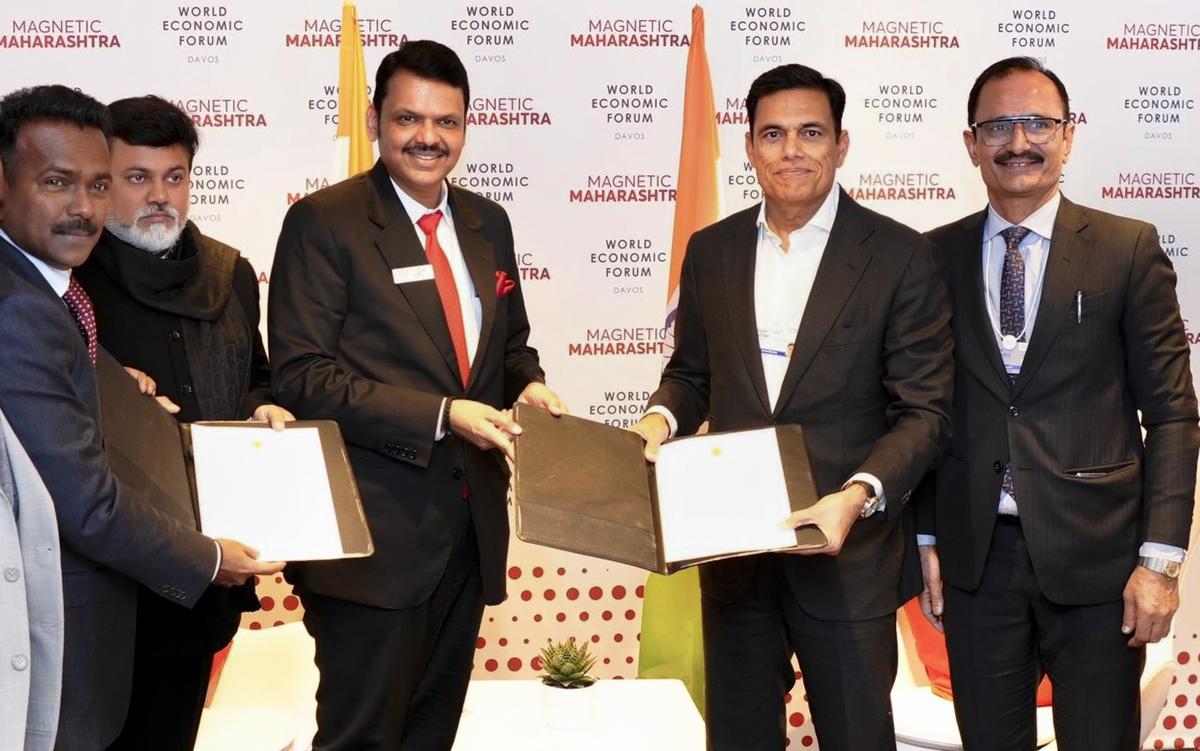
Political tensions in Maharashtra have sharpened after Chief Minister Devendra Fadnavis travelled to Davos to attend meetings on the margins of the World Economic Forum, prompting sharp criticism from Shiv Sena leader Sanjay Raut, who dismissed the visit as an expensive and unnecessary spectacle funded by public money.
Raut, a Rajya Sabha member and senior figure in the opposition party, questioned the rationale behind state chief ministers travelling annually to the Swiss resort town, arguing that such engagements deliver limited tangible outcomes for ordinary citizens. He described the Davos gathering as a “picnic” for political leaders and corporate executives, asserting that discussions between state governments and domestic companies could take place within the country at a fraction of the cost.
Fadnavis is part of a delegation from Maharashtra that has been holding meetings with multinational corporations, investment funds and technology firms during the forum. The state government has maintained that the visit is aimed at attracting foreign direct investment, promoting manufacturing clusters, and securing commitments in areas such as electric mobility, renewable energy, defence manufacturing and advanced electronics. Officials accompanying the chief minister have said memoranda of understanding and investment intentions discussed at Davos will support job creation and long-term economic growth in the state.
Raut challenged these claims, arguing that similar announcements are made every year without sufficient public scrutiny of what ultimately materialises on the ground. He said the forum has become a ritualised event where promises are showcased but accountability is lacking. According to him, repeated trips to Davos reflect a preference for high-profile optics over substantive engagement with domestic economic challenges such as agrarian distress, urban infrastructure strain and unemployment.
The criticism has resonated with other opposition figures, who have asked the state government to disclose the full cost of the delegation, including travel, accommodation, security arrangements and logistical support. They have also sought clarity on how many of the investment proposals discussed in earlier years translated into operational projects, factories or sustained employment. For these leaders, the issue is less about international engagement and more about transparency and outcomes.
Supporters of the chief minister have pushed back, arguing that global investor outreach is a standard practice among sub-national governments competing for capital in an increasingly interconnected economy. They point out that several states across Asia, Europe and North America send senior political leadership to Davos to showcase policy stability and signal openness to global business. From this perspective, absence from such platforms risks marginalising states at a time when capital is mobile and competition intense.
The Maharashtra government has highlighted the state’s economic weight, noting that it accounts for a significant share of national output and hosts major financial, industrial and technology hubs. Officials argue that Davos offers a concentrated setting where multiple investors can be engaged over a short period, something that would otherwise require months of bilateral travel. They also stress that investment discussions initiated at the forum are followed up through formal channels back home.
The controversy has reopened a broader debate about the value of the World Economic Forum for emerging economies. Critics have long argued that the gathering prioritises elite networking over actionable solutions and tends to amplify corporate interests. Supporters counter that it remains a rare venue where political leaders, business executives and policy experts converge, enabling informal dialogue that can accelerate decision-making.
For Maharashtra’s ruling coalition, the political challenge lies in convincing voters that international outreach translates into local benefits. Past investment summits hosted within the state have produced mixed results, with some projects delayed or shelved due to land acquisition issues, regulatory hurdles or shifts in market conditions. Opposition leaders have seized on this history to argue that overseas roadshows add little value unless domestic execution improves.