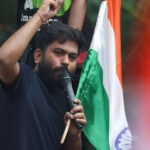
Bora, who completed a 23-day hunger strike during the campaign over examination paper leaks, said the principal questions concerned the deployment of force, injuries suffered by demonstrators and responsibility for decisions taken during an attempted march towards Parliament.
She accused critics of applying selective standards by condemning profanity used by young protesters while overlooking inflammatory remarks allegedly made by political figures against students. Bora said she would neither defend every word uttered during the agitation nor participate in demands that protesters collectively apologise before the authorities answered allegations of excessive force.
The controversy intensified after videos showed demonstrators using expletives while denouncing Prime Minister Narendra Modi and the Centre. A 15-year-old protester, Ruchika Singh, became a central figure after footage of her remarks circulated widely. Police cases were subsequently registered against her, prompting concern among protest organisers over the legal treatment of a minor.
Singh later issued a video apology to the prime minister, appearing with folded hands and expressing regret for her choice of words. Bora said the teenager had also faced online threats and claimed that the reaction reflected a gendered pattern of intimidation against women involved in the movement.
The AISA leader questioned why legal action had not followed statements that protesters considered insulting, including descriptions of agitating students as extremists, disruptive elements or threats to public order. Her intervention has shifted the debate from the original examination-reform demands towards wider questions of political speech, policing and accountability.
The July 20 confrontation occurred when protesters sought to march from Jantar Mantar towards Parliament. Security personnel blocked the procession, leading to clashes in which demonstrators alleged the use of tear gas, batons and pellet-firing weapons.
A post-operation assessment by the Central Reserve Police Force concluded that standard procedures and the prescribed escalation of force had been followed. Security officials maintained that warnings, tear gas and baton action had failed to disperse sections of the crowd before pump-action guns were deployed with authorisation.
The assessment said between three and five protesters suffered injuries from metal pellets. It also recorded injuries to 47 Rapid Action Force personnel, including six who sustained head wounds. Security officials alleged that some members of the crowd attacked personnel with stones and iron rails.
Protesters dispute that account and have called for an independent investigation. They have also alleged that officers carried batons fitted or covered with nails, a claim that has not been independently established. Delhi Police has rejected allegations of unlawful conduct and maintained that its personnel acted within the law while responding to violence and attempts to breach security barriers.
The Supreme Court has directed the Centre to preserve the Rapid Action Force ammunition log connected with the deployment at Jantar Mantar. The court observed that pellet guns may be used in exceptional circumstances but sought documentary records that could help establish whether their use was justified in this case.
The court also directed that adequate medical treatment be provided to those injured. The proceedings have increased pressure for a detailed reconstruction of the sequence of events, including the orders issued to officers, the weapons carried by anti-riot units and the stage at which each method of crowd control was authorised.
Bora has demanded the resignation of Union Home Minister Amit Shah and the removal of Delhi Police Commissioner Anurag Kumar, saying responsibility should not be limited to junior officers. She argued that the political and command structure behind the operation must be examined alongside the conduct of personnel on the ground.
The agitation began as a campaign seeking accountability over alleged irregularities in competitive examinations, paper leaks and the distress faced by students preparing for government recruitment and university entrance tests. It was led by the Cockroach Janta Party movement and supported by several student organisations.
The protest expanded after environmental activist Sonam Wangchuk joined the hunger strike and was forcibly taken to hospital following medical concerns. His removal generated fresh demonstrations and increased public attention around the youth-led mobilisation.
The government later accepted several education-related demands, while then education minister Dharmendra Pradhan resigned. Parliament subsequently approved legislation strengthening penalties and investigative provisions against organised cheating and examination malpractice.
(IPA Service)