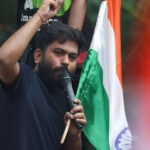
Kharge said students had not been deceived into blaming Pradhan but had held the minister responsible for problems arising under the Education Ministry. His intervention has reopened the political argument over responsibility for the NEET-UG 2026 paper leak, weeks after sustained student demonstrations forced the issue to the centre of the national political agenda.
Pradhan, the BJP MP from Sambalpur, stepped down from the Union Council of Ministers on July 25 after prolonged protests over the medical entrance examination. Speaking publicly about his departure on Saturday, he said attempts had been made to mislead Generation Z during the agitation and indicated that he chose to leave office rather than allow the confrontation to deepen.
Kharge disputed that account. He questioned how students demanding accountability for an examination conducted under the Education Ministry could simply be characterised as having been misled. The Congress chief argued that candidates had identified the ministry responsible for administering the examination system and expected its political leadership to accept responsibility when that system failed.
The Congress president also widened his criticism beyond the Education Ministry. He questioned the functioning of the Home Ministry and investigative agencies, asking why alleged irregularities were not detected and addressed before they developed into a national controversy. The remarks sought to shift the debate from Pradhan’s individual political responsibility towards the government’s institutional handling of examination security and intelligence.
NEET-UG 2026 became a major political crisis after the examination was cancelled following evidence of a paper leak. The controversy affected roughly two million medical aspirants and triggered demonstrations demanding accountability, stronger safeguards against examination fraud and action against those responsible for compromising the test.
A re-test was subsequently held as the government sought to restore confidence in the admission process. The turmoil, however, expanded beyond demands concerning a single examination. Students and campaigners raised broader questions about repeated paper leaks, competitive examination management, unemployment and the intense financial and psychological pressures faced by young people preparing for public examinations.
The protests became particularly prominent through the Cockroach Janta Party, or CJP, a youth-led movement that mobilised demonstrators in Delhi and other cities. Its demands included Pradhan’s resignation, compensation for families of aspirants who died by suicide and protection for peaceful protesters from prosecution.
Opposition parties also intensified pressure on the government inside Parliament. Kharge had insisted in July that a meaningful parliamentary discussion on the paper-leak controversy could not take place while Pradhan remained Education Minister. Congress leader Rahul Gandhi similarly called for his removal and accused the government of failing students.
Pradhan’s resignation marked an important concession after weeks of resistance to opposition demands. In his resignation letter, he said he did not want the controversy to damage students’ futures or be exploited politically. His later comments about attempts to mislead Generation Z have now given Congress a fresh line of attack by allowing it to argue that the former minister remains unwilling to accept the protesters’ grievances on their own terms.
Pradhan has nevertheless stressed the political and social importance of younger citizens. Addressing students and teachers at Gangadhar Meher University in Bhubaneswar, he described Generation Z as a force that could not be ignored and spoke of their ambitions and energy. His comments appeared intended to distinguish his criticism of those he believes influenced the agitation from criticism of the students themselves.
The dispute comes against a larger debate about the credibility of competitive examinations. Paper leaks and suspected malpractice have repeatedly generated anger among candidates who spend years preparing for limited places in universities and government employment. For families investing heavily in coaching and education, cancellation or compromise of a major examination can carry substantial financial consequences.
(IPA Service)