Advocate Mohammed Tanveer Ahmad filed the petition under Article 227 of the Constitution, questioning the Saharanpur City Magistrate’s July 16 order and the district judge’s September 2 decision dismissing an appeal against it. The petition alleges that the authorities acted without jurisdiction and legal authority.
The state government, represented through the Saharanpur District Magistrate, has been made a party to the case. Abdul Hamid, identified in the proceedings as the mosque’s maulvi and manager, has also been named as a respondent.
The dispute centres on a 315-square-metre plot within the Collectorate premises. The City Magistrate had proceeded under the Uttar Pradesh Public Premises Act, 1972, holding that the mosque occupied government land without authorisation. The July 16 order directed removal of the structure and imposed a penalty of ₹6.41 crore on the mosque management.
Proceedings had begun in March 2025 against Abdul Hamid over alleged unauthorised occupation of the property. The administration relied on revenue entries identifying Khasra No. 539 as Collectorate or court land. The mosque side disputed that interpretation, arguing that the records cited did not conclusively establish ownership and that other land documents should have been considered before coercive action was taken.
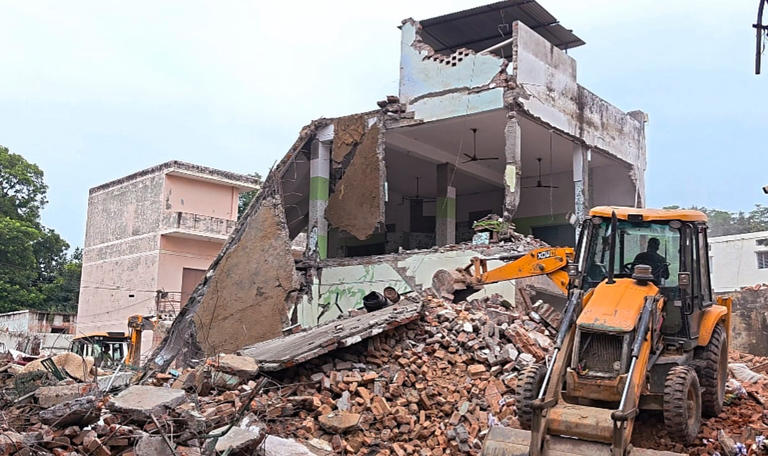
The mosque management challenged that order before the district court. District Judge proceedings ended on September 2 with dismissal of the appeal, leaving the magistrate’s decision undisturbed. Authorities demolished the mosque three days later, during the early hours of September 5, under a heavy security deployment.
The High Court petition has now shifted the dispute from the legality of the occupation itself to the validity of the process through which the administration and lower court acted. The petitioner’s principal contention is that the statutory powers invoked by the City Magistrate did not authorise the impugned action in the manner adopted.
Questions over procedure had surfaced immediately after the demolition. Tanveer Ahmad, who had been associated with the mosque management, disputed the administration’s account that every required legal step had been completed and argued that the action was carried out before available remedies had been exhausted.
The administration has maintained that the structure stood on government land and that the removal followed the legal process initiated under the public premises law. Officials have also pointed to the district court’s dismissal of the appeal as the basis on which the administration proceeded.
A point requiring judicial scrutiny is the precise effect of the September 2 district court order. While it dismissed the management’s appeal against the magistrate’s ruling, the order itself has been described in available court reporting as not separately issuing a fresh demolition direction. The High Court challenge therefore concerns both the underlying magistrate’s order and the legal consequences attached to the appellate dismissal.
The demolition generated political criticism in Uttar Pradesh. Opposition leaders accused the state government of using administrative powers selectively, while the government and district authorities defended the action as an enforcement measure concerning unauthorised occupation of public land.
Security was tightened around the Collectorate during and after the demolition. Political representatives who sought to visit the area also faced restrictions, reflecting the sensitivity surrounding the dispute and the administration’s stated concern over maintaining public order.
Another issue emerged after the structure was removed when workers found a covered well beneath the site. The well, described as roughly 20 feet deep, prompted the district administration to consider seeking an archaeological assessment of the location. That discovery is separate from the legal challenge over the demolition orders and does not determine the ownership or lawfulness questions now before the High Court.