By Nitya Chakraborty
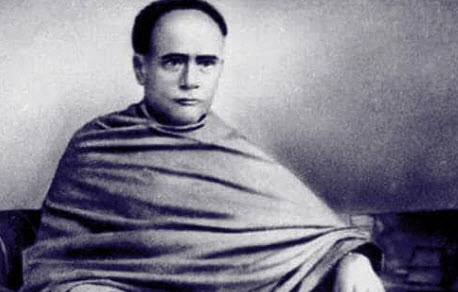
Iswar Chandra Vidyasagar, whom Rabindranath Tagore had hailed as the symbol of ‘ajeya paurasha, akhanda manushyatva’ meaning invincible manliness and indelible humanism, was the tallest among the social reformers and educators in 19th century Bengal. His 71-year-long life from September 26, 1820 to July 27, 1891 was the story of an unparalleled journey for modernising the Bengali language, spreading education to the lowest level of the population, including girls, by setting up of schools, colleges and institutions, and simultaneously fighting for the social emancipation of Bengali women, especially widows.
All of this he did mostly as a loner fighting on different fronts simultaneously, against both the orthodox Hindus of those days and the orientalist Englishmen. He was the target of vicious personal attacks at that time from the creme de la creme of the Calcutta society for his consistent actions, but he was single-minded in his pursuit for doing things which he thought the best. After his birth, his grandfather called him ’erebachur’ in Bengali, meaning bull calf – very obstinate. Iswar Chandra was true to that as he led his life without caring for his sufferings and financial losses.
The period when Iswar Chandra was born was turbulent. In 1820, Bengal was in ferment in terms of the clash between the orthodox section of the Calcutta Hindus and the emerging group of young men looking for western knowledge and education through English with the setting up of Hindu College in 1817. Iswar Chandra Bandyopadhyay, born in a poor family of pundits and Brahmin preachers, got his initial education in a village school in Birsingha, Midnapore district, and excelled at his studies with his quick grasp of subjects and sharp memory.
Iswar Chandra went to Calcutta for higher studies in 1828 and from 1829 he was a student of Sanskrit college adjacent to the Hindu College, till 1841. This period of Iswar Chandra at Sanskrit College was most crucial in shaping his mind about his future goals. It was an extraordinary feat of his intellectual acumen that he was not overwhelmed by the young Derozians next door in the Hindu College, the cultural renaissance started by the Englishman Henry Louis Vivian Derozio and his cohort of elite Bengali upper class youth, which was the fashion in those days of the brightest Hindu kids of Calcutta families.
Iswar Chandra closely followed the developments, witnessed how the orientalists were losing the ideological battle. Macaulay’s decision in 1835 opened up a new window for English education, extending it to the urban elite of Kolkata. Iswar Chandra also observed how these young Derozians were showing spirit of inquiry while rejecting the old Hindu rituals s backward. Iswar Chandra had a mind of his own. He appreciated the adventurous spirit of the Young Bengal Group for knowledge but rejected the excesses. He decided that while accepting English as the language for seeking new knowledge, the Bengali language has to be modernised to make it easier for studies and writing to shape young minds of rural and urban Bengal, outside of the elite circuits of Kolkata and the Young Bengal Movement led by Derozio and his band of boys. His goal was set.
After getting his degree from Sanskrit College and empowered with both western knowledge and orientalist education, including complete command over Sanskrit language and literature, Iswar Chandra served for four years at Fort William College as head pandit. He improved his skills in English language. He started working for bringing new style to the Bengali grammar and language to make it easier and reader-savvy. He also began his connection with Tattvavodhini journal, which he backed along with his close friend Akshoy Kumar Datta, a legendary exponent of science education in Bengal at that time and one of the pioneers of the knowledge-based movement that took over after the Derozians lost in the social churning process of Bengal. Iswar Chandra resigned from Sanskrit College differing with the authorities on how to bring about educational reforms. He was still not financially comfortable as he had a large poor family to look after. But the westernized pandit told Rsamay Datta with whom he differed, “I’ll rather sell potatoes and patals in the market rather than serve any institution against my principles.”
What followed was something unthinkable for an educated Bengali belonging to a poor family in the 1840s. Iswar Chandra founded two business firms Sanskrit Press and Sanskrit Press Depository for the publication of Sanskrit text books and literature. He also started writing Bengali text books. Sanskrit College was feeling his absence, that innovative efforts during last four years were missing. Iswar Chnadra was again made Professor of Literature in 1850 and in 1851 Chandra, Iswar took over as the principal of Sanskrit College. He was then only 31.
The period from 1851 to 1858 was the golden period in his career. He did multiple activities in the areas of strengthening Bengali language, setting up girls’ schools and colleges, as also taking part and leading the agitation for widow remarriage and finally getting it legislated in 1856. Iswar Chandra was the busiest man during these eight years. He cared for nothing excepting work, work and work. His enemies in Hindu society constantly questioned him on his faith and rituals, but he rarely cared to enter into a discussion. Once he told a friend: “I have no time to think about religion, there are so much work to do for the people of poor Bengal that I don’t feel any need to think of other things.”
However, his strong individuality and singlemindedness created both social and family problems for him in his later years. In fact, the period from 1859 till his death in 1891 was marked by many setbacks in his personal life which affected the pace of his work. He had business acumen, earned enough money, but he continued his donations to all who needed. In the last two decades of his life, he had illnesses and mentally also he was bitter at the treatment he got from the lazy selfish Bengal bhadralok society of Calcutta.
Iswar Chandra was closely involved with English periodical Hindu Patriot of Harish Mukherjee and also Soma Prakash, a Bengali journal. He was a pioneer in writing books in Bengali for beginners. With Barnaparichay, he started a course in Bengali reading and writing, which opened the uncharted road for improving the language and making it simple for common students. As the well-known literary historian Gopal Halder said, “Banrnaparichay is the first book for beginners and shows scientific accuracy in systematising the Bengali orthography step by step from the simple alphabets.”
Long before Bankim Chandra Chatterjee started writing, Iswar Chandra wrote Betal Panchavimsati and followed it up with JivanCharit in 1849 and Bodhodaya in 1851. At higher level, he wrote Sakuntala in 1854 and Sitar Banavas in 1860. Iswar Chandra’s writing style reflects different aspects of the great man, the scientifically minded educationist as also a great humanist and ‘dayarsagar’, the sea of kindness.
But this great mind has to be remembered mostly for his modernist views on education. In fact, many Bengali historians call him as the first thinker of modern education in India. More than 150 years ago, Iswar Chandra recommended that Indian education must have knowledge of the science and civilization of the western world and the regional languages will be the medium of education, while English and Sanskrit are to be the link languages.
Iswar Chandra did not take part in the political activities during that period against the British rulers. But he had strong political views which he kept to himself, as he did not want his work for education expansion and social reform to get derailed for any reason. In 1886, the second session of the newly founded Indian National Congress was held in Calcutta. On the eve of the event, the organisers came to him and approached him to join the session. According to Dr. Khitish Prasad Chattopadyay, Iswar Chandra Vidyasagar told them: “If in the interests of achieving freedom from the British rulers, it is needed to take to arms, will you do it?” The Congress leaders kept mum. Then he said, “You yourselves go ahead then, exclude me.” Vidyasagar said this five years before his death. He was fully alert and agile and years ahead in his modernist outlook compared to other political leaders of that period.
Today in 2026, the teachings of Vidyasagar have got more relevance. His secular ideas and strong determination to fight all superstitions, both religious and social, should give us lessons about the need for fight against the forces in India which want to divide the country once again on the basis of religion. The battle which Iswar Chandra Vidyasagar fought in the 19th century, remains more relevant in the present decade of the 21st century. (IPA Service)