By Dr. Gyan Pathak
The first week of the Monsoon Session of the Parliament of India closed with a note of hope, which turned into frustration with the beginning of the second week on July 28. Protests and adjournments crippled both the Houses of the Parliament of India – the Lok Sabah and Rajya Sabha – before the debate on Operation Sindoor could be taken up, agreement on which was reached between the ruling establishment and the opposition.
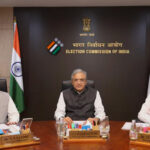
Opposition demanded discussion on the Special Intensive Revision (SIR) of the Electoral Roll of Bihar apart from discussion on Operation Sindoor, however, the government was not ready for that which led to several adjournments in both the Houses. Chairs of both the Houses, refused the opposition’s demand which led to louder sloganeering and more chaos.
The Crippling of the Parliament of India on account of Opposition’s protests and adjournments are new, and it must be seen in a perspective. Motions or notices moved by the ruling establishment are generally accepted by the Lok Sabha Speaker and the Rajya Sabha Chairman while those moved by the Opposition generally rejected. Such a situation is dictated by non-other but by the ruling establishment. It leads to distrust between the government and the opposition on the one hand and makes the neutrality of the chairs in both the Houses questionable. One can see the degeneration of democracy within the Parliament.
In the beginning of the Monsoon Session, government avoided discussion on Operation Sindoor, and the events that followed, including Trump’s claims. It resulted into strong Opposition’s protests and several adjournments. The ruling establishment then agreed to the discussion, and the Business Advisory Committees of the Houses decided to allow discussion for 16 hours each, but not immediately. Discussion was scheduled for July 28.
Opposition then started protest against the SIR in Bihar and wanted discussion, immediately, if discussion on Operation Sindoor was not possible last week. Government was then not ready for discussion on SIR, which had other intentions for the week. Opposition continued their protests in the Houses, while chairs of both the Houses kept on adjourning. It washed out the entire first week.
Defence Minister Rajnath Singh was to address the Lok Sabha at around noon. However, when the Housed convened, Opposition started sloganeering and insisting on discussion on SIR in addition to the discussion on Operation Sindoor. Speaker of the Lok Sabha Om Birla adjourned the House within 15 minutes of convening the House.
In Rajya Sabha, when the proceedings began, Deputy Chairman Harivansh Singh announced that 26 notices from MPs have been received demanding discussions on SIR and other issues, but the notices were declined because they have not complied with previous directives issued in the House. It was just an example how the parliament has been trivialized. The Chair said that only digital notices to be submitted via Digital Sansad portal. Then Opposition started protesting and sloganeering more loudly, which resulted in adjournment in the Rajya Sabha.
Lok Sabha and Rajya Sabha reconvened after noon. Chaos continued in both the Houses. Amidst protests and sloganeering by opposition MPs Rajya Sabha was adjourned till 2 PM. In the Lok Sabha the officiating Speaker Krishna Prasad Tenneti informed that the Speaker Om Birla has not accorded assent to any of the adjournment motions moved by the opposition. When Om Birla came to preside over, he adjourned Lok Sabha till 1 PM, telling the protesting MPs that their demand for discussion on SIR is to be decided by Business Advisory Committee and protesting in the well of the house would not avail conclusive results.
Nevertheless, when Lok Sabha reconvened at 1 PM, Opposition continued their protest insisting on their demand to discuss SIR for Bihar. Speaker then had to adjourn the House for the third time till 2 PM.
Both the Lok Sabha and Rajya Sabha resumed after 2 PM. There was no let up in the opposition protests in Rajya Sabah which led to the House adjourned for the day.
However, Lok Sabha initiated discussion on Operation Sindoor, after the Parliamentary Affairs Minister Kiren Rijiju assured the House that they would allow discussion on other subjects of importance too, subject to Business Advisory Committee’s decision. Defence Minister began his address, paid tribute to the soldiers who sacrificed in the Operation Sindoor, while asserting that India’s response to the terror attack was “swift, proportionate and calculated” to not cause any provocation.
The defence minister underlined that Pakistan used missiles, drones, rockets including long-range rockets, among others, to target airports, military establishments and military cantonments. “However, they failed to cause any damage to any establishment,” he emphasised.
Rejecting Opposition’s assertions about international pressure, particularly from U.S. President Donald Trump, culminating in the government halting Operation Sindoor, Rajnath Singh said they were “unfounded” and “incorrect”.
The opposition Congress leader Gaurav Gogoi told the government not to be scared of the truth. The country stands with the government against terrorism and in favour of the truth. “We are not the enemy, we are in favour of our country and our armed forces, but you need to tell us the truth,” he said adding “We will continue to question the government on lies and deceit.”
The discussion on Operation Sindoor will continue on Tuesday in Lok Sabha while Rajya Sabha will take up it tomorrow. Had the government agreed on discussion on SIR for Bihar, today’s disruption could have been avoided. Discussions are soul of democracy, and PM Narendra Modi led government must allow it. The chairs must also appear above partition attitude that is generally suspected by the common people. (IPA Service)