By K Raveendran
India’s decision to end the zero-charge regime for a significant segment of merchant payments over the Unified Payments Interface has introduced an awkward contradiction into one of the Narendra Modi government’s most frequently advertised technology achievements. Only days after New Delhi used the BRICS summit to promote interoperable payment systems and greater use of local currencies in cross-border commerce, the domestic model on which much of that confidence rests is acquiring a price tag.
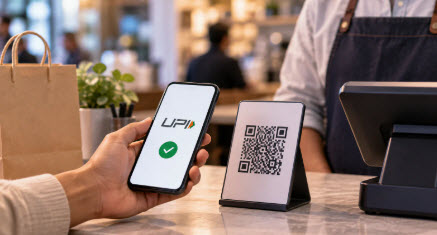
The change needs to be defined precisely. It is not a blanket transaction fee on every UPI payment above Rs 2,000, nor is the government proposing to charge individuals for transferring money to one another. From October 15, a merchant discount rate of 0.4 per cent will apply to qualifying person-to-merchant transactions above Rs 2,000, with the charge capped at Rs 300. Person-to-person transfers remain outside the levy, while several exemptions and concessional provisions cover smaller merchants, rural and semi-urban QR payments and specified sectors. The government says consumers must not be charged the fee.
That distinction is important, but it does not settle the economic argument. A merchant discount rate is formally paid by the merchant, yet businesses generally treat payment-processing costs like other operating expenses. Depending on competition, margins and bargaining power, some portion can eventually be reflected in prices. The extent of such pass-through cannot be assumed in advance, and it may be negligible in highly competitive businesses. But the government’s assertion that consumers are insulated because the levy technically falls on merchants does not by itself establish that consumers will bear no economic cost.
The policy therefore marks a meaningful transition in the UPI story. Zero MDR was not an incidental feature of India’s digital payments expansion. It helped make electronic payment cheaper for shopkeepers than card transactions and made the QR code ubiquitous from supermarkets to roadside vendors. The state effectively decided that building scale and changing payment behaviour were public-policy objectives worthy of subsidising. UPI subsequently grew into infrastructure of extraordinary size, processing about 24 billion transactions worth roughly $311 billion in August alone.
The government now faces the problem created by that very success. Banks, payment companies and fintech platforms have argued for years that operating a system of this scale requires sustainable revenue for technology, fraud prevention, cybersecurity and customer support. The new MDR answers that argument by allowing the ecosystem to recover part of its costs directly from commercial transactions rather than relying almost entirely on government incentives and cross-subsidisation.
That makes the decision economically more complicated than simply imposing a charge on something that was previously free. A payments network handling hundreds of billions of dollars cannot indefinitely behave as though processing has no cost. The relevant policy question is whether India has found the right point at which to move from subsidised expansion to commercial sustainability without weakening the network effects that made UPI exceptional.
The timing nevertheless creates a political and diplomatic vulnerability. India has increasingly presented UPI not merely as a domestic convenience but as exportable digital public infrastructure. At the BRICS Business Forum, Commerce Minister Piyush Goyal urged member countries to link payment systems and expand local-currency trade, while India highlighted UPI as evidence of what interoperable digital finance can achieve. The New Delhi BRICS declaration went further in supporting work on cross-border interoperability of payment and messaging channels and settlement in local currencies.
It would, however, overstate matters to describe the BRICS project as an agreed “UPI-based payment mechanism”. The bloc has not adopted UPI as its common architecture. Brazil has Pix, China has its own systems, Russia has alternatives developed partly in response to Western sanctions, and several members are exploring central-bank digital currencies. India itself has resisted solutions that could create strategic dependence on another large BRICS member. The emerging concept is interoperability among national systems, not the wholesale adoption of an Indian platform.
The connection with the dollar is similarly important but requires qualification. Greater settlement in local currencies and direct links among BRICS payment systems could reduce the need for dollar-based correspondent banking in particular transactions. That does not automatically threaten the dollar’s reserve-currency position, which rests on much deeper foundations: the size and liquidity of US financial markets, the role of Treasury securities, global invoicing practices and the availability of dollar funding. India has also been careful to describe BRICS payments cooperation as a mechanism for making transactions cheaper and faster rather than as an explicit campaign to replace the dollar.
The opposition’s allegation that New Delhi introduced UPI charges under American pressure therefore raises a legitimate question about international commercial interests, although the evidence available so far does not establish a deal between Washington and Delhi. Rahul Gandhi and other Congress leaders have accused the government of yielding to US payment companies, while the BJP says the charge is being misrepresented because consumers are not being directly billed.
There is, nonetheless, a documented background to the allegation. Washington has for years objected to aspects of India’s electronic-payment policies that it says disadvantage foreign suppliers. The US Trade Representative’s 2026 report again complained about restrictions affecting American companies in the UPI ecosystem and described Indian payment policy as creating an uneven competitive environment. That establishes the existence of US pressure over market access; it does not establish that the new MDR was negotiated in response to it.
The sharper criticism of the government therefore lies elsewhere. For years, the political branding around UPI blurred the distinction between technological achievement and the public subsidy that helped make the system attractive. Moving to a paid merchant model reveals that the celebrated “free” infrastructure always had costs; the state had merely decided where those costs would fall.
India can still present UPI as a fintech success. Charging merchants does not erase its technological scale, interoperability or capacity to bring hundreds of millions of people into digital payments. But it changes the proposition being offered at home and abroad. The achievement will now be judged not simply by how many transactions UPI processes, but by whether the system can finance itself without encouraging merchants to return to cash, creating hidden consumer costs or weakening the very universality that turned it into India’s most visible digital public infrastructure export. (IPA Service)