


By Ashok Nilakantan Ayers
NEW YORK: As the United States enters the final month before the November 3 midterm elections, both parties are confronting an increasingly fluid political landscape. Republicans hold the White House, the Senate and the House of Representatives, but history has rarely been kind to governing parties in midterm years. Democrats, meanwhile, are searching for signs of a comeback after the setbacks of 2024, encouraged by improving voter registration trends and a political environment that appears more competitive than many expected a year ago.
The emerging storyline of the 2026 midterms is not one of confidence, but of uncertainty. That uncertainty was reflected in remarks from Vice President JD Vance, who acknowledged that Republicans face what he described as an “uphill climb” in retaining their congressional majorities. Such candour is notable for an administration that has spent much of the year emphasizing economic growth, energy investment and national security achievements. Vance’s assessment reflects a broader reality familiar to students of American politics: voters often use midterm elections to express frustration with the party in power, regardless of presidential popularity.
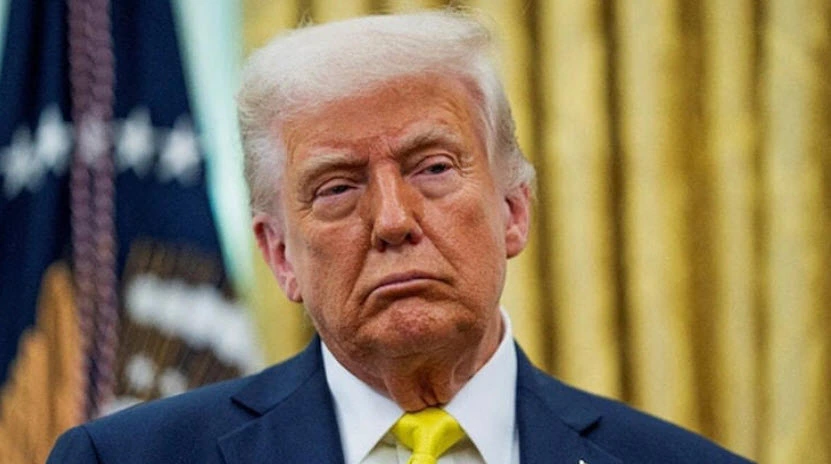
President Donald Trump appears well aware of the challenge. Rather than remaining largely focused on governing, he has launched an unusually aggressive campaign effort, planning appearances across 17 states before Election Day. His latest stop, a rally in Alabama, is part of a broader strategy designed to energize Republican turnout and reinforce support among the party’s base voters.
The Alabama rally itself is taking place in a state that is not expected to determine control of Congress. Yet symbolically, it highlights Trump’s view that every vote matters in what could become a turnout-driven election. The president’s travel schedule suggests a White House concerned enough about congressional control to devote significant political resources to races far beyond traditional battlegrounds.
For Republicans, the challenge extends beyond historical precedent. Recent developments suggest that the political map may be shifting in ways that complicate their path to victory.
One of the most important indicators comes from voter registration trends. Following the 2024 presidential election, Democrats suffered significant registration losses across several key states. For much of 2025, Republicans steadily expanded their advantage. However, that trend has begun to reverse. Democratic registration gains have outpaced Republican gains in states such as Arizona, Nevada, Pennsylvania, Maine and New Jersey, while losses have slowed elsewhere.
Registration statistics do not guarantee electoral outcomes, but they often provide clues about voter enthusiasm and organizational strength. For Democrats, the numbers offer evidence that their coalition may be recovering after a difficult period. For Republicans, they serve as an early warning that dissatisfaction with the administration could be creating opportunities for the opposition.
The battle for control of the Senate illustrates how quickly political calculations can change. A notable development emerged when a major Republican-aligned super PAC reportedly paused additional spending in North Carolina while simultaneously expanding efforts in Kansas. Political strategists closely watch these spending decisions because they reveal where parties believe races remain competitive and where resources may no longer produce meaningful returns.
The shift suggests Republican concerns about North Carolina, where Democrats have become increasingly competitive. At the same time, increased investment in Kansas indicates that Republicans are taking seriously a race that would ordinarily be considered safe territory. When a state that has not elected a Democratic senator in nearly a century attracts major campaign spending from both sides, it signals a broader national environment in which assumptions are being challenged.
Beyond campaign strategy, voters will be heading to the polls amid several high-profile policy debates that continue to dominate national attention.
Immigration remains one of the defining issues of Trump’s second administration. The Supreme Court is preparing to hear cases involving key components of the president’s agenda, including immigration enforcement measures. Other upcoming cases involve the administration’s military policies and Trump’s continuing legal battles.
The court’s new term ensures that legal questions will remain intertwined with electoral politics throughout the closing weeks of the campaign. Decisions and arguments emerging from the nation’s highest court could influence voter perceptions of presidential authority, social policy and constitutional limits on executive power.
Another issue gaining prominence is homelessness and mental health policy. Investigative reporting has highlighted administration efforts to address homelessness through tougher measures that critics argue could weaken long-standing disability protections. Supporters describe such policies as necessary responses to public disorder and urban encampments, while opponents see them as a retreat from decades of disability rights to progress.
These debates underscore a central dynamic of the 2026 election: many of the disputes shaping voter attitudes are no longer purely economic. Questions involving public safety, immigration, courts, civil rights and presidential power have become increasingly important in determining electoral preferences.
Economic messaging nevertheless remains central to Trump’s strategy. The president recently promoted major investment commitments involving South Korea, including plans connected to American energy development projects. The administration argues that such investments demonstrate the success of its trade and energy policies and reinforce its message of American economic strength. Republicans hope voters will reward what they characterize as economic momentum, energy independence and industrial investment.
Democrats, by contrast, are seeking to focus attention on concerns about governance, institutional norms and policy implementation. Their argument is that concentrated Republican control in Washington has produced controversy and division rather than stability and effective government.
The outcome may ultimately depend on which party succeeds in defining the election’s central question.
If voters primarily evaluate economic conditions and international investment, Republicans may be able to limit losses. If voters view the election as a referendum on the administration’s conduct, legal battles and policy disputes, Democrats could benefit from the traditional midterm backlash against the party in power.
For both parties, the stakes extend beyond the next two years. Vance’s comments about a possible 2028 presidential campaign reveal that influential Republicans are already thinking about the post-Trump future. The midterm results will inevitably shape that conversation. Strong Republican performance would reinforce the administration’s political model and strengthen potential successors. Significant losses could trigger debates about strategy, messaging, and leadership heading into the next presidential cycle.
In that sense, November 3 is more than congressional control. It is a test of the durability of Trump’s political movement, a measure of Democratic recovery after defeat, and an early indicator of what American politics may look like in 2028.
Over the next month, rallies, court cases, campaign spending decisions and voter turnout efforts will continue to reshape the battlefield. Yet one conclusion already appears clear: despite the advantages of incumbency and unified government, Republicans are entering the final stretch of 2026 facing genuine political headwinds, while Democrats see their best opportunity in years to regain momentum.
The final verdict will come from voters on November 3. Until then, the contest remains wide open. (IPA Service)





