


By K Raveendran
India’s electoral system has entered a territory where the argument is no longer merely about errors in voters’ lists. The deeper question is whether citizens can continue to repose confidence in the constitutional institution entrusted with deciding who gets on those lists, how names are removed and whether the rules governing that process are being administered impartially.
Allegations that the Election Commission has perpetrated a fraud on the Indian people are sounding more and more credible, despite assertions to the contrary by the Commission. The developments surrounding the Special Intensive Revision of electoral rolls have made it increasingly difficult to dismiss the controversy as routine partisan grievance. Questions about exclusions from electoral rolls, the procedures used to identify and restore eligible voters, and reported differences within the three-member Commission have pushed the dispute into the realm of institutional credibility.
There is an important legal fact that any assessment of the crisis must acknowledge. The Supreme Court ruled in May that the Election Commission possessed the authority to undertake the Bihar SIR under Article 324 and the Representation of the People Act. The judgment therefore does not support the proposition that intensive revision itself is inherently unconstitutional. But the real issue has shifted towards the manner in which that authority has subsequently been exercised, the safeguards surrounding exclusions and, now, whether decisions attributed to the Commission were reached through the collegial process required of a multi-member constitutional body.
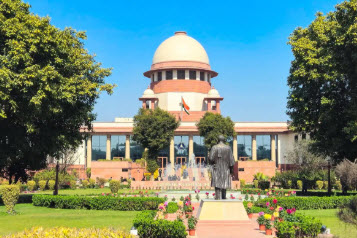
The Supreme Court has agreed to hear a petition challenging Chief Election Commissioner Gyanesh Kumar’s functioning and seeking invalidation of the nationwide SIR. The petition relies partly on reports that Election Commissioners Sukhbir Singh Sandhu and Vivek Joshi objected on several occasions to decisions connected with electoral-roll revision. Those assertions raise a constitutional question that cannot comfortably be answered by the Election Commission simply investigating or explaining itself: was the constitutional authority of the Commission exercised collectively, as the law envisages, or did consequential decisions effectively become the decisions of one office-holder?
This is where the problem becomes larger than electoral-roll management. A democracy depends upon institutions capable of commanding acceptance even from those who lose. Parliament cannot easily resolve a dispute involving an electoral authority when the principal political actors represented in Parliament are themselves beneficiaries or victims, depending upon their competing accounts, of the system under challenge. The government cannot convincingly arbitrate it. The opposition cannot adjudicate its own allegations. And the Election Commission, however strongly it defends its conduct, cannot be the final judge of accusations concerning its own institutional functioning.
That leaves judicial review as the constitutional mechanism capable of producing an authoritative answer. The independent five-member commission headed by former Supreme Court judge Madan B Lokur may assist the wider search for facts, but an important correction to the emerging narrative is necessary: this panel has not been constituted by the Supreme Court. It was established by the Lawyers Association for Constitution. Its proposed examination of the constitutional and statutory validity, methodology and impact of SIR, including public hearings involving affected citizens and experts, could illuminate the controversy, but its conclusions will not carry the force of a Supreme Court judgment. The responsibility resting on the Court is therefore greater, not smaller.
There is another unresolved institutional issue running alongside SIR. A Supreme Court bench delivered a split verdict in September on whether challenges to the 2023 law governing appointments of the Chief Election Commissioner and Election Commissioners should go before a Constitution Bench. That law replaced the Chief Justice of India on the selection committee with a Union Cabinet minister nominated by the Prime Minister, leaving the Prime Minister, the Leader of the Opposition and the nominated minister as the selectors. The matter has gone to the Chief Justice for the next procedural step. Taken together, these disputes concern three stages of electoral legitimacy: who appoints the referees, how the referees make decisions and who remains entitled to participate in the election they supervise.
The streets are already registering the political consequences. The youth-led Cockroach Janta Party has begun protests demanding the Chief Election Commissioner’s resignation, while opposition organisations and student groups have joined demonstrations. Hundreds were detained during protests in Delhi, and further mobilisation has been announced. The Election Commission rejects accusations that its actions were designed to benefit the ruling BJP, while protesters and opposition parties allege precisely such partisan consequences.
Those protests should not be confused with proof of the allegations. Nor should public anger substitute for constitutional adjudication. Their significance lies elsewhere: they demonstrate what happens when an argument over administrative procedure mutates into a dispute over democratic legitimacy.
The constitutional system still has channels through which the controversy can be resolved. The Supreme Court can demand records, examine whether statutory procedures were followed, determine the legal significance of disagreements within the Commission, protect eligible voters against wrongful exclusion and prescribe remedies where violations are proved. None of this requires the Court to reinvent the Constitution. It requires rigorous application of judicial review to circumstances the Constitution was designed to survive.
The greater danger would arise if ordinary constitutional remedies ceased to command public confidence before authoritative answers arrived. Once citizens conclude that elections cannot correct failures in electoral administration because the machinery governing elections is itself beyond credible scrutiny, the dispute becomes circular. Political competition can no longer settle the argument because the legitimacy of political competition is the argument.
India has not reached the point where mass uprising is its only option. The courts are functioning, petitions are being heard, the Election Commission is responding to criticism and peaceful protest remains part of democratic expression. To declare constitutional remedies exhausted would therefore outrun the facts.
But the warning embedded in the present confrontation should not be underestimated. Electoral democracy ultimately rests upon something more fragile than statutes, machines or voter databases. It rests upon the loser believing that the contest was honestly administered and the voter believing that the right to participate cannot disappear through an opaque process.
That confidence is now under unusual strain. Restoring it requires more than assurances from the institution under challenge and more than accusations from its political adversaries. It requires facts capable of surviving independent examination and constitutional answers carrying authority across the political divide.
The Supreme Court now occupies the position from which those answers can most credibly emerge. The urgency lies not in rescuing one party from another, but in preventing a dispute about electoral rolls from becoming a dispute about whether the democratic referee itself can still be trusted. (IPA Service)

