By Arun Srivastava
The political economy of a state is the interdisciplinary study of how a government’s political institutions, laws, and power dynamics interact with its economic system to produce, distribute, and manage wealth and public policy. The political economy of Uttar Pradesh is shaped by its massive electoral weight, profound caste-class cleavages, and a transitioning economic landscape moving from agrarian backwardness toward state-driven industrialization.
Post-independence political economy was historically anchored by upper-caste control over land, state administration, and bureaucracy. The Mandal movement of the 1990s brought Other Backward Classes (OBCs) and Dalits to political power via regional parties like the Samajwadi Party (SP) and Bahujan Samaj Party (BSP). Under the Bharatiya Janata Party (BJP) administration led by Yogi Adityanath since 2017, utterly lacks a defined path for the promoting and giving a new shape to its growth trajectory.
While Yogi’s BJP government claims of massive investment for boosting the social indices, the structural underfunding in health and primary education, coupled with historical socio-economic stratification, continues to limit broad-based human capital formation compared to southern Indian states. During its last 10 years rule the BJP simply exploited the politics of hate and Hindu-Muslim matrix to grow and expand in the state.
However it is expected that the upper-caste-defined political economy is poised to be a pivotal factor in the 2027 state election as it acts as both a foundational base for the ruling establishment and an economic-social structure that opposition alliances are seeking to reshape. The interaction between traditional upper-caste social authority and surging lower-caste alignment will dictate the electoral map. In UP the BJP has historically relied on upper castes (primarily Brahmins, Thakurs/Kshatriyas, and Vaishyas) as its core base. These groups hold a disproportionate concentration of wealth, land ownership, and administrative capital.
To maintain its grip on this political economy ahead of 2027, the BJP is deploying tactical social engineering. The nomination for Rajya Sabha elections sends the clear message that party has carefully distributed tickets to reinforce its traditional upper-caste alliance while simultaneously accommodating non-Yadav OBCs and Dalits. Nevertheless the upper-caste political economy is not entirely unified, and internal friction is presenting vulnerabilities. A restive mood has emerged among privileged-caste voters over state-level regulations and university equity guidelines, creating domestic political challenges and localized protests that the opposition seeks to exploit.
Opposition parties are tackling the upper-caste political economy using a two-pronged strategy: The PDA Coalition: Led by the Samajwadi Party (SP), the opposition is mobilizing under the Pichhda-Dalit-Alpsankhyak (PDA/Backward-Dalit-Minority) banner, targeting the Brahmin Vote and are attempting a “caste reset”.
Predicting election results in Uttar Pradesh is notoriously difficult due to its intricate caste equations and massive voter base, but the prevailing ground dynamics and realities suggest a highly competitive environment, where violence will have a major say in the final outcome, as the state builds toward the 2027 Legislative Assembly election. While the INDIA bloc (primarily the Samajwadi Party and Congress) has strong reasons for optimism following their robust performance in the 2024 Lok Sabha elections, the electoral mood appears to have made a swing in favour of INDIA bloc due to UP Chief Minister Yogi Adityanath’s capricious governance style, often characterized as “muscleman” or “bulldozer politics” on the plea of a strict “zero-tolerance policy” on crime.
During his ten years’ of rule Yogi has simply widened the chasm between Brahmin and Rajput and other upper castes. Accusations of Yogi patronising his caste-men Rajputs and giving carte blanche to the Rajput criminals, has been a subject of significant debate among political analysts, opposition parties, and internal party factions. Brahmins who have traditionally been in control of the politics and administration have been marginalised.
It is not that the upper castes, especially Rajputs perpetrated repression on Dalits and backward castes, they fought amongst themselves. Historical and political records show that upper and dominant castes were rarely monolithic entities; they frequently engaged in intense internal conflicts. In many agrarian regions, dominant landed castes (Thakurs, Bhumihars, Jats, or Kammas) maintained intense internal rivalries. These feuds were typically driven by disputes over land ownership, local political power, family honour, and control over regional resources.
The Thakurs became aggressive with their caste-man Yogi ascending to the power. Animosity between the Rajputs and Brahmins have been an open secret. The post-Mandal political landscape altered upper-caste dynamics. The rise of assertive backward-caste (OBC) and Dalit politics forced upper castes to navigate shared political spaces, occasionally intensifying intra-upper-caste friction for control over regional political patronage. Shifting Political Patronage: Leadership equations and perceived favouritism in administrative appointments or police postings have historically fuelled latent anxieties between the two communities regarding political dominance.
While Brahmins ruled UP during the Congress Raj and the Rajputs are dominant force in BJP Raj. The opposition parties frequently accuse the government of promoting “Thakurvad” Brahmins feel politically sidelined, pointing to high-profile police actions against figures from the Brahmin community (the 2020 encounter of gangster Vikas Dubey) as evidence of selective targeting. Separate community meetings organized by Brahmin and Thakur legislators in 2025 indicated ongoing anxieties over power-sharing and representation ahead of the 2027 state elections. Yogi has consistently dismissed speculation of a Brahmin-vs-Rajput feud and has repeatedly stressed that as a monk, he does not practice casteism, but he at the same time did not forget to affirm that taking pride in one’s community background is not a crime. Comprehending the political void,
Congress appointing Aradhana Misra ‘Mona’, daughter of a prominent Brahmin leader Pramod Tiwari, as the new President of the Uttar Pradesh Congress Committee (UPCC) is part of its strategy to reach out to the Brahmins. But political circle is not sure of her abilities to represent herself as the public face of the Brahmins and imbibe their aspirations. Her Brahmin pedigree may not be much help.
The voters of Rampur Khas, her constituency, do not find her as an astute and pro-people leader. She has been surviving on the political aura of Pramod Tiwari, her father. Obviously it is uncertain how far the Brahmins of Uttar Pradesh could repose their trust in her. Political analysts hold that this appointment is part of social engineering strategy ahead of the 2027 assembly elections. The strategic goals behind this move include: Brahmin and Upper-Caste Outreach; Broadening Social Alliances and Wooing Women Voters. Besides Mishra, Congress appointed Imran Masood (a Muslim MP) as Working President, as well as Devinder Nishad (from the Extremely Backward Classes) and Alok Prasad (a Dalit leader) as senior vice presidents. This creates a combined Brahmin-Muslim-Dalit-EBC alliance to expand their voter appeal.
The most important message that the Congress intended to convey by appointing Aradhana as state president is, it would further strengthen the fraternal ties with the Samajwadi Party and help present INDIA bloc as a significant political force at all India level. Congress and its allies officially debuted the Indian National Developmental Inclusive Alliance (INDIA bloc) banner during the 2024 Lok Sabha elections. Through joint electoral participation in UP, the alliance would test this collective strategy beyond general elections. Bloc regularly organizes joint nationwide campaigns, such as coordinated “Save Democracy” marches and collective representations to the Election Commission regarding institutional issues. But this would be a significant move at state level.
As Pramod Tiwari has a nice working relation with Akhilesh Yadav, SP chief, the Congress leadership is sure of smooth sailing in the case of seat sharing. The BJP has already stepped up preparations with visits by central leaders and a focus on its organisational strategy and ideological plank. The party won 255 of the 376 seats it contested in the 2022, securing 41.29% of the votes. The Samajwadi Party, which won 111 of the 347 seats it contested in 2022 with a 32.06% vote share. Congress, which contested 399 Assembly seats in 2022, won two seats with a 2.33% vote share.
In 2027 assembly elections, the smaller Dalit and backward caste parties would have a decisive role. Surviving on the sub-caste political loyalty, these parties have not allowed the Dalits and backward castes to emerge as a consolidated and united force. But their role has been crucial for helping the BJP to come to power in UP. Though the core group of the Uttar Pradesh state unit of the BJP held numerous meetings to evolve an outreach strategy for GenZ and women. But it did not succeed in its mission. Rahul Gandhi factor and C JP have been the favourites of the Gen Z. They are frustrated with the caste and communal politics of Yogi. What has antagonised them more is Yogi resorting to strong arm tactics to throttle the voice of protest.
The recent massive rallies “Chhatron ki Goonj” held by Rahul Gandhi is testimony to it. Obviously BJP anchoring its strategy on governance performance, aggressive social engineering, and targeted demographic outreach has failed to have significant impact on the Gen Z. His aggressive political strategy to organize and court the OBCs has central focus in UP’s political landscape. By shifting the Congress party’s core ideology heavily toward social justice and representation, Gandhi has brought the debate over the caste census into mainstream national discourse.
Rahul Gandhi’s persistent campaign for a nationwide caste census, removal of the 50% reservation cap, and increased representation has significantly reshaped the Congress party’s engagement with Dalits and Other Backward Classes (OBCs). This strategic pivot directly underpins the party’s long-term groundwork for 2027 assembly elections.
Caste-based discrimination and violence against Dalits in UP remain a critical and deeply entrenched challenge. Human rights organizations and legal bodies consistently highlight systemic clash between marginalized Dalit communities and dominant upper-caste groups in the region. During the Lok Sabha elections, focus on the Constitution and backward class representation heavily resonated with marginalized voters, notably increasing Congress’s seat share. It is expected that in the 2027 assembly elections, these issues would play a significant role in promoting Rahul’s political line. It is unlikely that Hindutva or nationalism would move the common voters, especially the Gen Z to side with BJP.
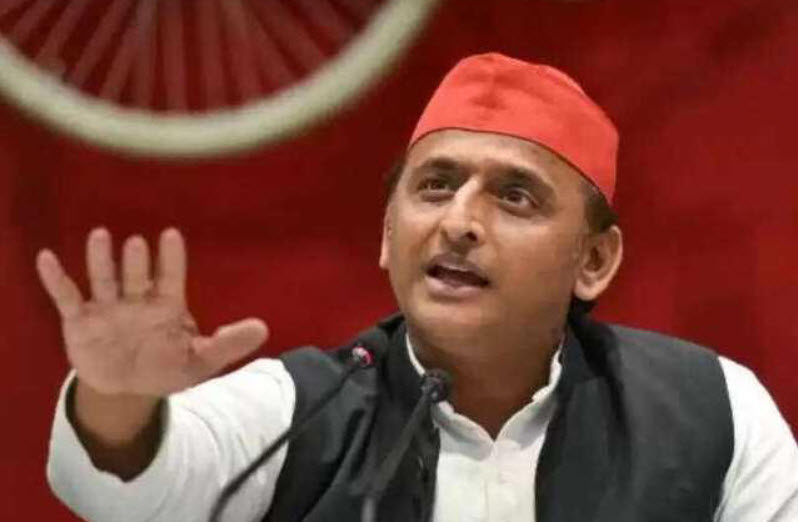
The opposition coalition significantly dented the BJP’s stronghold in 2024, with the Samajwadi Party (SP) securing 37 seats and Congress winning 9. Psephological assessments indicate that the alliance led in a substantial number of assembly segments (SP led in 184 and Congress in 39, totalling 223 out of 403 segments). Though Akhilesh’s PDA plank (Pichhda [OBCs], Dalit, Alpsankhyak [Minorities]) has successfully expanded its traditional Yadav-Muslim voter base, in a tactical move the SP-Congress thrust would be on INDIA. Significantly Akhilesh and Aradhana have been consistently harping on INDIA.
Notwithstanding Yogi’s move to project his governance as a clean and pro-people, the INDIA bloc is determined to use the official records to expose its claim. Significantly on September 30, 2026, the Supreme Court strongly criticized the Uttar Pradesh Police for serious lapses and record-keeping flaws during a criminal investigation. The top court imposed a ₹10 lakh fine on the Uttar Pradesh Government for keeping a Sambhal violence accused under preventive detention for a year without valid reasoning. Recent Supreme Court rulings have restricted arbitrary police powers and emphasized accountability. (IPA Service)