By Anjan Roy
Aviation circles in the West have started questioning how an Omani citizen could have been cleared for a flight from UAE’s Dubai to Tel Aviv in Israel. The possible 9/11 type of crash would have been the result of such a security lapse.
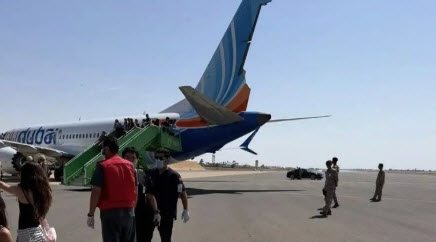
Stories are flying in the global media, particularly, those in Western Europe and USA, about the security implications of the Fly Dubai flight which had a near crash experience. Well into the fight the co-pilot had stabbed the captain, an Indian national, in an attempt to fly it either into some other destination or crash it.
The captain fortunately managed to open the cockpit door which let in the aircraft passengers who had overpowered the truant co-pilot. Fortunately some other others flying were pilots too and they managed to fly the craft safely into a nearby airport in Saudi Arabia.
However, technically it was a narrow escape. An aircraft is a sturdy enough construction that it can survive a normal strain at the altitude and speed at which they fly. These are built into the airframe.
However, if the strain exceeds certain limits, the airframe can give way. A plane falling some twenty thousand feet in about half a minute could put the aircraft under huge pressure. Besides, the aircraft was witnessed to have been spinning with its nose definitely head down.
Besides, some experts pointed out the torn rudder section which gives direction to the aircraft. Loss of that section is significant. Besides, the data showed that the hydraulics of the plane were drained and some vital electronic systems have also gone out of function.
In the circumstances, that the plane could land safely was nothing short of a miracle, apart from the fact that the injured pilot could unlock the cockpit door before falling to floor. After the 9/11 incident cockpit doors have been made extremely secure for anyone to enter from outside. Without unlocking the door from inside, it would have been impossible to enter and stabilise the aircraft.
In such s situation, to check its sudden fall and then to reverse into an upward course can cause massive pressures on the airframe and the body could have spilt apart. Besides, some of the critical aircraft systems had also been put out by the stabbing co-pilot. Hence, the aircraft was seen to swerved violently and spun.
Some of the stabilising features like the tail fins and other stabilising flaps were also apparently damaged. Hence, to control and stabilise the aircraft quickly must have been a tying job.
Some experienced pilots, showing the results of such stresses in a simulator, pointed out that but for the quick landing at a nearby airport in Saudi Arabia, the plane could not have flown much longer. The decision to bring it down was extremely apt. Going further to Tel Aviv would not ordinarily have been possible.
Oman, like many of the Arab countries, does not have diplomatic relations with Israel. In that situation, how could the Omani pilot have been allowed to be a pilot on a flight to an Israeli city, particularly when a massive and nasty fight is continuing for the past so many years.
Oman has friendly relations with Iran and in the process of negotiating some long ranging deals with the latter. Iran has considerable influence on sections of Oman population and therefore could be thought to have friendly attitude.
On the other hand, Israel is extremely conscious about security implications of international aviation. (IPA Service)