Gyan Pathak
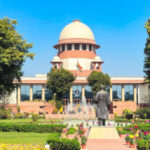
After the Supreme Court of India on August 25, 2026, agreed to hear TMC general secretary Abhishek Banerjee’s plea for swift action on the issue of party’s 20 rebel MPs pending in the Lok Sabha for their disqualification, and directed to issue notices to Lok Sabha Speaker as tribunal in such cases, Secretary General of the Lok Sabha, and the rebel MPs, the Lok Sabha secretariat became active. It issued notices to the rebel MPs, dated on the same day, asking them to reply within seven days. It means TMC rebel-MP episode has now become much bigger than a routine party split, and has become a test case not only for the anti-defection law, but also the Speaker’s constitutional role, the Supreme Court’s power to prevent strategic delay, and the BJP’s politics of defection.
Notices to the 20 rebel TMC MPs, issued on August 26, though it was dated August 25, the Lok Sabha Secretariat attached the copy of Abhishek Banerjee’s petition to the Speaker and asked, “You are requested kindly to furnish your comments on the petition in terms of Rule 7 (3) of the said Rules within seven days of the receipt of this letter for consideration of the Hon’ble Speaker, Lok Sabha.”
It should be noted that Abhishek Banerjee had filed disqualification petition against the rebel TMC MPs on June 19 under Rule 6 of the Members of the Lok Sabha (Disqualification on Ground of Defection) Rules, 1985. Abhishek Banerjee also sent written reminder to the Lok Sabha Speaker Om Birla on July 27, and met him on August 12. However, Speaker Om Birla did nothing.
The 20 MPs who were sent notice now on August 26 were – Kakoli Ghosh Dastidar, Sudip Bandyopadhyay, Satabdi Roy, Prasun Banerjee, Rachana Banerjee, Jagadish Chandra Barma Basunia, Partha Bhowmick, Arup Chakraborty, Adhikari Deepak Dev, Sayani Ghosh, Bapi Haldar, Md Abu Taher Khan, Kalipada Saren Kherwal, Asit Kumar Mal, June Maliah, Mitali Bag, Khalilur Rahaman, Mala Roy, Sharmila Sarkar and Yusuf Pathan.
It is worth recalling that 20 TMC rebels on June 14 were gathered at the residence of BJP leader and Union Minister Bhupendra Yadav, and had decided to set up a separate bloc in the Lok Sabha, which did not materialize due to legal hurdles. Then, BJP and the rebels explored their possibility of merger with the BJP, but that too faced perceived legal obstacles. Thereafter, a third route was adopted, and the rebel group announced their merger with NCPI, which is a little-known Tripura-based political party, having no MPs in the Lok Sabha, and is an NDA ally led by the BJP.
The TMC leadership strongly condemned the move, dismissing it as illegitimate and filing petitions for the disqualification of the rebel lawmakers. The legal validity of the merger remains a contested subject under review by the Speaker’s office and the Supreme Court.
Abhishek Banerjee’s petition in the Supreme Court was heard on August 25, in the Bench led by Chief Justic of India Surya Kant and also comprising Justice Joymalya Bagchi and Justice V Mohana.
What is now stake for BJP is the party’s politics of defection. One can certainly say this politically, which the current episode clearly shows, that once BJP won West Bengal election, TMC rebel leaders were seen meeting BJP leaders. BJP leaders also claimed to break apart the TMC just as the Shiv Sena was broken in Maharashtra. Subsequently, the 20 TMC leaders rebelled, joined NDA ally NCPI, and enjoyed hospitality of top BJP leaders. However, legally, BJP’s fingerprints are more complicated than simply saying BJP has engineered defection.
Rebel TMC MPs’ argument is that they are 20 out of 28 TMC MPs in the Lok Sabha: that is a 71.4 per cent, which is above the two-thirds threshold mentioned in Paragraph 4 of the Tenth Schedule of the Constitution of India. Here NCPI is important, because it provides a legal-political vehicle between TMC and BJP.
However, there is a serious constitution problem. The same paragraph 4 speaks of a merger of the original political party. TMC argues that the TMC as an organisation has not merged with NCPI. This is where the 2023 Supreme Court judgment in the Maharashtra/Shiv Sena case becomes extremely important. The Court drew a strong distinction between the “political party” and its “legislature party”, holding that the legislature party cannot simply detach itself from the political party that created it.
This case thus becomes legally complex, when the Rebels say 20 out of 28 is the legislature party and therefore the merger is protected. TMC says merger cannot be manufactured merely because you have 20 MPs. This question is yet to be definitely resolved.
It is worth recalling that in the 2023 Supreme Court judgement on the Shiv Sen dispute, the court had rejected the idea that whichever faction has the majority among legislators automatically becomes the political party. This is relevant to the TMC fracture.
The most politically sensitive part is the action of the Lok Sabha Speaker. Under the Tenth Schedule, the Speaker is the primary adjudicating authority of Lok Sabha disqualification petitions. TMC submitted 20 separate disqualification petitions to Speaker Om Birla on 18 June. However, he did nothing prompting, TMC general secretary to approach Supreme Court. Supreme Court intervened by issuing notice, and Speaker’s Secretariat also issued notices to the rebel MPs. However, the attitude of the Speaker so far makes it uncertain what he will finally decide. It should be noted that Speaker Om Biral is a BJP MP from Rajasthan.
Supreme Court has therefore a greater role in this case. Supreme Court has shown willingness to address the issue of unreasonable delay. Speaker has the constitutional jurisdiction to decide on the fate of the 20 rebel MPs, and at present, Supreme Court is not going to interfere in this. However, the Supreme Court Bench has said that Speaker becomes a tribunal is deciding such cases. It opens the possibility of Supreme Court’s intervention too. (IPA Service)
Supreme Court action activates Lok Sabha on TMC rebel issue