



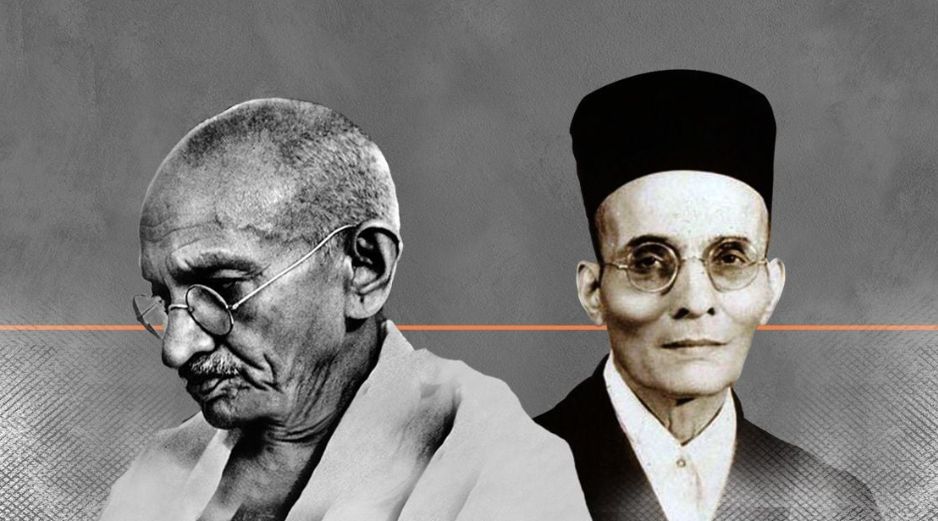
A terse social media update from the Ministry of Petroleum and Natural Gas provoked sharp criticism after featuring a visual that seemingly elevated Vinayak Damodar Savarkar above Mahatma Gandhi in an Independence Day tribute. The Congress accused the government of distorting historical record and promoting divisive narratives, while the BJP defended the gesture, citing historical endorsements of Savarkar’s legacy.
The image, posted on the ministry’s official social media channel, placed Savarkar prominently above Gandhi, alongside other freedom fighters such as Subhas Chandra Bose and Bhagat Singh. Opposition voices criticised the ordering as suggestive of partisan historical revisionism and decried the focus on personalities like Savarkar when pressing public concerns—particularly escalating fuel prices—demand attention. The rallying cry from the opposition was blunt: “Give cheap fuel, not cheap comedy.”
Defending the post, top BJP spokespersons referenced remarks attributed to former Prime Minister Indira Gandhi regarding Savarkar, suggesting that recognition of his historical role is not a recent reinterpretation but rooted in earlier political discourse. Amit Malviya, among others, highlighted these citations to counter Congress’s claims.
Prominent leaders from the Congress, including K. C. Venugopal and Pawan Khera, condemned the depiction as an assault on constitutional values, arguing that equating or elevating Savarkar in that context undermines the legacy of more universally accepted figures such as Gandhi and Jawaharlal Nehru. CPI’s John Brittas also joined the chorus, emphasising the importance of preserving historical integrity and resisting politicised interpretations of national icons.
Savarkar continues to be a deeply polarising figure in India’s historical and contemporary political landscape. Celebrated by nationalist factions for his ideological contributions—particularly Hindutva—and revolutionary writings including The First War of Indian Independence – 1857, he remains controversial due to his clemency petitions to British authorities and alleged ideological links to Mahatma Gandhi’s assassin.
Recent academic scrutiny has itself questioned the popular narrative associated with Savarkar, notably what many call the “heroic” escape from a British ship in Marseille. Historian and former Union Minister Arun Shourie argues that the dramatic account often recounted in political rhetoric—of Savarkar swimming through perilous seas—is a myth. He cites government records showing the escape occurred in calm waters, just a few feet from the dock, and that Savarkar was swiftly captured.
That scrutiny underscores the broader tension over how India remembers its freedom fighters: whether as unified heroes or divided icons with complex legacies. While admirers highlight Savarkar’s revolutionary zeal, ideological depth, and social reform advocacy, detractors point to elements of authoritarian cultural nationalism and ethically fraught political manoeuvres.
The controversy has reignited debate over the political appropriation of historical figures in public messaging, especially on symbolic occasions like Independence Day. Critics say it reflects selective memory shaping and partisan narratives. Supporters counter that revising who is honoured and how broadens public understanding of the independence struggle.







