


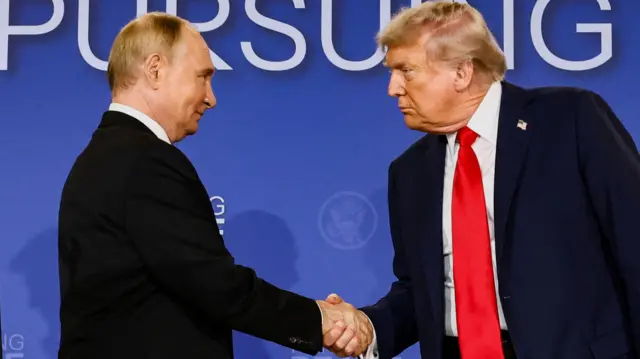
U. S. President Donald Trump suggested he may not impose additional secondary tariffs on India for buying Russian oil, adopting a softer tone after threats of punitive measures, and setting the stage for a more nuanced diplomatic posture. The remarks, made shortly before his high-profile summit with Russian President Vladimir Putin in Alaska on 15 August 2025, offered New Delhi a measure of relief amid mounting trade tensions.
Amid global scrutiny, Trump framed the potential tariffs as a flexible tool rather than an immediate action: “If I have to do it, I’ll do it. Maybe I won’t have to do it,” he remarked, underscoring the possibility of keeping some countries exempt, depending on evolving circumstances.
That summit concluded without any agreement to end the war in Ukraine. Both leaders described the discussions as constructive, yet no ceasefire or concrete plan emerged. Putin claimed an “understanding” had been reached, but Trump countered, “There’s no deal until there’s a deal,” flagging remaining gaps and the need for further negotiation.
Following the summit, Trump pressed Ukraine to engage in direct talks and suggested terms such as land swaps and security guarantees could form the basis of a future agreement—though he stressed that any resolution must come with Ukraine’s consent. President Volodymyr Zelenskiy responded with guarded openness to discussions and is slated to meet Trump in Washington soon.
European leaders welcomed the idea of providing security assurances to Ukraine akin to NATO’s Article 5 safeguards, while emphasising that Ukraine must be included in all critical negotiations. Some suggested a possible trilateral summit to move the process forward.
The Alaska meeting’s optics stirred controversy. Critics noted that granting Putin a prominent platform without achieving tangible outcomes could bolster his standing while undermining Western unity. Observers warned that dramatic pageantry without substance risks weakening U. S. influence and sending mixed signals to allies. Ukraine’s ambassador to Australia cautioned against sidelining Kyiv in diplomacy with Russia, arguing that sustainable peace depends on Ukraine and European partners being at the table.
At its heart, the summit reinforced that peace will remain elusive without inclusive negotiations. Key issues—including potential sanctions, security guarantees, territorial integrity, and the mechanics of any ceasefire—are unresolved. Trump appears to be shifting the burden onto Ukraine and its European allies to shape the parameters of future talks.
As Washington considers its next steps, India may find conditional reprieve from tariff threats, while the globe watches for how subsequent trilateral diplomacy may—or may not—yield a path toward peace.


