By P. Sreekumaran
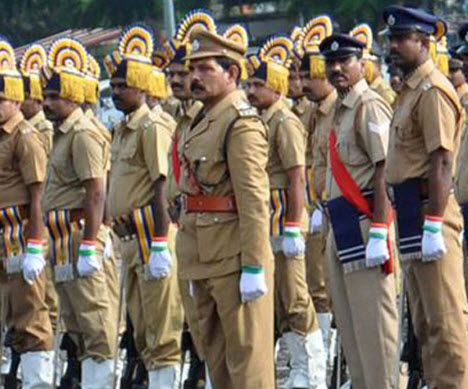
The V. D. Satheesan-led United Democratic Front (UDF) Government in Kerala has undertaken a major reorganization of the police force in the State. The project, christened ‘My Police Station’, aims at transforming police stations accessible and people-friendly service centres.
Inaugurating the state-level launch of the initiative in Thiruvananthapuram, Chief Minister V. D. Satheesan said the project sought to make the police a ‘friend’ and a source of support for people even while retaining the deterrent role of the force against crime. The programme, the Chief Minister said, should create a sense among citizens that the police station belonged to them and that the police would stand by them in times of distress. The timing of the project is significant as the nature of crimes is changing rapidly, with cybercrime, drug-related offences and technology-driven crimes posing new challenges to the force.
The police force will have to move in step with the times by equipping itself with modern technology and investigative capabilities so that it can keep pace with increasingly sophisticated criminals, Satheesan said. The Chief Minister also laid accent on courteous behaviour towards people visiting police stations. People who approach police stations, especially women, children and elderly persons, should be received with dignity and compassion, he pointed out.
Speaking on the occasion, Home Minister Ramesh Chennithala said the project has been launched to transform all 484 police stations in the State into more welcoming and citizen-oriented institutions. The Home Minister also announced a series of organizational changes to make the police more responsive. Under the revised system, the Government has restored the sub-inspector-led Station House Officer (SHO) system in regular police stations while retaining circle inspector-level SHOs only in 63 strategically important police stations out of a total of 484 stations. Given the strategic importance of the Mullaperiyar dam, the SHO post at that police station will remain with a Deputy Superintendent of Police (DySP). A notable feature of the new system is that as many as 63 police stations will have women serving as SHOs.
The HM also directed senior police officers to undertake regular visits to police stations and submit reports so that shortcomings could be identified and corrective measures introduced. With CCTV cameras installed in police stations, including lock-ups, the department must ensure that custodial deaths and violence did not occur.
The previous system was introduced in 2017 with inspectors appointed as SHOs in 196 police stations in 2017, before extending the system to 268 stations in 2018. The revamp of the force was based on a review of the existing inspector SHO system by a committee headed by the Additional Director General of Police (Headquarters). After studying police stations across the State, the committee came to the conclusion that reintroducing the sub-inspector-led SHO system would ensure a more effective organizational structure.
The sub-inspector-led SHO commends itself as it has several advantages. For instance, the system ensures improved supervisory mechanisms, better professional grooming of direct recruit sub-inspectors, quicker redress of public grievances, greater focus on investigating graver crimes, administrative flexibility and a reduction in stress within the police force.
In another important decision, the Kerala Government has decided to establish a state-of-the-art disaster resilience system in Pathanamthitta district, particularly vulnerable to flash floods and cloudbursts, on a pilot basis to strengthen preparedness against recurring floods.
Announcing the decision, the Chief Minister said the proposed system would include a denser network of rain gauges and an advanced early warning system, to be developed in association with climate research institutions such as the Cochin University of Science and Technology (CUSAT) and the Hume Centre.
The increasing frequency of extreme rainfall events and cloudbursts leaves very little time to respond and evacuate people safely, adding that reports of a major landslip and several minor landslips inside forest areas have been received of late. The CM also attributed the worsening flood situation to the declining carrying capacity of rivers. In this connection, he noted that the Pampa and other major rivers had been choked with silt, and the debris deposited during the devastating floods in 2018 and subsequent flood events. Once the flood waters recede, the immediate priority would be to desilt the rivers and restore their carrying capacity.
In another significant step, the Kerala Government has decided to allow candidates who have completed ITI and polytechnic courses to enrol in undergraduate programmes without clearing the Plus Two examination. The decision, taken on the recommendations of the Kerala State Higher Education Council, has been implemented in accordance with the University Grants Commission’s National Credit Framework, Higher Education Minister Roji M. John said.
The revised norms allow candidates holding an Industrial Training Institute (ITI) certificate to get admission to the first year of a four-year undergraduate programme, while those with a three-year polytechnic diploma can seek lateral entry into the second year of a degree course. (IPA Service)