


By Arun Srivastava
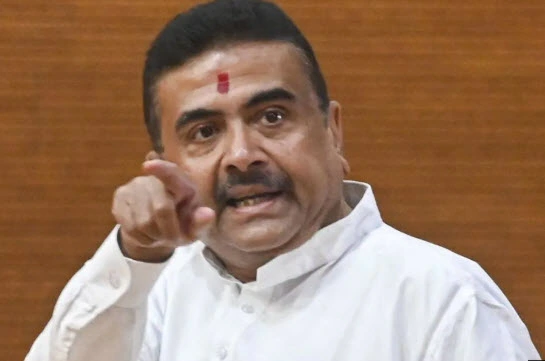
The arrest of Milan Pradhan, Congress nominee for Nandigram, ahead of the October 6 by-poll has sparked intense debate regarding political probity and the unethical conduct of West Bengal Chief Minister Suvendu Adhikari’s tenets of basic governance. It is widely understood that Adhikari resorted to this vindictive step pushing the opposition into a corner, terrorising voters, especially Bengali Muslims, who constitute around 40 per cent of the total electorate of Nandigram, and weaken INDIA bloc’s electoral campaign.
Adhikari might have become the chief minister enjoying the blessings of Narendra Modi and Amit Shah, his action nonetheless presents a picture of a frightened politician. He has not learnt the lessons from his own past, that voters rebel and repel vindictive moves of the rulers by defeating even their superstar candidates. Besides, it would also be naïve to believe that Mamata Banerjee, with her history as a fierce political fighter, would simply accept such aggressive actions by the ruling dispensation. Banerjee is an astute politician who, soon after the withdrawal of her candidate, Sanchita Pradhan Dey, immediately announced support for the Congress candidate, Milan Pradhan, a decision supported by Rahul Gandhi and Arvind Kejriwal, potentially creating a more consolidated anti-BJP front.
The political developments surrounding the Nandigram assembly bypoll involve intense allegations of coercion and vendetta, and the motivations remain a matter of heated debate between opposing parties. The high-stakes events unfolding in West Bengal centre around Suvendu Adhikari, the withdrawal of Mamata Banerjee camp’s candidate Sanchita Pradhan Dey, and the subsequent arrest of Congress candidate Milan Pradhan. The timeline of these fast-paced events has led to deeply conflicting explanations from the involved political factions: Mamata Banerjee and the Congress leadership allege a calculated political conspiracy. Mamata Banerjee has claimed that Sanchita Pradhan Dey was subjected to intense pressure and intimidation to force her withdrawal.
Following Sanchita’s exit, the Mamata camp extended its support to the Congress candidate, Milan Pradhan. Within hours of this announcement, Pradhan was arrested by the West Bengal Police in connection with a 2007 murder case filed during the infamous Nandigram land agitation. Ironically, it was Suvendu Adhikari himself who was leading the historic 2007 anti-land acquisition movement in Nandigram. He was then part of the All India Trinamool Congress (TMC) and helped lead the Bhumi Uchched Pratirodh Committee (BUPC). The agitation, which fiercely opposed the Left Front government’s plans to acquire 10,000 acres of farmland for a chemical hub, led to intense standoffs and widespread violence.
The most violent incident occurred on March 14, 2007, when police entered Nandigram to clear roadblocks set up by the agitators, leading to a firing that killed at least 14 villagers. The agitation involved armed clashes between local protesting villagers (backed by BUPC and opposition parties) and cadres of the ruling CPI(M) who attempted to recapture the villages. Thousands of locals who supported the Left Front were also driven out of their homes into relief camps during the peak of the resistance. At the court’s directions, two cases involving 73 persons were registered.
On June 9, 2020, the Public Prosecutor in West Bengal moved an application to withdraw multiple criminal cases registered against politicians. This occurred under Section 321 of the Code of Criminal Procedure (CrPC), which allows the state to drop criminal prosecutions. The applications for the withdrawal of these cases were submitted in two phases—the first in February 2020, and the subsequent ones in June 2020.The original cases involved allegations of unlawful assembly, rioting, and violence during the mass anti-land-acquisition protests in Nandigram. The court allowed the state to withdraw the cases. But this move triggered massive legal battle. In March 2021, the Calcutta High Court reversed the state’s decision to drop these cases, ruling that withdrawing serious charges like murder or rioting without adequate legal justification caused public harm.
The matter went to Supreme Court and in March 2021, the court granted an interim stay on a Calcutta High Court order that had revived criminal cases related to the 2007 Nandigram violence against S.K. Supian, the election agent of West Bengal Chief Minister Mamata Banerjee for two weeks or until further orders from the High Court. The apex court directed that no coercive legal actions or steps be taken against Supian during this period. The Supreme Court noted that the High Court’s earlier revival order was passed without giving Supian a proper opportunity to be heard, which effectively disabled him from executing his duties as an election agent during the assembly polls.
After coming to power, Chief Minister Suvendu Adhikari used the pending case to derail the INDIA bloc, as joint Congress-Mamata TMC candidate Milan Pradhan posed a serious threat to the BJP candidate Hasirani Rath, mother of Adhikari’s slain aide, Chandranath Rath. However, Adhikari might have overreached this time and his move seems to have backfired. Pradhan’s arrest has turned the electoral credibility of Suvendu Adhikari suspect. Many of his former TMC comrades from the 2007 land agitation, who joined BJP along with him, are critical of his approach. Sabuj Pradhan, a close associate of Adhikari, shocked at the arrest of fellow agitator Milan, said, “We (Sabuj and Milan) took part in the anti-land-acquisition protest under the leadership of Suvendu despite belonging to a different political party”. Left Front government had withdrawn the cases in 2020. Suvendu’s old comrades are surprised at the pace of development of the events. Within weeks of Suvendu defecting to the BJP, saffron leader Nilanjan Chakraborty challenged the withdrawal process before Calcutta High Court, which ordered the murder cases to be reopened in a Haldia court. The court issued arrest warrants against 108 people. The leaders who had led the agitation thought the new government would withdraw the false cases, but never imagined that it would end up making arrests. Incidentally, Milan was arrested in one of these cases, days after Suvendu promised at a party rally that he would withdraw all the purportedly false cases against the 2007 land agitators.
The arrest of Milan Pradhan was executed on pending arrest warrants, just after he was nominated by Congress to contest the by-poll. KolkataPolice made the arrest immediately after Mamata Banerjee’s faction withdrew its own nominee and announced support for Milan. Yet another factor which is of immense significance is why Suvendu Adhikari—who was a prominent frontline leader steering the 2007 Bhumi Uchhed Pratirodh Committee (BUPC) agitation—is not facing the same trial.
Politically motivated and patently unjust arrest of the Congress candidate has indeed sent a shock wave in the political circles. A setback here would directly undermine the authority of Modi and Shah as much as Suvendu’s dominion over Bengal. For Modi and Shah, failing to win a seat where the primary opposition is so fragmented would be a significant structural setback and further erosion of their image across the country. Adhikari’s attempts at saffron social engineering in Bengal would also then be countered more forcefully. Opposition parties are actively leveraging the timing of the arrest to build a narrative of political vendetta, state overreach, and “intimidation”. The latest developments would also help create a perception of heavy-handedness which would eventually generate sympathy votes and boost voter turnout for the INDIA bloc. Counting of votes on October 9, 2026, will dictate whether the BJP successfully solidifies its historic momentum in West Bengal, or gives the newly aligned opposition a crucial psychological breakthrough.
Adhikari’s political authority is heavily tied to the 2026 massive mandate. Early electoral losses would allow a fragmented opposition to claim that public buyers’ remorse has set in quickly. Already its five month stay in power has invited serious public reprimand and criticism for its failure to devote to peoples’ cause, instead indulging in Muslim hate politics. The BJP’s victory was built on a fierce, ideologically charged campaign focusing on nationalist and cultural revival. A defeat in Nandigram would signal that the party’s aggressive “saffron drive”—including policies regarding uniform governance and cultural identity—is facing immediate pushback from Bengal’s deeply nuanced electorate.
A victory for the INDIA bloc in the Nandigram by-poll would intensely boost the political stature of Mamata and reshape the opposition’s trajectory in West Bengal. Wresting this high-profile constituency back from the BJP would deliver an immense psychological and political blow to Suvendu and his government. A Congress win in Nandigram bypoll would boost the political image of the INDIA opposition alliance, Mamata Banerjee, and Rahul Gandhi. A shared victory proves that opposition parties can work together against the ruling Bharatiya Janata Party (BJP). It would rejuvenate the Congress cadres in Bengal and also at national level. This victory would further boost the national image of Rahul Gandhi and validate his aggressive anti-BJP stance. It is worth noticing that Rahul described arrest of Milan as a “murder of democracy” and “political revenge,” and promising that the Congress would fight and win.
Gandhi has framed the arrest as an attempt by the BJP to “end the electoral fight”. Milan Pradhan’s win would also position Rahul as a cohesive leader capable of steering complex state-level alliances within the broader national opposition framework. No doubt it would mark a dramatic electoral resurrection for the Congress in a state where it was widely considered a minor player. An opposition win would allow the INDIA bloc to reclaim the pro-farmer, grassroots narrative that the BJP has co-opted in the region.
Ironically, in the wake of Pradhan’s arrest, sharp differences between Suvendu Adhikari and the West Bengal BJP president Samik Bhattacharya have resurfaced, especially on the issue of how to approach minority voters. While Suvendu is for hardline stance, Samik favours inclusive or non-distinction policies. Samik has publicly sought to distance the party from Suvendu’s exclusionary rhetoric, emphasizing that the party does not formally distinguish between majority and minority voters. Electoral loss in Nandigram bypoll could widen these cracks, leading to internal questions over leadership and strategy. (IPA Service)


