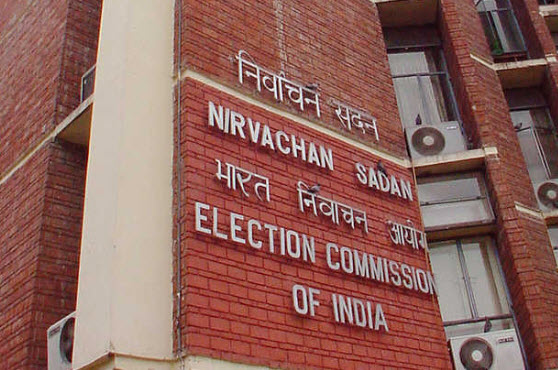
By Dr. Gyan Pathak
Two Election Commissioners of India, out of three, have put on record their objections against certain decisions of the Election Commission under the leadership of Chief Election Commissioner (CEC) Gyanesh Kumar Gupta, and labeled them even ‘illegal’ and ‘unauthorised.’ An Indian Express investigation has found that objections were raised at least 14 times in the last ten months. However, the expose goes far beyond the accountability of CEC alone, since he is the favourite appointee of Prime Minister Narendra Modi and the home minister Amit Shah, under their 2023 legislation for appointment of CEC and other ECs, that brought the Election Commission under their thumb.
Under that legislation, only CEC has constitutional protection and could be removed only by impeachment. How immaterial this provision of impeachment has become, can be understood by the latest example of resignation of the Vice President of India Jagdeep Dhankhar on July 21, 2025, effective immediately. The provision of impeachment proved for him no protection and a simple message of threat of impeachment from the highest level got his resignation easily.
This episode gives an idea about how vulnerable Gyanesh Kumar is at the post of CEC. He has no option but to carry out the orders from PM Narendra Modi. As for other two ECs, they have no such constitutional protection. Their term of service is purely on the wish of the CEC, indirectly of the government, under the 2023 legislation for appointment and service conditions of CEC and ECs. The two ECs have only power to raise objections, what they actually did, but it will be too much to expect from the ECs to pursue the matter to their logical conclusion under the present circumstances. We have seen earlier how an EC had to pay heavy price for objecting certain activities in Election Commission, and suffered because the government had initiated action against his wife for alleged tax evasion. These episodes give clear idea how Election Commission of India operates under the PM Narendra Modi’s thumb.
Therefore, the opposition’s demand for impeachment of CEC Gyanesh Kumar, will not solve the problem of accountability of the Election Commission of India as the custodian and preserver of the electoral democracy. Special Intensive Revision of the Electoral Rolls in India are being carried out since July 2025, that has become highly controversial, that put the citizens of India under great duress and over 13 crore voter’s names have been deleted so far. Earlier, large number of voters were added from other states to influence the state polls, in several states including in Haryana and Maharashtra. All were done under the garb of laws, which were just manipulated. SIRs were also manipulated, and the beneficiary party always remained the BJP under PM Narendra Modi. Supreme Court has also reduced itself from delivering judgement to a supervisory role to facilitate the SIR. Supreme Court is even sitting on the case challenging the 2023 Act for the appointment of CEC and other ECs, that has kicked the Chief Justice of India out of the Appointment Committee. Supreme Court’s stance has been mysterious – it found electoral bond scheme unconstitutional, but refused to take action against unconstitutional collection of money by the BJP under PM Narendra Modi.
The current revelation by Indian Express report is therefore goes beyond mere internal disagreements within the Election Commission to a more serious questions whether an election watchdog remain genuinely independent when the government of the day has a decisive influence over this constitution body?
Election Commission’s credibility depends not only on the personal integrity of its commissioners but also on the institutional safeguards that protect them from political pressure. It is at this point, we can’t only blame the personal integrity of CEC Gyanesh Kumar, especially when he is seen hand in glove with PM Narendra Modi on hijacking the entire electoral democracy through bringing legislations and rulings which were never discussed even in the parliament of India.
It should be recalled that CECs and other ECs appointment and service condition Act of 2023 was passed when almost entire opposition members were suspended from the Lok Sabha. Petitions filed in the Supreme Court pointed out that there was virtually no debate on the issue, and the legislation was rushed through voice vote in absence of the opposition MPs after their suspension.
The question of credibility of the ECI has become more urgent in the light of the latest revelations that the two ECs raised objections on multiple occasions concerning electoral roll procedures, changes to Form 6, and the operation of the Commission’s technology system. Electoral rolls data were centralised and ECs were not adequately involved in the decisions.
Now the fundamental question is if Commissioners themselves disagree over the legality, authorisation or implementation of important electoral decisions, what institutional mechanism ensures that such disagreements are properly examined, recorded and resolved?
The most disturbing institution issues included the control over the centralised electoral roll in which even the election officers on the grounds and in the states have only given restricted access to the system, which prevented them to record their decisions. Indirectly, CEC controlled the system through technology people, not the election officers.
Two election commissioners raised the question of even Form 6, which is particularly serious, because it is the gateway to not only new voters but also for those who were excluded in the draft electoral roll. The two ECs noted that the changes were unauthorised and should be removed. However, the changes still in place. It raises the question about legal authority, procedural transparency and equal access to voter registration.
The entire issue therefore needs serious public scrutiny, not only of the functioning of the CEC Gyanesh Kumar, but also the roots from where he gets the strength to violate the law and act arbitrarily, without taking into account the objections raised or observation made by the fellow ECs. (IPA Service)