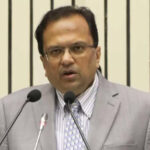
Ministry spokesperson Randhir Jaiswal accused the Office of the United Nations High Commissioner for Human Rights (OHCHR) of applying selective standards when assessing demonstrations and law enforcement responses across countries. He warned that such an approach could damage the organisation’s credibility and weaken confidence in multilateral institutions.
Addressing a media briefing in New Delhi, Jaiswal said the UN body had failed to respond consistently to comparable developments elsewhere, despite publicly questioning the handling of demonstrations in the capital.
He said the concerns expressed by OHCHR were unwarranted and unacceptable because they amounted to interference in India’s internal affairs. The spokesperson also questioned why the organisation had not adopted similar public positions concerning protests and policing in other parts of the world.
Jaiswal warned that continued selectivity could lead to a loss of faith in multilateralism while undermining the standing of the human rights office. His remarks reinforced the government’s objections to international criticism of security measures imposed during demonstrations demanding the resignation of Chief Election Commissioner Gyanesh Kumar.
The OHCHR had expressed concern on October 10 over reports of mass detentions involving demonstrators, protest organisers, civil society representatives, lawyers and journalists before and during large demonstrations in Delhi.
UN Human Rights spokesperson Thameen Al-Kheetan called on authorities to respect the right to peaceful assembly and ensure that restrictions complied with the principles of necessity and proportionality. The office also sought the immediate and unconditional release of people it described as arbitrarily detained.
The demonstrations were organised by the Cockroach Janata Party (CJP) and other groups protesting alleged irregularities in the Special Intensive Revision of electoral rolls. Protest organisers accused the Election Commission of undermining electoral fairness and demanded Kumar’s resignation.
The government and the Election Commission have rejected allegations of electoral manipulation. Police authorities have maintained that restrictions on demonstrations were necessary to protect public order and prevent disruption.
Wednesday’s intervention followed an earlier response from the ministry, which defended constitutional protections for peaceful assembly while maintaining that exercising those rights remained subject to public safety requirements.
The ministry argued that citizens could seek remedies through the courts and that law enforcement agencies operated within established legal procedures. It also pointed to the country’s independent judiciary and free media as safeguards against violations of fundamental rights.
Those assurances have faced scrutiny following complaints about detentions, restrictions on movement and alleged mistreatment of journalists covering demonstrations.
The Supreme Court has examined restrictions affecting public transport and other services during the protests, raising questions about the balance between maintaining public order and protecting constitutional freedoms.
Delhi Police has defended its measures before the court, citing intelligence assessments and alleged violations of undertakings by protest organisers. The police submitted an unconditional apology in proceedings concerning compliance with judicial directions while maintaining that their actions were undertaken in good faith.
The Delhi Metro Rail Corporation separately informed the court that restrictions on entry and exit at certain stations were introduced following police instructions. It denied that services had been completely suspended across the network.
The corporation stated that 271 trains completed 4,157 trips on October 10, while access restrictions affected 45 of its 303 stations. It also submitted an unconditional apology in response to contempt proceedings concerning the implementation of the court’s directions.
The competing positions have placed the legal boundaries of protest restrictions under examination, alongside the diplomatic disagreement over whether international human rights scrutiny constitutes interference in domestic affairs.
The OHCHR’s intervention focused on the treatment of protesters and others detained during the demonstrations. Its concerns addressed the application of internationally recognised protections for peaceful assembly rather than the political demands advanced by protest organisers.
The ministry’s response, meanwhile, challenged the consistency of the organisation’s public interventions without identifying specific incidents abroad during Wednesday’s briefing.
Earlier ministry statements had referred to violent responses to protests in neighbouring countries and law enforcement actions elsewhere that, it argued, had not attracted comparable criticism.
The government has maintained that restrictions on public gatherings must be assessed against security requirements, while the UN human rights office has emphasised that limitations on peaceful assembly must satisfy established human rights standards.
The demonstrations centred on allegations concerning electoral roll revisions, with protesters seeking accountability from the Election Commission and authorities imposing security restrictions around designated gathering points.
Police also restricted access to Jantar Mantar, a traditional protest venue in central Delhi, during the mobilisation.