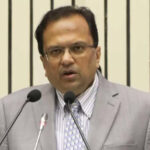
Lokur questioned why the Supreme Court and Delhi High Court had not intervened more decisively against alleged unlawful police actions affecting protesters, lawyers, journalists and ordinary citizens. He said judicial inaction risked allowing restrictions on personal liberty and peaceful assembly to become normalised.
The former judge argued that both courts possessed sufficient constitutional authority to initiate proceedings independently, without waiting for affected citizens to approach them individually.
“Why it doesn’t exercise it in a situation like this, which involves personal liberty… is really difficult to answer,” Lokur said, referring to the Supreme Court’s power to take suo motu cognisance of rights violations.
His criticism followed extensive security operations surrounding demonstrations against Chief Election Commissioner Gyanesh Kumar over alleged irregularities in the Special Intensive Revision of electoral rolls. Protest organisers have accused the authorities of suppressing peaceful dissent, while police maintain that preventive measures were necessary to preserve public order.
Lokur cited detentions extending beyond demonstration venues, including actions against political activists travelling to Delhi and individuals taken into custody at their residences.
He specifically questioned the detention of Cockroach Janta Party leaders Abhijeet Dipke, Saurav Das and Ashutosh Ranka, who were intercepted aboard an aircraft, and commentator Dhruv Rathee, who was detained at his Gurugram residence.
“Obviously all this is illegal,” Lokur said, expressing concern about the legal justification for such preventive action.
Delhi Police have defended their operations, maintaining that preventive arrests followed applicable legal procedures. Police have also accused some demonstrators of obstructing officers, breaching restrictions and attempting to enter prohibited protest areas.
Das and Ranka were subsequently remanded to five days of judicial custody following another confrontation at Jantar Mantar. Police alleged that protesters violated restrictions and obstructed personnel performing official duties.
Lokur also raised concerns about the treatment of lawyers, particularly senior advocate Shadan Farasat, who alleged that police forcibly detained him during the demonstrations.
The Delhi High Court Bar Association condemned the detention of legal professionals and alleged excessive police force. Its resolution stressed the importance of protecting citizens exercising constitutional rights.
Journalists covering the protests have similarly alleged detention, assault and interference with their professional duties. Press organisations demanded accountability after reporters said they were detained despite displaying identification.
The Supreme Court has issued directions intended to safeguard peaceful assembly, prevent unlawful detention and protect access to essential services. Chief Justice Surya Kant also intervened following complaints about lawyers detained near the court premises.
Nevertheless, Lokur questioned whether judicial directions were producing effective protection when allegations of police misconduct continued.
He argued that contempt proceedings against individual officers could not adequately address repeated violations if broader institutional practices remained unchanged.
“Why are the courts allowing this to happen?” he asked.
The former judge also criticised restrictions affecting public transport, commercial activity and telecommunications. Security measures included widespread barricading, closures of Metro stations, disruption of railway services and internet restrictions in parts of central Delhi.
Lokur contrasted these disruptions with judicial concerns about inconvenience to commuters during the Shaheen Bagh protests, when restrictions on prolonged occupation of public roads were justified partly by the need to maintain public access.
He questioned why comparable disruption attributed to police arrangements appeared to attract a different institutional response.
“The standards are very different,” he said, questioning the apparent inconsistency.
Lokur further warned that making peaceful public gatherings dependent on police permission could create a restrictive system undermining the practical exercise of constitutional freedoms.
He described the danger as a return to a permission-based regime in which citizens must seek administrative approval before exercising rights guaranteed by the Constitution.
The former judge urged constitutional courts to give priority to petitions involving personal liberty, hear arguments fully and deliver judgments without avoidable delay.
He also identified delays in adjudicating electoral bonds, anti-defection disputes and voting rights petitions as examples of judicial processes affecting public confidence.
Lokur, who served on the Supreme Court between 2012 and 2018, currently chairs the United Nations Internal Justice Council and serves on the Supreme Court of Fiji’s non-resident judicial panel.