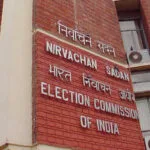
Speaking in Mumbai on Wednesday, Thackeray linked his demand to disclosures that Election Commissioners Sukhbir Singh Sandhu and Vivek Joshi had repeatedly raised objections over decisions connected with the Special Intensive Revision of electoral rolls. He also demanded the removal of Chief Election Commissioner Gyanesh Kumar and said the courts should take cognisance of the controversy.
“Gyanesh Kumar should be immediately sacked and jailed,” Thackeray said. He thanked Sandhu and Joshi for what he described as exposing Kumar and urged the two commissioners to reverse decisions they considered improper. He also appealed to opposition parties to unite over what he framed as a threat to the integrity of elections.
The Election Commission rejected the suggestion that differing views among commissioners showed that its final decisions lacked collective approval. It said opinions and suggestions expressed during internal deliberations were part of the Commission’s working process and maintained that decisions taken by the three-member body, including those relating to the SIR, were unanimous.
The controversy followed disclosures that Sandhu and Joshi had put objections on record at least 14 times over about 10 months. The issues included changes affecting new-voter registration, deletion and restoration of names on electoral rolls, access to electoral-roll databases and the manner in which some instructions were issued in the Commission’s name.
One dispute concerned Form 6, used for registration of new voters. Sandhu was reported to have described a change introduced during the SIR process as “unauthorised and illegal”, while both commissioners raised concerns about communications being issued without the Commission’s formal approval. They also questioned changes affecting access to electoral-roll systems and oversight of the information-technology infrastructure.
Under the 2023 law governing the Chief Election Commissioner and Election Commissioners, the Commission’s business should, as far as possible, be conducted unanimously. Where members differ, the law provides for a decision according to the majority view. The reported objections have therefore fuelled political questions over whether particular administrative steps reflected decisions of the full Commission or actions taken at another level.
Thackeray’s demand covers elections held at different times. Maharashtra voted in November 2024, while West Bengal and Tamil Nadu held their latest Assembly elections in 2026. Electronic voting machines were used in those elections under the Election Commission’s established polling system.
His call for ballot papers revives a longstanding opposition demand for a return to paper voting. The Election Commission has consistently defended electronic voting machines and the voter-verifiable paper audit trail system, while opposition parties have periodically questioned the transparency of electronic voting and sought wider verification or paper ballots.
The latest dispute has drawn responses from several opposition leaders. Trinamool Congress leader Abhishek Banerjee sought Kumar’s removal and a court-monitored investigation into the Election Commission’s functioning, while other opposition figures also demanded scrutiny of the SIR process and the reported internal objections.
No decision has been announced by the Election Commission to revisit the three state election results. Thackeray did not cite court order setting aside those elections and the Commission has not accepted his allegations as established. Under the Representation of the People Act, an election to a returned candidate may be challenged through an election petition before the relevant High Court, which can examine statutory grounds for declaring an election void.
The SIR has itself been under judicial and political scrutiny because of disputes over deletions, documentation requirements and the treatment of voters flagged by database checks. The Supreme Court has examined aspects of the exercise in several proceedings, including questions about notices issued to electors and mechanisms available for correcting or appealing exclusions.
The Election Commission has maintained that electoral-roll revision is intended to ensure that eligible citizens are included while ineligible or duplicate entries are removed. Opposition parties have argued that safeguards must prevent lawful voters from being excluded and have demanded greater transparency in how additions, deletions and software-driven checks are handled.