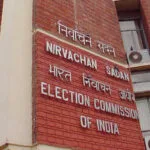
Dipke announced a press conference in Delhi for Thursday and posted “Election Commission Thik Karo” while targeting Chief Election Commissioner Gyanesh Kumar. CJP chief spokesperson Saurav Das said the group was suspending other programmes to focus on the functioning of the poll body and protection of voting rights.
The move followed disclosures that Election Commissioners Sukhbir Singh Sandhu and Vivek Joshi had placed formal objections on record at least 14 times over the past 10 months concerning decisions or communications linked to electoral rolls, voter registration, deletions, restoration of names and control of the electoral database.
The Election Commission has rejected suggestions that the disagreements show decisions were imposed by one member. Officials maintained that differing views were part of internal deliberations and that the Commission’s decisions, including those relating to the SIR, were ultimately taken unanimously with the approval of all three commissioners.
The dispute has nevertheless drawn attention to how decisions are made inside the constitutional body. Under the 2023 law governing the Chief Election Commissioner and Election Commissioners, the Commission is expected, as far as possible, to transact business unanimously. Where members differ, a matter is to be decided by majority opinion. Allocation of business and procedures for conducting it require a unanimous decision.
Among the issues raised by Sandhu and Joshi was a change to Form 6, used by new electors seeking registration. The revised process asked applicants whether they or their parents or grandparents appeared on the electoral roll used during the previous intensive revision. Joshi had objected to altering the process without corresponding changes to the rules, while Sandhu later described the change in an internal note as unauthorised and illegal.
The two commissioners also questioned what they saw as increasing centralisation of access to the electoral-roll database. Their written interventions sought safeguards to ensure that statutory Electoral Registration Officers retained effective control over rolls in their constituencies and that no unauthorised authority could alter voter records.
Concerns also arose over appeals connected with the SIR in West Bengal. Sandhu sought details about who had authorised appeals challenging the restoration or inclusion of voters and whether those steps had received approval from the Commission. The questions were tied to a large volume of litigation and appeals following deletions and disputed entries during the revision exercise.
The SIR, first undertaken in Bihar in 2025 and later expanded to other states and Union Territories, has become politically contentious because of the scale of deletions from draft rolls and the documentation demanded from electors. Opposition parties have accused the Commission of putting eligible voters at risk of exclusion, while the poll body has defended the exercise as necessary to maintain accurate electoral rolls.
Judicial scrutiny has added to the pressure. The Supreme Court has examined aspects of the revision process in several proceedings, including disputes over deleted voters and the handling of notices. On Tuesday, the court questioned the mechanical issue of some notices during the Delhi exercise and suggested that voters should have practical channels, including digital means, to respond.
CJP’s decision places the organisation alongside a broader set of political groups demanding greater accountability from the Election Commission, although its precise proposals for institutional reform are expected to be detailed at the Delhi press conference. Das argued that campaigns on schools, unemployment and public infrastructure would have limited meaning if citizens believed their ability to vote was under threat.