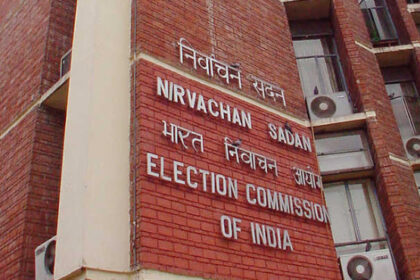
The former election strategist defeated Bharatiya Janata Party candidate Neeraj Kumar by 19,324 votes after maintaining a steady lead through the counting process in Patna. Official figures showed Kishor polling 64,151 votes, or 49.23 per cent of the valid votes counted, against Kumar’s 44,827 votes and 34.4 per cent share.
Rashtriya Janata Dal candidate Rekha Kumari finished a distant third with 14,273 votes, accounting for 10.95 per cent. The result turned what had been presented as a three-cornered contest into a decisive battle between Jan Suraaj and the BJP.
Kishor’s victory ended the BJP’s three-decade dominance of the central Patna constituency. The party and its predecessor representatives had controlled the area since 1995, winning eight consecutive Assembly elections. Bankipur, created in its present form after delimitation, had returned BJP leader Nitin Nabin in every election since 2010.
The by-election was held after Nabin resigned from the Assembly, leaving a vacancy in a constituency considered among the BJP’s safest urban seats in Bihar. His departure transformed the contest into an important test of whether the party’s organisational strength could survive without its established candidate.
Jan Suraaj’s breakthrough is particularly striking because the party suffered a sweeping defeat in the 2025 Bihar Assembly election. It contested 238 constituencies but failed to win a seat, with most of its candidates losing their deposits. Kishor had stayed out of that election as a candidate while directing the party’s statewide campaign.
Bankipur gave him an opportunity to move from political organiser to elected representative. His candidacy also placed his personal credibility at the centre of the campaign, leaving the result likely to shape perceptions of Jan Suraaj beyond Patna.
Kishor focused his campaign on education, employment, civic infrastructure and the quality of public services. He argued that Bankipur’s status as a prominent urban constituency had not translated into better roads, drainage, traffic management or municipal facilities for its residents.
The BJP relied on its established cadre network and the constituency’s history of support for the party. Senior leaders campaigned for Kumar, seeking to frame the election as a choice between a tested organisation and a party that had yet to demonstrate electoral strength.
The contest was complicated by changes surrounding the BJP’s candidate selection. Opposition parties used the episode to question the cohesion of the ruling party’s local organisation, while Jan Suraaj sought to attract voters who were dissatisfied with both the BJP and the RJD.
A turnout of about 34 per cent added uncertainty to the contest. Lower participation often favours parties with strong booth-level machinery, but Kishor’s campaign succeeded in mobilising enough urban voters to overcome the BJP’s organisational advantage.
Bankipur has a large Kayastha electorate, a group that has traditionally played a central role in the constituency’s politics. Kishor’s ability to cut across established caste and party loyalties appears to have been critical. Support from students, professionals and younger voters also helped Jan Suraaj build a coalition outside Bihar’s conventional political alignments.
The RJD’s third-place finish underlined its continuing difficulty in expanding its influence among central Patna’s urban electorate. Its limited vote share allowed Kishor to occupy the principal opposition space without splitting the anti-BJP vote evenly.
The victory gives Jan Suraaj formal representation in the Assembly for the first time and offers the party an institutional platform from which to pursue its political agenda. It also provides Kishor with an elected office after years spent designing campaigns for leaders and parties across the country.
Kishor previously worked on major election campaigns involving Narendra Modi, Nitish Kumar, Mamata Banerjee, Amarinder Singh and Jagan Mohan Reddy before withdrawing from political consultancy. He later undertook an extensive march across Bihar to build Jan Suraaj as a grassroots organisation.
(IPA Service)