By Arun Srivastava
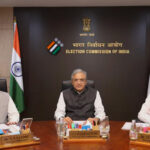
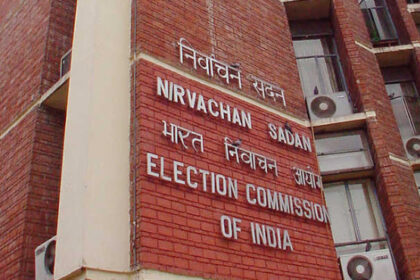
Trinamool Congress supremo Mamata Banerjee exercising her democratic rights has approached the Election Commission of India (ECI) alleging that Narendra Modi is misusing central agencies and forces during the 2026 West Bengal Assembly elections. But the big question is; will CEC Gyanesh Kumar act on her complaint and direct Modi to refrain from resorting to such activity.
It would be a preposterous proposition. Having acquired expertise in the use of central agencies for his personal and political gains, from the days he spent as the chief minister of Gujarat, Modi finds the misuse of central agencies, especially ED, as the most gratifying mechanism. According to official data presented in Parliament as of December 2025, the Enforcement Directorate (ED) has registered over 6,300 cases under the Prevention of Money Laundering Act (PMLA) during the approximately 11 years (June 2014 to October 2025) of the Narendra Modi-led government. The reports reveal that 98% of ED cases involving politicians have been filed against opposition leaders since 2014. In the last 10 years (up to March 2025), the ED registered 193 cases against politicians (MPs/MLAs), with only 2 resulting in convictions. ED searches increased by 86 times under Modi government compared to UPA decade.
An insight into the ED action reveals that the raids were carried out to simply terrorise the opposition leaders and make them submit to the wishes of Modi. It is not that ED actions have gone unnoticed. The Supreme Court of India has indeed, on several occasions in 2023, 2025, and early 2026, strongly reprimanded the Enforcement Directorate (ED) for its methods, describing them as “vindictive,” “arbitrary,” and excessive, often directing the agency to act with fairness. Court even questioned ED’s status as a “juristic person” and its right to file certain petitions.
Notwithstanding the judiciary ridiculing ED’s role, style of functioning and its misuse, Modi and his lieutenant Amit Shah have in a bizarre manner continue to deploy it. The court’s explicit instruction that the ED should not be “vindictive” and must act with “highest degree of dispassion and fairness” has no relevance for the ED, as with Modi and Shah as its patrons it ought to not bother the court and its instructions.
Mamata has accused Modi government of using the CBI, ED, Income Tax Department, and central forces for “vindictive politics” and to intimidate her party members. She alleged that central agencies targeted individuals responsible for her security, specifically citing raids on a person involved in her security arrangements, and questioned if this was an attempt to harm her, according to. The partition attitude of the central agencies was also perceptible in the use of the central agencies to check for “Cash in Vehicles” allegation.
She has levelled serious allegation of central forces were being used to carry cash to influence the elections. With the central agencies under the direct control of Shah, these developments have not come as surprise. Shah has many serious criminal allegations. He has been facing accusations of murder, kidnapping, and extortion related to the 2005-2006 Sohrabuddin Sheikh and Tulsiram Prajapati fake encounter cases, leading to his arrest in 2010. He was discharged in 2014 by a special CBI court, which noted a lack of evidence. The CBI had alleged that Shah was the “mastermind” in the conspiracy to eliminate gangster Sohrabuddin Shaikh, his wife Kauser Bi, and associate Tulsiram Prajapati when he was Gujarat’s Minister of State for Home. His political opponents have frequently accused him of a “criminal background” and used the incidents to challenge his, and the BJP’s, integrity.
Mamata also accused PM of violating the Model Code of Conduct (MCC) by holding “illegal campaigns” through his addresses to the nation. Interestingly in her complaint lodged to the ECI, Mamata claimed that the ECI itself was acting with a “bias” and “arrogance” in favour of the Prime Minister, alleging that the poll body was ignoring concerns raised by the TMC. She has demanded an internal investigation by the ECI into these issues and for measures to ensure a level playing field.
Modi’s political background and methods are sharply polarized, with his political critics often using phrase “foul politics” to describe his rise and actions, while supporters view him as a transformative leader. While he is famous for speaking blatant lies and resorting to falsehood to justify himself, he is also accused of engaging in “dirty politics” and using aggressive or personal attacks against political opponents, including in Parliament. He is least bothered of the consequences of his politics though opponents claim that democratic institutions have been weakened by the concentration of power and the placing of loyalists in key positions.
People, especially his opponents, nurse the view that it is utopian to expect fair play from Modi. Fair nature and brand of politics is alien to him. Critics, including research institutes like V-Dem, have expressed concerns that India under Modi has transitioned toward an “electoral autocracy”. Opponents have been consistently alleging that the government utilizes central agencies to target political rivals and silences dissent, which they argue undermines the fairness of the democratic process. There is no denying that the political philosophy promoted by Modi has fostered communal division and targets specific communities for electoral gain.
His using central agencies against Mamata’s party colleagues nonetheless makes it crystal clear that Narendra Modi has misjudged the situation. The political situation in Bengal has already been hostile to Modi and BJP. Obviously it needed Modi to tread more carefully. His using the central agencies however underlines of his sense of insecurity and fear of losing the election. He has been using the central agencies as the last resort to terrorise the TMC cadres and not to pose any challenge to BJP’s machination on the polling day.. He probably nurses the feeling that his coercive politics would prove to be productive.
But he is mistaken. His actions will provoke the Bengalis and their cultural ethics and they would retaliate with full force. One thing is quite noticeable, common voters are maintaining deafening silence. They know that form of protest at this stage would help Modi to crack down on the state, coerce the people and hijack the election. Trinamool Congress (TMC) has rightly accused the BJP of a “larger conspiracy” to create an atmosphere of terror in Bengal by weaponizing central agencies. Already ED has raided on the offices of I-PAC (Indian Political Action Committee), the TMC’s primary political consultancy. I-PAC activities before polling have been stopped by ED to hit the preparations of TMC.
ECI has deployed a record 2.4 lakh Central Armed Police Forces (CAPF) personnel, the highest ever for a single state, to ensure violence-free polling. She nonetheless promised not to “bow down,” suggesting the actions are part of a vindictive strategy. Modi is undeterred at Mamata’s accusations and defended his actions, claiming that TMC is a party of “corrupt leaders and extortionists” and that the agencies are doing their duty to investigate graft. He also accused the TMC of running the state through “syndicates” and fostering a “maha-jungleraj”. (IPA Service)