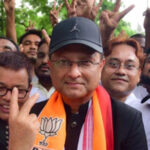
Tharoor said the conference was organised by India’s International Movement to Unite Nations, or IIMUN, a student-led organisation whose advisory board he serves on. He stressed that the programme was not being conducted by the RSS and that his scheduled appearances would take place after Bhagwat’s session.
Bhagwat is due to address more than 2,000 Gen Z and Gen Alpha students at the Nita Mukesh Ambani Cultural Centre on August 6. Tharoor said he would be in New Delhi for Parliament that day and would attend the conference on August 7 and 8.
“It is not RSS-led. It’s a student movement that invites educationists and thought leaders of all backgrounds to address students,” Tharoor said while responding to questions raised on social media.
The Thiruvananthapuram MP added that he believed in freedom of expression and would chair meetings of the organisation’s advisory board during the later stages of the conference. His clarification sought to separate his role in IIMUN from Bhagwat’s appearance at the opening session.
The controversy emerged after details of the conference circulated online, prompting questions about why a senior Congress parliamentarian was associated with a platform hosting the head of an organisation ideologically opposed to his party.
Bhagwat will interact with students aged between 15 and 19 from schools and colleges in more than 100 cities. The session forms part of IIMUN’s 15th anniversary and its annual championship conference, where participants are expected to debate domestic and international issues.
The theme of the gathering is “The Role of Youth in Uniting the World, the Indian Way”. Organisers have described the programme as an attempt to facilitate direct conversation between senior public figures and younger citizens on leadership, democracy, civic responsibility and nation-building.
IIMUN founder Rishabh Shah has said leadership requires established figures not only to guide younger people but also to listen to them. The organisation has presented the conference as a broad public-affairs forum rather than an ideological platform.
Its advisory board includes business leaders Ajay Piramal, Deepak Parekh and Nadir Godrej, former Chief Justice of India D. Y. Chandrachud, filmmaker Karan Johar, Olympian P. T. Usha and former military chiefs, alongside Tharoor.
Bhagwat’s participation has nevertheless acquired political significance because of heightened youth activism over examinations, jobs, institutional accountability and policing. Students have increasingly used street demonstrations and social media campaigns to question political leaders and public bodies.
The RSS chief has also spoken about the changing relationship between generations. He has argued that young people no longer accept instructions without explanation and expect adults to offer reasoning, evidence and examples. His Mumbai interaction is therefore expected to draw attention to whether students are given an opportunity to ask direct and potentially difficult questions.
Opposition leaders have questioned the timing of the outreach. Shiv Sena leader Aaditya Thackeray asked why organisations seeking dialogue with young citizens had not intervened when student protesters faced police action. His remarks placed Bhagwat’s programme within a wider debate over how political and cultural organisations respond to youth dissent.
Cockroach Janta Party founder Abhijeet Dipke welcomed the attempt to communicate with students but said the RSS should promote educated younger leaders instead of depending mainly on senior figures to address the new generation. He argued that youth representation within organisations would make such engagement more credible.
Tharoor’s clarification also reflects the scrutiny he frequently faces over appearances and statements that do not fit neatly within partisan boundaries. He has maintained that participation in a public forum does not amount to endorsement of every speaker invited by its organisers.
(IPA Service)