By Krishna Jha
“Break down the mosque, break down the temple, break down everything that can be broken, but do not break a human heart, for that is where God resides.”
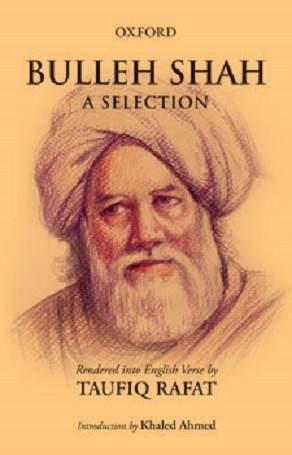
That was Bulleh Shah, relevant even after so many years. One of Punjab’s greatest Sufi poets, he makes people remember Rumi. He preached the primacy of “ishq” or universal love, above all religions. He had rejected barriers of caste, creed, religion, and gender.
About a month back, the shrine of the 17th-century Sufi poet Bulleh Shah was vandalised by miscreants in Mussoorie, Uttarakhand, sparking widespread outrage and calls for the protection of Sufi heritage.
The structure was vandalised late on January 24 by a group of men, who allegedly broke open a donation box, stole silver jewellery, and damaged religious books. Days earlier, Bajrang Dal activists protested against the mazaar and other shrines, claiming they had been built “without proper sanction on school or forest land”.
Kali Sena, a right-wing fringe group, then issued multiple statements warning that any attempt to reconstruct the over 100-year-old mazaar of Sufi poet Bulleh Shah in Mussoorie would be met with stiff opposition. In a video released, the outfit’s state convenor Bhupesh Joshi said, “We will beat up anyone who tries to rebuild the mazaar. We will instead construct a Hanuman temple near it.” The statement came after Baba Bulleh Shah Committee president Rajat Aggarwal had declared that the mazaar would be rebuilt by May this year.
Beginning from the beginning, Ideologue of the present regime, Vinayak Damodar Savarkar (1883-1966) had issued a call in his book “Hindutva: Who is a Hindu”, published in 1923, to Hinduise the entire political system in the country and militarize it. He said it is Hindutva that creates Hindu identity not Hinduism. He said Hindutva is not only a religious or spiritual history, it is complete on its own.
Whatever emerges from the narrative is a failed initiative to distort our legacy of unity among all communities and creed. The very birth of Hindu nationalism is to gain its own supremacy over the ruins of other communities.
The attempt to vandalise the shrine of Bulleh Shah was one example of the same. In the process of defining Hindu identity, the very fabric of our secular background has been overlooked where communities have been living with deep connectivity. Indian ethos is not only multilayered, the multiplicity has widened the spectrum of consciousness too that has multi-dimensional streams. It was inherent in the process of evolution itself and hence never was challenged.
Bulleh Shah was a “seeker” who rebelled against caste, religion, and patriarchy. Hindu nationalism is a recent concept, almost contemporary in our country and closely knitted with the right. It was a phase when British business was blossoming, industries were gaining roots and a new working class was entering the social system, without shelter, with a pittance as wage and working hours without limits. Freedom struggle was gaining strength as chains of slavery were tightening. Modernity was entering on the debris of the old. Colleges and schools were opened, new colonial syllabus was taught under the guidance of Macaulay team. British colonialism was engaged in looking for ways to enslave the intellect of the Indian masses and shape their ideas, yet rebellion was also gaining its roots. It was also a time when colonialists were trying to create a rift to destroy the unity. This concept of unity or secularism has always been prominent in our culture.
Bulleh Shah was one of the leading banner holder of it as he spoke of message of love, rejecting divisive influences based on universal love, art, philosophy and culture. His legacy has kept standing against all the challenges.
Born in 1680 in Kasur in present-day Pakistan, his real name was Abdullah Shah. His ancestors hailed from Uch Gilaniyan in Bahawalpur, but scholars trace his birth to the Pandoke Bhatian village where his father, Shah Mohammed Dervish, worked as a teacher. An upper-caste Syed man, the parish preacher was well-versed in Arabic, Persian, and the Quran. Even today, Shah Mohammed’s death anniversary is marked at his tomb in Pandoke Bhatian (such events are called “urs” in Sufi tradition).
But Bulleh Shah revolted against his Syed caste status. He pursued higher education in Kasur, a key learning centre, under Hazrat Ghulam Murtaza, who also taught the renowned Punjabi poet Waris Shah, his contemporary. Bulleh Shah later studied in Batala under the Qadriya Silsilah (school), a branch of the Sunni Sufi order founded by Abdul Qadir Gilani in the 12th century at Baghdad.
Bulleh Shah’s second act of rebellion targeted religious orthodoxy. He scorned rituals like the Hajj, fasting during Ramzan, Sharia laws, and even the daily namaz, enraging the clergy at a time when Punjab was in tumult with frequent rebellion by the newly-founded Sikhism.
His third act of rebellion challenged patriarchy. He learned to sing and dance, swapping traditional green Islamic attire for pink (worn by Punjabi brides). His kafis use a feminine voice, urging women to reject oppression.
Bulleh Shah also drew from the Nath yogis, who incorporated both the Tantric Shaivite rituals and Tantra-inspired Buddhism. He was drawn to them, for he believed they transcended religion, linking individuals to the Supreme Being through yogic practices. In one of his kafis, he declares: “To attain Thee, I have controlled breath.” Borrowing from the contemporary Bhakti movement, his murshid (guru) embodied the divine for him. (IPA Service)