By Dr. Gyan Pathak
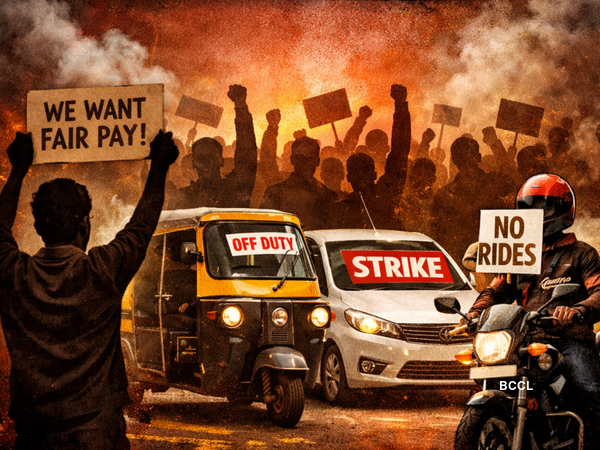
All India strike of app based transport workers on February 7 has disrupted transport services in major cities of India like Delhi Mumbai, Bengaluru, Hyderabad, and Kolkata. Delivery and transport services have also impacted many other cities across the country. This is the second strike of app based gig and platform workers since their last strike on December 31, 2025, demanding an end to exploitative working condition and fair wages.
The strike is being led by the Telangana Gig and Platform Workers Union (TGPWU) and the Indian Federation of App-based Transport Workers (IFAT). They said that their income had been dwindling while work pressure on them continue rising. Union leaders have said that government failed to notify minimum base fares under the Motor Vehicle Aggregator Guidelines, 2025. Companies continue to fix fares on their own terms, leaving workers with little say in how much they earn. On the other hand, they have to work longer hours, with rising fuel costs, maintenance expenses and zero social security.
This condition prevails despite the Union Government’s claim that they have brought gig and platform workers under newly notified Labour Codes for social security and other benefits. However, the reality is that they will not be recognized as employee, even after implementation of the labour codes, that Union Government has announced to roll out from April 1, 2026.
The Joint Platform of the 10 Central Trade Unions–INTUC, AITUC, HMS, CITU, AIUTUC, TUCC, SEWA, AICCTU, LPF and UTUC – call the labour codes anti-workers and pro-corporate and have given a call for all India strike on February 12. The workers across the country have been seriously preparing for this strike, while the call is gaining wider support from even bank and insurance employees unions, farmers unions, scheme workers, MGNREGA workers, sectoral associations, and even government employees association.
However, Bharatiya Mazdoor Sangh (BMS), which is an RSS-BJP backed and government supported Central Trade Union, has refused to join the February 12 General strike alleging the agitation ‘politically motivated’. BMS General Secretary RavindraHimte released a statement and said that they ‘consistently support constructive and pro-labour initiatives’ of the government while ‘firmly opposing and raising objections’ to policies that may adversely affect workers.
All India Bank Employees’ Association (AIBEA), All India Bank Officers Association (AIBOA) and Bank Employees Federation of India (BEFI) have announce to join the February 12 general strike against the four labour codes demanding their immediate withdrawal and also to oppose ‘increasing attacks on the working class. In a letter to their units they said, “The labour codes proposed to be implemented are totally against the workers and stringent conditions have been prescribed to register trade unions.”
Additionally, other bank unions and federations such as All India Bank Officers’ Confederation (AIBOC), National Confederation of Bank Employees (NCBE), Indian National Bank Officers Congress (INBOC) and Indian National Bank Employees Federation (INBEF) have circulated joint opposition notices related to labour reforms, though their exact strike participation may vary by region.
Several farmers unions and rural workers organisations have announced to participate in the February 12 strike, which included Samyukt Kisan Morcha (SKM), an umbrella platform of farmers union, All India Kisan Sabha (AIKS) and All India Agricultural Workers’ Union (AIAWU). They have also been opposing the recent India-US, and India-EU trade deals alleging that the government of India has compromised the farmers’ interest, which will impact farmers and employment in India.
In various regions, transport workers groups are joining their own industrial actions around the same time, signalling wider labour mobilisation. Motor transport workers’ unions (Assam) have already declared that they will join the nationwide strike protests on February 12.
Local reports indicated that construction labourers, mechanics and daily wage workers in some areas, especially of Haryana, have declared that they will stop work on February 12 in solidarity with demands of withdrawal of labour codes.
Confederation of Free Trade Unions of India (CFTUI) has said that agriculture, rural, and informal workers’ unions will also be participating in the strike in response to dismantling of MNREGA, through policy changes that dilute its rights-based nature, weaken legal guarantees, restrict access, and turn statutory employment guarantee into an indiscriminate, controlled welfare scheme.
The Assam Chah Mazdoor Sangha (ACMS) has also extended full support to the nationwide general strike. In response to the nationwide strike call, the ACMS announced that on February 12, workers and employees in all tea gardens across Assam will stage demonstrations in front of the garden managers’ offices in the morning.
Scheme workers, such as ASHA, Mid-Day Meal, and Anganwadi workers, in several states have also been planning to join the strike.
Even government employees, such as in Punjab and Haryana have intensified their campaign in support of the general strike of workers.
After the Union Budget 2026-27 was presented, Central government employees and pensioners had also warned of a one-day nationwide strike on 12 February 2026 in protest over issues related to the 8th Central Pay Commission (CPC). The Confederation of Central Government Employees & Workers (CCGEW), had warned unless their demands are addressed, the protest could go ahead.
In Himachal Pradesh, the Joint Action Committee (JAC) representing HPSEBL employees, engineers and pensioners has announced a statewide pen-down and tool-down protest on February 12. Himachal Pradesh Apple Growers’ Association (HPAGA) have also appealed to orchardists and farmers across the state to join the nationwide farmers’ strike on February 12.
News of preparation for the strike and protest demonstrations on February 12, which included roadblocks, have been pouring in from across the states in India. (IPA Service)