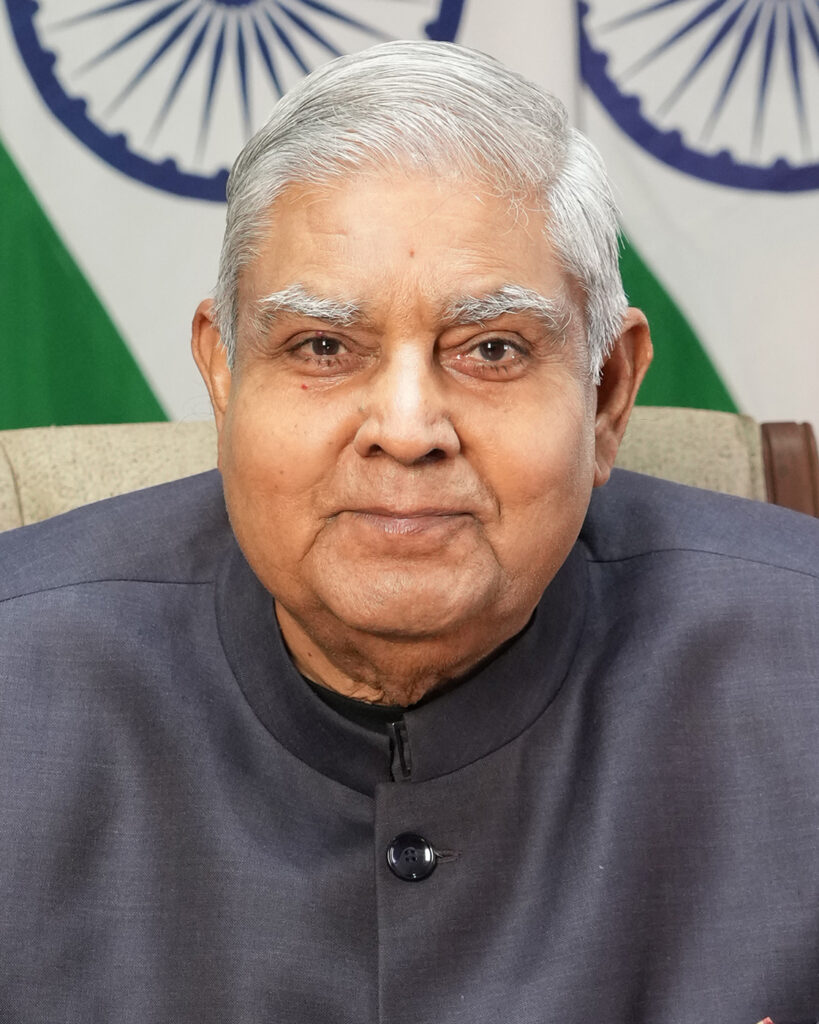
Vice President Jagdeep Dhankhar’s resignation, officially announced at the beginning of the Monsoon Session of Parliament, marks the culmination of months of escalating tensions with the government, sources familiar with the matter have revealed. While Dhankhar’s decision to step down has been attributed to health and medical reasons, insiders claim that his departure was a result of a prolonged and deepening rift with the ruling establishment.
Dhankhar’s resignation came shortly after he expressed support for a motion to impeach Justice Yashwant Varma, a move that some political observers viewed as aligning with the opposition. This decision reportedly acted as the final catalyst in the conflict, which had been brewing for quite some time. His controversial stance on judicial matters, paired with an increasing sense of alienation from the ruling party, had set the stage for the eventual resignation.
The tension between Dhankhar and the government first became apparent several months ago, with sources suggesting that there were disagreements over key administrative decisions and his role within the parliamentary framework. Dhankhar, a former Governor of West Bengal, had previously held a position of significant influence within the political ecosystem. However, his alignment with certain opposition factions led to a gradual breakdown in relations with the current government, according to sources.
A crucial flashpoint occurred when Dhankhar, acting in his capacity as Vice President, endorsed the opposition’s push for the impeachment of Justice Varma. The motion, which centred on allegations against the Supreme Court judge, was a significant development in the ongoing tussle between the executive and judiciary. Dhankhar’s willingness to accept and support the motion left many in the government uneasy, leading to heightened friction within political circles.
Political analysts have noted that Dhankhar’s political trajectory has been marked by an increasingly independent stance. His decision to back opposition-driven motions and his outspoken comments on the functioning of the judiciary set him apart from his earlier position of neutrality. This shift in his role, according to insiders, became a point of contention with the ruling party, which has consistently emphasised a more cooperative relationship between the executive and judiciary.
Government sources, speaking off the record, have indicated that Dhankhar’s resignation was a decision made with great personal reflection, and while his health issues were cited as the official reason, they also acknowledged the underlying political factors at play. The Vice President’s resignation has raised questions about the future direction of his political affiliations, particularly as he has made no secret of his frustrations with the current administration’s stance on certain issues.
Dhankhar’s tenure as Vice President had been marked by instances of friction with the government. His tenure began with a promise of political neutrality, but over time, he appeared to align more closely with opposition elements, particularly in matters related to judicial independence and the administration of justice. His support for the impeachment motion, although framed as a move in defence of institutional integrity, was perceived by many as an act of defiance against the government’s control over key judicial appointments.
Opposition leaders have expressed mixed reactions to Dhankhar’s resignation, with some viewing it as a loss to the larger cause of judicial independence. Others, however, have been quick to point out that Dhankhar’s resignation leaves a vacuum in a crucial institutional role, one that could have been used more effectively to challenge government overreach.
The resignation also raises broader questions about the functioning of the Vice President’s office, especially in light of recent events that have highlighted the political entanglements within the highest echelons of power. The Vice President’s role, traditionally seen as a ceremonial one, has over the years become more politically charged, with occupants of the office playing increasingly prominent roles in the political discourse.
 Diplomatic Borders Between Pakistan and Bangladesh Open