By C Adhikesavan
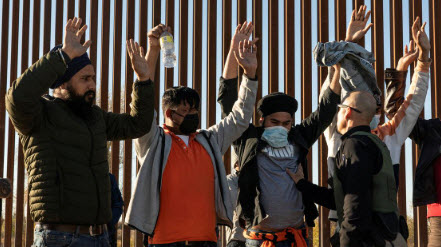
More than 5,200 Indian nationals were deported from the United States in the first 15 days of August, according to reports. The figure marks a sharp acceleration in immigration enforcement. What makes the number significant is that it is not limited to people who entered the country without permission. Many of those affected had arrived on valid visas, including H-1B work visas, O-1 visas for individuals with extraordinary ability, and student visas. The cases reveal how quickly legal status can unravel. Some students faced action over alleged minor violations such as traffic offences. Others were accused of posting criticism of the US administration on social media.
In one reported instance, an H-1B worker in Texas lost his job and later took temporary work at a restaurant. Immigration authorities raided the establishment and detained him for an alleged visa violation. Under normal rules, H-1B holders have a limited grace period after job loss to find a new sponsoring employer. That window is often only 60 days. When it closes, the path back to India can open suddenly.
These developments form part of a larger pattern.
In 2025, official figures cited by India’s Ministry of External Affairs recorded 3,567 Indian deportations from the United States. Earlier high-profile removals, including one involving a military aircraft that drew controversy over the treatment of deportees, had already signalled tougher enforcement. A removal order does not always mean immediate departure. Appeals, legal proceedings and voluntary departure remain possible. Yet the overall message is clear: the American immigration system has become far less forgiving.
The vulnerability of visa dependent workers is especially stark. One professional from Indore who had studied and worked in the United States described receiving a 15-minute phone call that ended his job. With only about two months to secure a new sponsor, he applied for hundreds of positions. Recruiters showed interest until the question of work authorisation arose, after which responses stopped. Savings dwindled. He eventually took a temporary cleaning job at a hotel in North Carolina in exchange for food and accommodation. Months earlier his company had put him up in Marriott hotels on business trips. The contrast captured how rapidly a carefully built professional life can collapse when status depends on continuous employment. investigation under the Passport Act.
Other cases add further complications. A 51-year-old man from Gujarat who had lived in the United States for about 15 years was deported and then arrested in India after authorities found that the passport he carried appeared to have been tampered with. Even though the Indian embassy had issued an emergency certificate, the alleged use of a forged document turned an immigration problem into a criminal investigation under the Passport Act. Desperate decisions made abroad can follow people home.
Entry itself is no longer guaranteed by a valid visa. A family from Ahmedabad holding visitor visas was questioned at length at a New York airport after officers found household items in their luggage. Combined with the presence of close relatives in the United States and a visa nearing expiry, the items raised suspicions about intent to stay permanently. Their visas were revoked and they were placed on a return flight. Immigration officers examine the full picture, luggage, travel history, family ties and answers given, rather than the passport alone.
These pressures arrive against a backdrop of other challenges for the Indian diaspora. Reported hate-crime offences motivated by anti-Sikh and anti-Hindu bias rose in 2025 even as overall hate-crime numbers declined, according to FBI data. An Indian couple living in the United States has publicly advised young Indians to think carefully before migrating, pointing to visa uncertainty, green-card delays, employer dependence, distance from family and the personal costs of starting over.
In Jersey City, home to a large Gujarati community, residents have protested proposed property-tax increases of around 15.5 per cent, arguing that ordinary families should not bear the full burden of municipal budget shortfalls.
Technology is also reshaping border control. An Indian-origin entrepreneur has pitched humanoid robots for security tasks along the US southern border, arguing that machines can operate in extreme terrain and weather while humans retain decision-making authority. The discussion remains conceptual, yet it signals a future in which surveillance and enforcement may rely more heavily on automation.
Taken together, the stories point to a changed reality. For years the message to ambitious Indians was straightforward: study hard, secure an H-1B, and build a better life in America. That path still exists, but it now carries clearer risks. A job loss, a paperwork gap, a social-media post, or even the contents of a suitcase can alter status with startling speed. The distance between legal residence and removal has narrowed.
For students, workers and families already in the United States, the practical lesson is strict compliance with visa conditions, careful documentation, and realistic contingency plans. For those still considering the move, the calculation has grown more complex. Opportunity remains, but so does uncertainty. The American dream has not disappeared. It has simply acquired a sharper warning label. (IPA Service)
Courtesy: New Age