By T N Ashok
NEW YORK: The most consequential question emerging from three very different election controversies in the United States and India is deceptively simple: who controls the machinery that determines who is entitled to vote?
In America, the Supreme Court has just allowed the Trump administration, at least temporarily, to use an expanded federal database to help states verify the citizenship status of registered voters. In the same American political season, Texas and California have engaged in an extraordinary mid-decade battle over congressional district boundaries, each seeking to counter the other’s attempt to alter the political balance of the House.
And in India, an investigation by the Indian Express has exposed deep internal disagreements within the Election Commission over the Special Intensive Revision (SIR) of electoral rolls, an exercise that has resulted in more than 13 crore names being removed from draft rolls across 30 states and Union Territories.
The three controversies are not the same. They arise from different constitutional systems, involve different institutions and employ different mechanisms.
But they converge around one fundamental democratic question: how far can the state go in changing the electoral machinery without undermining citizens’ confidence that their votes will be counted and their eligibility determined fairly?
The American voter database case: The controversy is not about the Federal Election Commission, the independent agency that administers and enforces federal campaign-finance law. It concerns the Trump administration’s expansion of the federal government’s Systematic Alien Verification for Entitlements — SAVE — database, administered by the Department of Homeland Security. The administration wants states and local election authorities to use the system to verify the citizenship status of people registered to vote or seeking registration.
Under the expanded arrangement, information supplied by a state or local authority can be checked through federal databases, including Social Security records. If citizenship cannot be confirmed, the individual may be contacted and asked to provide proof of citizenship. The League of Women Voters and other organizations challenged the changes, arguing that they violated federal privacy protections and administrative-law requirements. A lower federal court restricted the expanded system. The Trump administration appealed.
On September 25, the Supreme Court intervened. The justices granted the government’s request for a stay, meaning that the expanded SAVE system can operate while the underlying litigation proceeds. The order is therefore not a final Supreme Court determination that every aspect of the program is lawful. It is an interim ruling on whether the lower-court restrictions should remain in effect during the appeal.
For President Trump and Republicans, this is consequently an operational gain, because the administration has greater room to deploy the database before the 2026 midterm elections. But describing it simply as a Republican electoral victory would go beyond what the Court actually decided. The administration says the objective is to help states identify ineligible voters and maintain accurate voter rolls. Opponents argue that database errors could wrongly place eligible citizens — including naturalized citizens — under suspicion or require them to produce additional documentation. The Supreme Court majority’s order, however, did not finally resolve those factual and legal disputes. That distinction matters.
It is not the same battle as Texas versus California. The redistricting confrontation is fundamentally different. There, the question is not who is on the voter roll, but where voters are placed geographically for congressional representation.
Texas undertook an unusual mid-decade redrawing of its congressional districts in 2025. The move was widely understood as an attempt to create additional Republican-leaning seats before the 2026 midterms. California responded with Proposition 50, approved by voters in November 2025. It temporarily replaced the state’s existing congressional map with legislatively drawn districts through the 2030 elections. The number of California congressional districts did not change; the boundaries did.
The Supreme Court ultimately allowed California’s map to be used in the 2026 elections, after previously allowing Texas to use its new map. Contemporary estimates suggested the Texas map could produce as many as five additional Republican seats, while California’s map could potentially produce as many as five additional Democratic seats. These are estimates of possible electoral effects, not guaranteed results.
Thus, the Texas-California confrontation is essentially a struggle over representation. The SAVE controversy is about voter eligibility verification. One changes the boundaries of constituencies; the other changes — or potentially changes — the administrative process through which individual voters establish their eligibility. There is, however, an important meeting point. Both involve the enormous power of election administration.
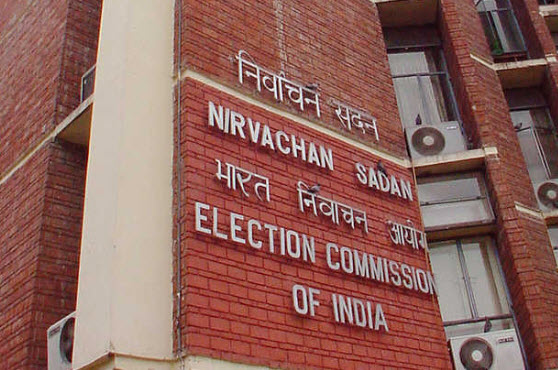
India’s controversy is larger numerically and, institutionally, potentially more unsettling. The Election Commission of India has been conducting a Special Intensive Revision, or SIR, of electoral rolls. According to The Indian Express, more than 13.37 crore names had been deleted from draft rolls across 30 states and Union Territories, representing about 14.1 per cent of the pre-SIR rolls. But “deleted from draft rolls” should not automatically be translated into “13 crore legitimate voters have been disenfranchised.” That is a crucial distinction. The SIR is a revision process. Names can be challenged, documents supplied, appeals filed and eligible voters restored.
Indeed, the process has generated an enormous appellate workload. In West Bengal alone, the Election Commission told the Supreme Court that 38.20 lakh appeals had been filed against decisions concerning deletion or inclusion, while only about 1.02 lakh had been disposed of by September 18. The more explosive development, however, came from inside the Election Commission itself. The Indian Express reported that Election Commissioners Sukhbir Singh Sandhu and Vivek Joshi had formally raised objections at least 14 times over ten months concerning decisions connected with voter registration, deletions and the management of electoral data.
Among the issues they reportedly raised were concerns about being kept out of parts of the decision-making process and about centralisation of voter-data access. That turns the controversy from an ordinary voter-roll dispute into an institutional question about the functioning of India’s constitutional election authority. The Election Commission has responded that differing views are a normal part of institutional deliberation and that all officers are entitled to offer suggestions before final decisions are taken.
That response is important because it demonstrates that the matter is not accurately described simply as a dispute between the government and the Election Commission. It involves questions inside the Commission itself.
The American SAVE controversy is about federal access to and use of citizenship data for voter-roll verification. India’s SIR controversy is about the scale and administration of electoral-roll revision and disagreements over how decisions were made inside the Election Commission.
The American redistricting controversy is different again: it is about the political geography of congressional representation. Yet all three expose the same vulnerability of modern democracies.
Elections are no longer simply about what happens inside a polling booth on election day. They begin much earlier — with databases, voter registration, citizenship verification, electoral boundaries, software, algorithms, administrative notices and decisions about whether an individual’s name remains on a roll.
The political contest therefore increasingly extends into the machinery surrounding the vote. America has constitutional and institutional checks involving states, Congress, federal agencies and courts. India has a constitutionally independent Election Commission, judicial oversight and statutory procedures for electoral-roll revision.
Neither system is immune from controversy. And neither the American nor Indian episode establishes, by itself, that an election has been stolen or that millions of legitimate voters have actually been prevented from voting.
What they do establish is something more fundamental: the integrity of elections depends not only on preventing fraud at the ballot box, but also on making the administrative process that precedes the ballot transparent, reviewable and trusted.
The American Supreme Court has now permitted the Trump administration’s expanded SAVE system to operate while litigation continues. The Texas-California redistricting battle has demonstrated how aggressively political actors can seek to reshape representation between censuses. And India’s SIR has placed the Election Commission itself under unprecedented scrutiny because of the scale of deletions and internal objections.
The common thread is not that the three controversies are identical. They emphatically are not.
It is that the democratic battle is moving upstream — from counting votes to controlling the systems that determine who votes, where they vote and which representatives they are grouped together to elect. That may ultimately be the more important electoral story of 2026. (IPA Service)