By Dr Arun Mitra
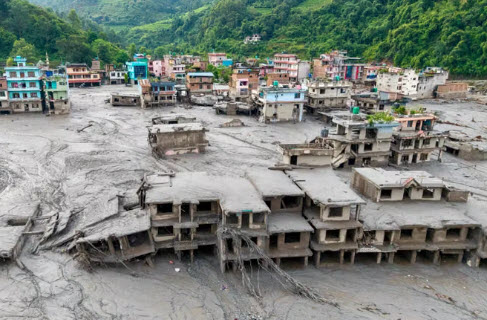
Forest fires across different parts of Europe, devastating heat waves in many western countries, growing concern over El Niño & similar phenomena and the rapid melting of glaciers are alarming indicators of a planet under severe stress. The formation of large glacial lakes poses an additional danger, as the breaching of their banks can unleash enormous volumes of water with devastating consequences, as witnessed in recent disasters in the Himalayan region, including Nepal. These developments demand urgent and coordinated international action.
The United Nations Secretary-General, António Guterres, has repeatedly warned that the world is running out of time to limit global warming to 1.5°C and has called for an immediate end to dependence on fossil fuels. Recent UN assessments indicate that possibility of temporarily exceeding 1.5°C makes rapid and decisive action even more urgent.
Much of the discussion on climate change has been focused on industry, transport, energy production and other activities involving intensive fossil-fuel consumption. More recently, attention has also been drawn to the enormous energy requirements of artificial-intelligence data centres and their associated carbon emissions. However, one of the serious and most systematically neglected sources of emissions is military activity.
Neta C. Crawford, in her article, ‘Mission Impossible? Quantifying Military Emissions: Military and Wartime Emissions Are Difficult to Track—but Too Important to Ignore’, published on 24 August 2026, raises a fundamental question: how much do war, preparations for war, military production and post-war reconstruction contribute to the climate crisis?
Her answer is deeply troubling: nobody knows with certainty, because there is still no comprehensive accounting of greenhouse-gas emissions from the world’s militaries, military industries and wars. This lack of reliable information is itself a serious problem.
The 1997 climate conference in Kyoto, Japan—the Third Conference of the Parties (COP3) to the United Nations Framework Convention on Climate Change (UNFCCC)—resulted in the historic Kyoto Protocol. It established mechanisms and reporting frameworks through which countries were expected to account for and reduce their greenhouse-gas emissions. Yet military emissions have remained inadequately accounted for and insufficiently regulated.
Whereas the ordinary citizens and civilian industries are asked to reduce their carbon foot print the enormous use of fossil fuels in the military activity is justified in the name of national security, regional security, deterrence and peacekeeping.
With over 750 military installations across more than 80 countries and territories the US is the largest military spender. The scale of the military-industrial complex is enormous. According to the Stockholm International Peace Research Institute (SIPRI), US arms manufacturers dominate the global arms industry, with six US companies among the world’s ten largest arms producers in 2024 and 39 among the top 100. US arms companies supply weapons to armed forces across the world. The United States also remains the world’s largest arms exporter.
Yet comprehensive and transparent accounting of the greenhouse-gas emissions associated with its global military operations remains inadequate. This is because of fear of a serious accounting of military emissions which could expose the enormous environmental cost of maintaining military power.
The climate cost of war involves preparation and arms production to military operations, destruction and reconstruction. It is therefore imperative that the international community develop a transparent and comprehensive system for measuring the greenhouse-gas emissions associated with military activities, arms production and warfare.
The issue extends beyond conventional military operations. Nuclear weapons programmes themselves have a substantial environmental footprint. The nuclear facilities and associated activities generate greenhouse-gas emissions. The environmental consequences of nuclear weapons production therefore extend far beyond the immediate devastation caused by their use.
The continuation and escalation of on-going wars increase the possibility of direct confrontation between nuclear-armed states. Any such escalation could lead to the use of nuclear weapons, with catastrophic consequences for humanity and the environment. There has already been too much talk of use of tactical nuclear weapons by the US and Russia. The US has also talking of use of nuclear weapons to get the control of Strait of Hormuz. This is an even more frightening dimension to this crisis.
International Physicians for the Prevention of Nuclear War (IPPNW) has repeatedly warned that even a limited nuclear exchange could produce an enormous humanitarian catastrophe, with devastating consequences for health systems, food production, the environment and global climate. A large-scale nuclear war could produce consequences far beyond the regions where nuclear weapons were detonated. Fires, radioactive contamination, disruption of agriculture and atmospheric changes could threaten food supplies and human survival on a global scale. The world therefore cannot treat nuclear disarmament as a distant political objective. It is an essential component of climate security and human survival.
Hasan Abdullah in his book ‘Climate Chaos – How Violence Drives it – and the best Bet for Change’ points that the production and use of weapons significantly increase entropy, disrupt ecosystems, and fuel climate chaos. Simultaneously, they reinforce the concentration of power and resources, further entrenching secrecy and hegemony.
Climate change is often presented primarily as an environmental or technological problem. It is also a problem of political priorities. Resources that could be used to strengthen public health systems, eradicate poverty, ensure food security, develop renewable energy, protect forests and adapt to climate change are instead being diverted on an enormous scale towards weapons and military preparedness.
The world needs a fundamental change in direction. Humanity cannot simultaneously prepare for war and claim to be serious about preventing climate catastrophe. We cannot destroy forests, cities and ecosystems in wars and then expect technology alone to repair the damage. Nor can we continue to expand military expenditure while millions remain deprived of basic healthcare, food, housing and education. The climate crisis, the nuclear threat and militarisation must therefore be confronted together. These are deeply interconnected threats to human survival. The world cannot afford to address them in isolation. A transparent and comprehensive system for measuring the greenhouse-gas emissions associated with military activities must be developed so as to effectively address the issue.
The demand should be clear: measure and disclose military emissions; reduce dependence on fossil fuels; end wars through political and diplomatic means; prevent the use of nuclear weapons; and redirect resources from militarisation towards human development and planetary protection. (IPA Service)