By Dr. Gyan Pathak
With Karnataka Governor Thaawarchand Gehlot’s walk out from the Karnataka Legislative Assembly on January 22, it has become obvious that governors in the country in opposition ruled states have started working on a well organized strategy against the governments that they lead as constitutional heads, which could not have been possible without coordination or direction from the Centre which they are supposed to report on various issues. It seems, the Centre is trying to control the opposition’s narrative of their development and welfare programmes by interfering through Governors.
Creating scene by the Karnataka governor is the third incident within two days. On January 20, Tamil Nadu Governor R N Ravi walked out of the Legislative Assembly of the state, while Kerala Governor Rajendra Vishwanath Arlekar tampered the speech approved by the state government by deleting and adding certain portions.
According to the convention, Governors are supposed to read the speech written and approved by the governments. Article 176 of the Constitution mandates a special address by the Governor to State legislatures at the commencement of the first session after a General Election to the Assembly and at the commencement of the first session of each year. Nevertheless, on one or the other pretexts, governors have tampered or not read the speeches approved the cabinet of the opposition ruled state, or even walked out.
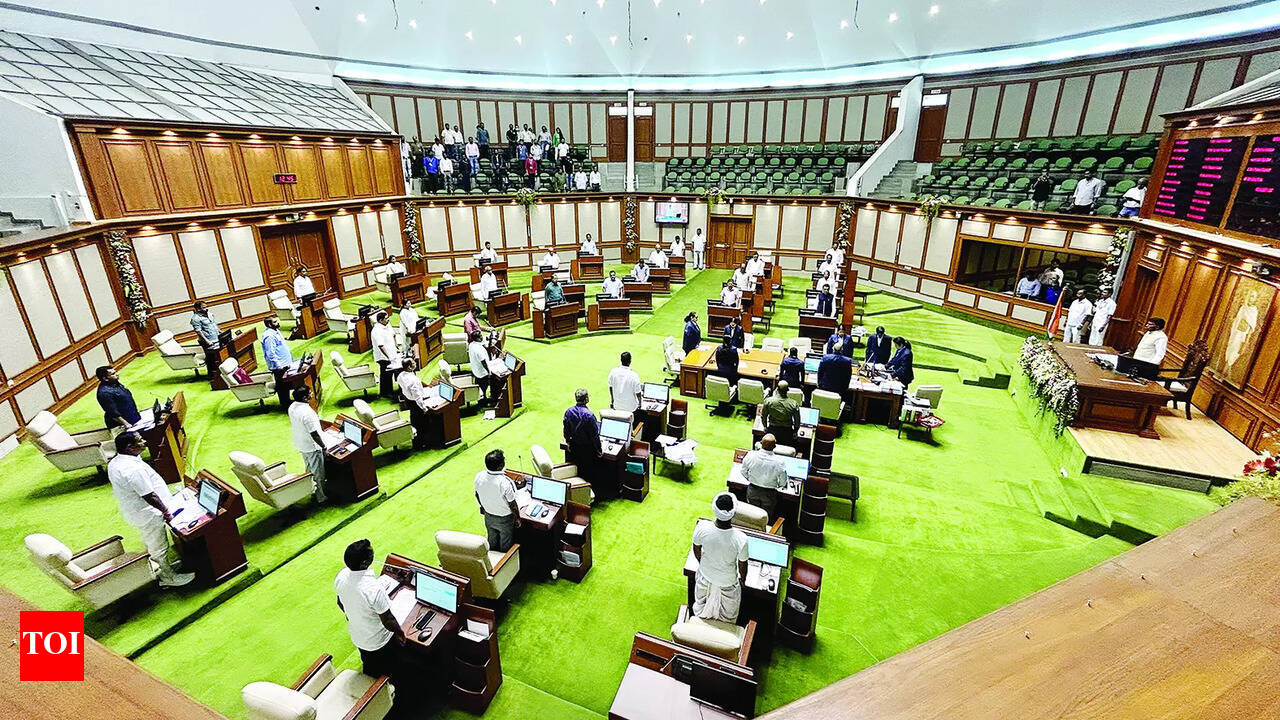
A chaos erupted inside the Karnataka Legislative Assembly when Governor Thaawarchand Gehlot walked out of the House after delivering a brief address of only two lines on the first day of the joint session of the bicameral House.
Governor Gehlot expressed his reservations over 11 paragraphs in the speech prepared by the Karnataka government, which included a strong criticism of the Central government for dismantling MGNREGA the only rural employment guarantee programme of the country and introducing in its place the VB-G RAM G Act. The special legislative session from January 22 to 31 has been convened by the Karnataka government to discuss the repeal of the MGNREGA, and its replacement with the VB-G RAM G Act.
The two line address of Governor Gehlot was, “My government is committed to doubling the speed of economic and social progress in the State. Jai Hind, Jai Karnataka.” After concluding his speech in this manner, he left the House. He did not read the speech.
A Congress government is ruling Karnataka. After the walk out of the Governor Gehlot, Chief Minister Siddaramaiah condemned his action and labelled it a “Violation of the Constitution of India.” He said, “The governor has acted as a puppet of the central government. To cover up their mistakes, the central government has made the governor read a speech they prepared. This is a violation of the constitution.”
CM Siddaramaiah said, “The governor cannot read a speech he prepares, he has to read the speech prepared by the cabinet.” It is constitutional function to address a joint session every year or when a new government takes charge, Siddaramaiah explained. He also said, “We have opposed this and the cabinet included this protest and our demand to bring back MGNREGA, 2005, in the governor’s speech. But the governor has not read the speech prepared by the cabinet and by reading a one para speech he prepared, he has violated constitutional norms. This is also an insult to the house of elected representatives. Our government, party and MLAs will protest this. We will take up a protest across the state.”
Kerala Legislative Assembly also witnessed an extraordinary scene on January 20 after the Governor Rajendra Vishwanath Arlekar left the House and Chief Minister Pinarayi Vijayan corrected his policy address. CM Vijayan, who leads a Left Democratic Front government in the state, announced that Governor Arlekar made changes to paragraphs 12, 15, and 16 in his policy speech and made certain additions elsewhere.
Cabinet approved paragraph 12 read, “Despite these social and institutional achievements, Kerala continues to face severe fiscal stress arising from a series of adverse Union government actions that undermine the constitutional principles of fiscal federalism” which Governor changed “Despite these social and institutional achievements, Kerala continues to face severe fiscal stress arising from curtailment of advances.”
Governor Arlekar omitted “Bills passed by State legislatures have remained pending for prolonged periods. My government has approached the Supreme Court on these issues, which have been referred to a Constitution Bench” in para 15.
Cabinet approved para 16 was “Tax devolution and Finance Commission grants are constitutional entitlements of States and not acts of charity, and any pressure on constitutional bodies entrusted with this task undermines federal principles” which Governor prefaced with “May government feels … .”
CM Vijayan said, “The Governor addresses the Legislative Assembly at the start of the first session of a year. Since the Governor presents the policy of the State government in the House, paragraphs 12, 15 and 16 as approved by the Cabinet will prevail.”
On January 20, Tamil Nadu Governor RN Ravi walked out the assembly third year in a row, alleging disrespect of the National Anthem of India and citing 12 other reasons for doing so, which prompted DMK leader and CM M K Stalin to assert that he will work with “like-minded parties to amend the Constitution of India to do away with the practice of customary address by Governors at the beginning of the first session of Legislative Assemblies every year. Governor Ravi read the speech prepared by the state government only once in 2022, after his becoming Governor in 2021. In 2023 he skipped certain portion and added his own words in the speech. He walked out the House without reading the speech in 2024, 2025, and 2026. Governor Ravi disagreed with the text and alleged that “several crucial issues troubling the people are ignored… .”
The pattern of the Governors actions suggest that they are politically active against the state governments ruled by the opposition, and they wanted to thwart the opposition government’s narrative on their policies, which is not Governor’s business. It is not the first time Governors are behaving in such a matter against opposition led government. Earlier, they have been sitting over the Bills passed by the Legislative Assemblies, which attracted Supreme Court’s intervention. Centre has been using Governors as a tool, which was obvious in the case of Delhi, on which Supreme Court ruled in favour of the state government. Opposition has always been alleging that the Centre is misusing Governors as their tools. (IPA Service)