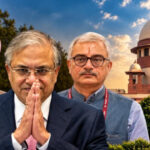
Justices Vikram Nath and Sandeep Mehta, examining the papers in chambers, ruled on November 17 that their November 7, 2025 order contained no apparent error justifying a review. The judges did not grant permission for oral arguments, despite the petitioners asking to be heard in open court. The decision leaves undisturbed the earlier dismissal of a challenge brought by worshippers who opposed the removal of the mosque near the Mahakal Temple complex.
The order, issued in the case of Mohammed Taiyab versus the State of Madhya Pradesh and others, states that the judges had examined the review petition and the grounds advanced in support of it. They found no basis for reopening the previous decision. The application seeking an oral hearing was rejected, and pending applications were disposed of.
The proceedings were conducted by circulation, a procedure under which judges consider a review petition on the written record rather than automatically scheduling arguments in open court. The ruling does not contain a fresh, detailed examination of the competing claims about the acquisition or demolition. Its immediate effect is to maintain the Supreme Court’s refusal to interfere with the earlier High Court judgment.
The original challenge came from 13 residents who said they had worshipped at Takiya Masjid. They contended that the mosque, which they described as approximately 200 years old, was demolished in January 2025 following the acquisition of land intended to enlarge parking facilities serving the adjoining Mahakal Temple and Mahakal Lok complex.
The petitioners maintained that the mosque had been notified as waqf property in 1985 and remained a functioning place of worship until its demolition. They argued that the authorities had acted unlawfully and sought reconstruction of the building, together with an inquiry into the conduct of officials involved in the exercise.
Their objections cited the Places of Worship (Special Provisions) Act, 1991, provisions governing waqf property and the Right to Fair Compensation and Transparency in Land Acquisition, Rehabilitation and Resettlement Act, 2013. They also questioned the acquisition process, alleging that compensation had been directed to people who lacked lawful entitlement. Those assertions formed part of the petitioners’ case and were not established by the Supreme Court’s review order.
The Madhya Pradesh High Court had rejected the worshippers’ application for reconstruction on September 4, 2025. Justice Pranay Verma held that proceedings concerning acquisition of the relevant land had already been adjudicated and that the mosque committee had withdrawn its own challenge to the acquisition in April that year.
The High Court concluded that the worshippers could not reopen the acquisition question through a separate petition after the mosque committee’s withdrawal and earlier judicial decisions concerning the same land. It also noted that the Madhya Pradesh Waqf Board had instituted separate proceedings concerning title before the Waqf Tribunal in Bhopal, but found that the existence of that suit did not alter the outcome of the petition before it.
A subsequent appeal by the worshippers failed, leading to their approach to the Supreme Court. On November 7, 2025, the bench declined to overturn the High Court’s ruling. The review application then sought to persuade the same court that the earlier refusal required reconsideration.
The acquisition itself arose from a proposal by the Shri Mahakaleshwar temple management committee for additional vehicle parking. An earlier High Court judgment recorded that the state authorities had issued an acquisition notification in November 2022 covering approximately 2.135 hectares, with compensation awards following in 2024.
That judgment, concerning challenges by affected residents, also addressed disputes over compensation and rehabilitation. The High Court pointed to a statutory route for contesting the amount or distribution of compensation and related resettlement entitlements, while declining to invalidate the acquisition. The court granted additional time for affected appellants to pursue those remedies.
The November 17 Supreme Court record identifies the review as arising from special leave petition number 31842 of 2025. Alongside the request for an open-court hearing, the record lists an application seeking a separate interim stay. Both were disposed of when the review petition was dismissed. The court’s signed order was issued in New Delhi and records the names of both judges.