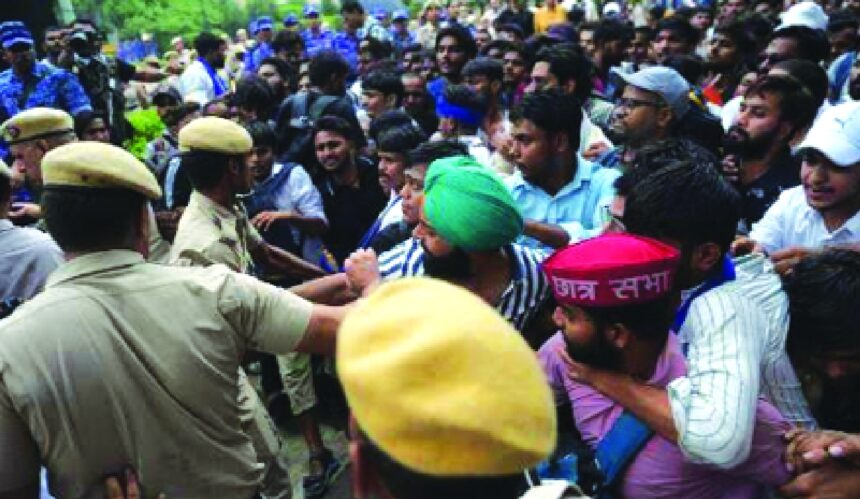
Singh’s intervention has added legal weight to criticism surrounding the July 20 “Chalo Sansad” march in New Delhi, where students, lawyers and CJP supporters encountered police barricades as they attempted to move from Jantar Mantar towards Parliament. Baton charges and tear gas were used during the confrontation, with protesters reporting injuries and alleging excessive force.
The SCBA president has sought a judicial inquiry into the episode and action against officers found responsible for unprovoked or disproportionate use of force. His position is that maintaining public order cannot become justification for suppressing constitutionally protected dissent, particularly when the demonstrations concern young people demanding accountability over examinations that determine access to professional education.
Singh has also highlighted allegations that lawyers participating in the demonstration were assaulted. His representation to Prime Minister Narendra Modi and Home Minister Amit Shah cited reports of force being used against students, women and minors, along with allegations that journalists and people providing medical assistance faced obstruction.
The controversy has since moved beyond political argument into the courts. The Supreme Court, while examining issues arising from the July 20 confrontation, observed that participation in an agitation by itself could not justify a lathi-charge. Chief Justice of India Surya Kant said both violence by demonstrators and police excesses were unacceptable and indicated that broader guidelines could be considered for handling public protests.
That judicial observation has strengthened calls for an independent examination of what happened at Jantar Mantar and adjoining areas. Lawyers’ organisations have argued that accountability is necessary not only to determine whether individual officers exceeded their authority but also to establish clearer limits governing police responses to peaceful assemblies.
The agitation emerged from mounting anger over the NEET-UG 2026 paper leak and wider complaints about examination integrity. The controversy affected about two million medical entrance candidates and became a focal point for dissatisfaction among students already confronting intense competition, unemployment pressures and recurring allegations of irregularities in public examinations.
CJP, built around a social media-driven youth mobilisation initiated by political communications strategist Abhijeet Dipke, transformed that anger into a broader campaign demanding examination reforms and political accountability. Its demonstrations drew large crowds in the capital and gained traction well beyond conventional student organisations, making the movement one of the most consequential youth-led challenges faced by the Modi government.
The protests also expanded beyond the original demand for action over the NEET leak. Campaigners raised the cases of students who died by suicide amid examination pressures, sought compensation for affected families and demanded withdrawal of cases filed against demonstrators. The movement’s rapid growth placed education policy, recruitment examinations and treatment of protesters firmly on the national political agenda.
Singh’s stance is significant because it comes from the leadership of one of the country’s most influential lawyers’ bodies rather than from an opposition organisation. The Supreme Court Advocates-on-Record Association also expressed concern over the handling of protesters, widening the institutional criticism from within the legal fraternity.
The debate over student protest rights intensified again after the Bar Council of India intervened in a dispute involving NALSAR University of Law students who objected to Surya Kant’s participation in their convocation. The Supreme Court subsequently said students had a right to protest peacefully and restrained bar councils from taking punitive action connected with the dispute.
CJP leaders have meanwhile continued to challenge police responses to demonstrations elsewhere, including action against students and job aspirants protesting recruitment irregularities in Ranchi. Dipke questioned why batons and tear gas should be directed at young demonstrators while political protests were often handled differently.
(IPA Service)