Jha said the INDIA bloc’s mobilisation on Sunday reflected growing support for its campaign over electoral accountability. He maintained that Congress leader Rahul Gandhi had placed the BJP on the defensive by sustaining scrutiny of voter lists and the Election Commission’s conduct.
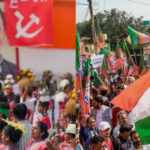
His assessment followed a dispute over attendance at the November 1 demonstration, where Opposition leaders demanded the resignation of Chief Election Commissioner Gyanesh Kumar and challenged the Special Intensive Revision of electoral rolls. The BJP disputed the organisers’ expectations of a crowd numbering up to one million.
BJP parliamentarian Sambit Patra questioned the turnout at a press conference, citing footage which he said showed substantial empty space and unoccupied seating at the venue. He accused Opposition leaders of exaggerating participation and challenged their account of the rally’s success.
Patra said approximately 28,000 chairs had been arranged and claimed that between 5,000 and 7,000 remained vacant when footage was recorded during the afternoon. He also argued that the stage and other enclosures reduced the area available to spectators.
Those figures were Patra’s estimates, not an independently established count. No authoritative attendance figure has emerged, making it impossible to determine the precise size of the gathering or substantiate either side’s broader assertions about its political significance.
Jha countered that the BJP’s emphasis on crowd calculations overlooked the participation of Opposition parties and the issues raised by demonstrators. His contention that the government was unnerved represents a political interpretation rather than evidence of a change in the ruling party’s position.
The rally brought together prominent figures from several INDIA bloc parties, including Congress president Mallikarjun Kharge, Samajwadi Party leader Akhilesh Yadav, Trinamool Congress chief Mamata Banerjee and Rashtriya Janata Dal leader Tejashwi Yadav. Their appearance alongside Gandhi provided a visible demonstration of cooperation among parties with differing regional interests.
The Opposition’s central demand concerned the electoral roll revision, which its leaders allege has excluded eligible citizens and compromised confidence in elections. They have pressed for accountability from the Election Commission and questioned the handling of voter registrations and deletions.
The Election Commission has defended the revision process as a means of identifying duplicate, deceased and otherwise ineligible entries. It maintains that eligible voters have procedures available to challenge exclusions and seek restoration of their names. Allegations of deliberate electoral manipulation remain contested.
Gandhi used the demonstration to accuse the authorities of undermining voting rights and to call for Kumar’s removal. He presented the dispute as a question of democratic representation rather than merely an administrative disagreement over electoral records.
The BJP rejected that characterisation. Its leaders accused the Opposition of undermining public confidence in constitutional institutions and disputed Gandhi’s allegations about electoral legitimacy. Patra also challenged arguments linking Kumar personally to the 2024 parliamentary election, pointing out that he became chief election commissioner in 2025.
The competing positions have shifted attention towards both the credibility of the revision exercise and the ability of Opposition parties to coordinate protests. Jha’s comments focused on the latter, portraying the shared platform as politically more important than competing estimates of attendance.
The demonstration drew participants from several states, including people who described difficulties involving voter registration and electoral records. Such accounts formed part of the Opposition’s case for closer scrutiny, although individual complaints do not establish that irregularities were systematic or politically directed.
Organisers had projected attendance approaching one million before the event. Police preparations, however, were based on a considerably smaller anticipated gathering, with security arrangements extending beyond the main ground to nearby roads and access points.
Authorities deployed thousands of police personnel and used surveillance cameras and other monitoring measures to manage crowds. The venue was divided into designated areas, with arrangements for entrances, movement and security around the rally.
The turnout dispute also highlighted a distinction between the number of people inside the ground at a particular moment and the total passing through the surrounding streets during the demonstration. Neither measure was independently verified.
The protest was organised under the slogan “Vote Bachao, Desh Bachao”, meaning save the vote, save the country. Participants also raised concerns extending beyond electoral administration, including living costs and public services.