



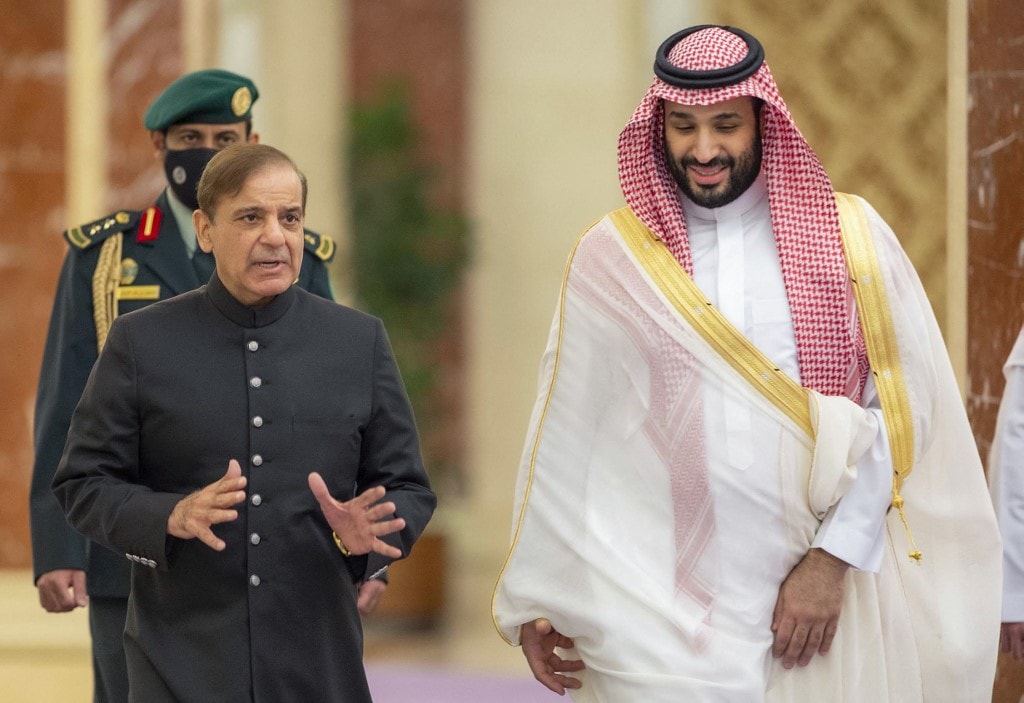
Saudi Arabia and Pakistan have formalised a Strategic Mutual Defence Agreement under which either state may invoke the pact if the other is attacked. The treaty was signed by Crown Prince Mohammed bin Salman and Prime Minister Shehbaz Sharif in Riyadh, declaring that “any aggression against either country shall be considered an aggression against both.”
The agreement commits both countries to expand defence cooperation and to strengthen joint deterrence against threats, using all necessary military capabilities. While it stops short of explicit guarantees of nuclear use, officials acknowledge it could encompass nuclear deterrence if the circumstances demand.
Negotiations for this framework had been underway for over a year. It builds on a long history of military collaboration, including training exchanges and previous defence agreements. Sharif was on a state visit to Saudi Arabia for the signing.
The pact emerges amid growing unease across the Gulf and South Asia over shifting security alignments. A recent Israeli airstrike on Hamas leadership in Doha has triggered concern in Gulf capitals about reliance on external security guarantees. In this context, Riyadh appears to be diversifying its alliances.
Pakistan’s status as a nuclear-armed state adds depth to shared deterrence, though both parties emphasise the defensive nature of the agreement. Saudi Arabia has publicly stated its commitment to non-proliferation even while maintaining robust bilateral relations with India. Pakistani officials similarly describe the pact as part of “brotherhood, Islamic solidarity and shared strategic interests.”
India has expressed cautious interest in the pact, monitoring developments closely. New Delhi emphasises that its bilateral relations with Saudi Arabia remain strong, while analysts warn that the new alignment could complicate the regional strategic balance, particularly given the nuclear dimension.


