By T N Ashok
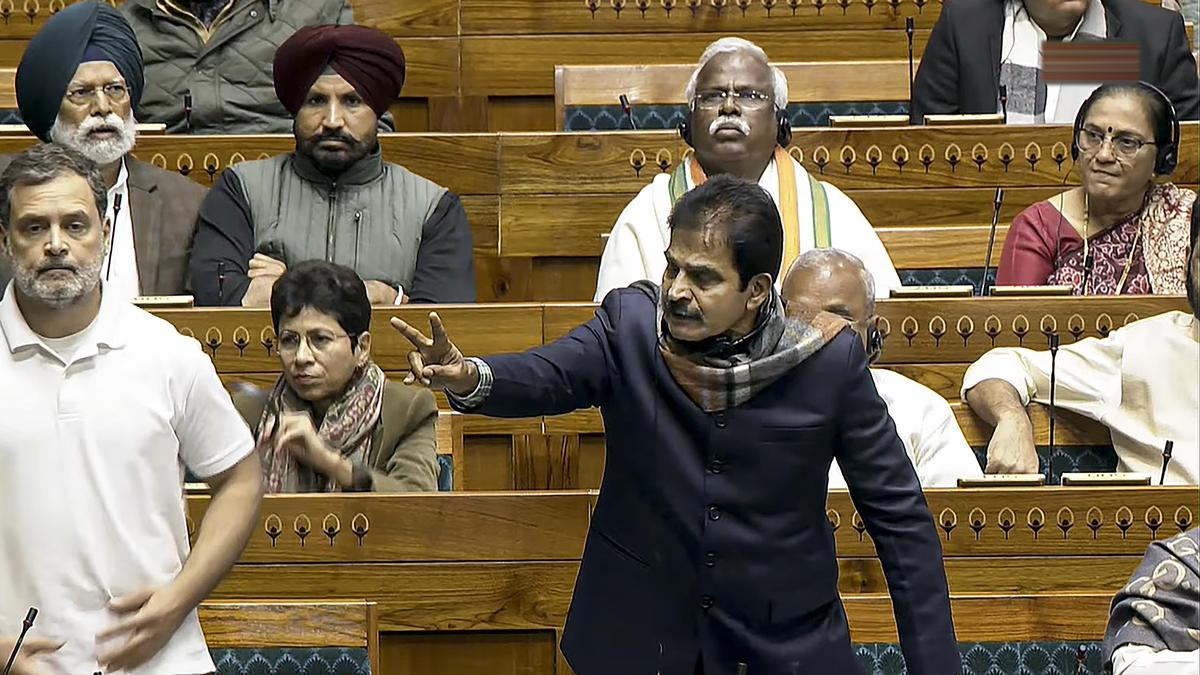
NEW DELHI: The Indian Parliament, long a theater of robust debate and occasional ruckus, has devolved into a battlefield where the very concept of the “neutral umpire” is under siege. The recent submission of a no-confidence motion against Lok Sabha Speaker Om Birla by approximately 120 opposition MPs is not merely a procedural skirmish; it is a structural fracture. Triggered by the Speaker’s unprecedented claim that intelligence inputs suggested opposition MPs planned to “gherao” (surround) Prime Minister Narendra Modi, the incident exposes a dangerous intersection of executive security, legislative privilege, and the systematic erosion of parliamentary independence.
At the heart of this “Parliamentary Storm” is a claim that borders on the dystopian. Speaker Birla’s public assertion—that disruptive tactics by elected representatives necessitated the Prime Minister’s absence—is a watershed moment in Indian legislative history. Traditionally, the Speaker is the custodian of the House, protecting the rights of members against the overreach of the executive. By citing intelligence inputs to justify the Prime Minister’s absence from a crucial debate on the Presidential address, the Speaker has effectively flipped the script. He has transformed from the protector of the MPs into the “government’s shield.”
The optics are biting: the presiding officer, who should be the ultimate authority within the chamber, is now acting as an intermediary for security agencies. This move suggests that the Special Protection Group (SPG) and intelligence bureaus now hold a proxy seat in the Speaker’s chair. If the Prime Minister—the most powerful man in the country—cannot face the elected representatives of the people within the most secured building in the nation, it signals either a catastrophic failure of security or a convenient political exit strategy.
The controversy was further poisoned by the “viral ferocity” of anonymous, unsavoury claims linking opposition MPs to a conspiracy involving the Epstein files and bizarre attire-tearing plots. While the government dismissed these as “AI-generated gimmicks,” the damage to the institutional fabric is real. When the Speaker’s official rhetoric mirrors the sensationalism of internet trolls—implying that female MPs are security threats rather than legislators—the dignity of the House is not just undermined; it is incinerated.
By framing parliamentary protest as a physical threat, the ruling dispensation, through the office of the Speaker, is attempting to delegitimize the very essence of opposition. In a democracy, “gheraos,” slogan-shouting, and walkouts are the tools of the disenfranchised. To rebrand these as “law-and-order risks” is a calculated move to sanitize Parliament and reduce it to a monocultural echo chamber where the executive is never made uncomfortable.
The technical defense of the Speaker’s actions often retreats into the silence of the Constitution. While Article 118 allows the House to make its own rules, there is no explicit provision empowering a Speaker to advise a Prime Minister to skip a session based on “intelligence.” This occupies a murky constitutional “grey zone.”
However, constitutional morality is not merely about what is written, but what is practiced. The Speaker’s authority rests on the perception of impartiality. When that perception is traded for partisan convenience, the office loses its moral weight. The opposition’s grievance is clear: if the Speaker begins to deploy intelligence narratives in public, he ceases to be a referee and becomes a player. This normalization of “executive avoidance” ensures that accountability—the primary function of the legislature—is the first casualty.
The motion, backed by 120 MPs, is numerically doomed. With the BJP-led NDA comfortably crossing the 272-mark, the motion will be defeated, and Om Birla will remain in the chair. This raises the question of why the opposition would bother.
The answer lies in the “barometer of trust.” The motion is a formal record of a broken relationship. Even the tactical absence of Rahul Gandhi’s signature—likely a move to avoid a direct “personalization” of the clash—cannot hide the fact that a significant portion of the House no longer views the chair as a neutral arbiter. The historical table of no-confidence motions against Speakers, from G.V. Mavalankar in 1954 to the present, shows a trend: these motions are never about winning the vote; they are about highlighting a crisis of confidence.
| Year | Speaker | Outcome | Core Grievance |
| 1954 | G.V. Mavalankar | Defeated | Alleged bias toward Congress |
| 1979 | G.M.C. Balayogi | Defeated | Allegations of partiality |
| 2026 | Om Birla | Pending | Use of security claims to shield the PM |
The then speaker Balram Jakhar of the Congress also survived a No Confidence Motion as then CPM leader Somnath Chatterjee, who was eventually to become speaker during an opposition ruled government, moved the symbolic gesture only to be defeated by to register protest. It was defeated.
The Speaker’s decision to ban protests at the gates of Parliament further reinforces the image of a “fortress legislature.” By shutting down the physical spaces for dissent and using the pulpit of the chair to cast aspersions on the conduct of MPs, the current leadership is fundamentally altering the DNA of Indian parliamentarianism.
The BJP’s counter-argument—that the Congress behaved similarly in the past—is a classic case of whataboutism that ignores the escalation currently at play. If past precedents were flawed, the solution is not to double down on partisanship, but to restore the “higher standards” that a burgeoning superpower requires.
The 2026 no-confidence motion will likely end with a whimper in terms of votes, but its echoes will be deafening. It marks the moment when the “referee” of the world’s largest democracy was accused not just of missing a foul, but of wearing the jersey of the home team.
The Speaker’s office survives on trust, not just the majority. If the opposition is framed as a security threat, the very foundation of “Mutual Trust” required for a functioning legislature vanishes. As the House reconvenes, the gavel may still strike the desk, but the sound it makes is increasingly hollow. India’s Parliament is no longer just a house of debate; it is a house of suspicion, where the security of the executive is used to silence the voice of the people. (IPA Service)