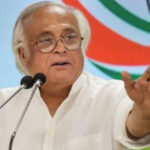
Khurshid, speaking to journalists during the Bharat Summit in Hyderabad on Friday, said political leaders seeking change would have to advance progressive issues and secularism. His remarks followed the formation of the Samajik Parivartan Morcha, which has declared Azad its chief ministerial candidate and announced plans to contest all 403 Assembly constituencies.
The Congress leader’s assessment contrasted with the ambitions outlined by Azad and Owaisi at their joint press conference in Lucknow on Thursday. The two parliamentarians said their coalition would challenge the ruling Bharatiya Janata Party and offer a political platform to marginalised communities, particularly Dalits, Muslims and backward classes.
Khurshid said the emergence of another front would not substantially alter the political situation. Referring specifically to Azad and Owaisi, he maintained that all parties and leaders would need to move forward on a secular and progressive agenda. He did not announce any agreement between Congress and the newly established coalition.
The remarks came after Azad publicly invited the Congress and the Samajwadi Party to support the front if they shared its objective of preventing the BJP from securing a third consecutive term in the state. That invitation has not produced an announced electoral arrangement with either party.
Owaisi, president of the All India Majlis-e-Ittehadul Muslimeen, named Azad, who heads the Azad Samaj Party (Kanshiram), as the coalition’s chief ministerial face. Azad represents Nagina in the Lok Sabha, while Owaisi represents Hyderabad. Both leaders said their organisations would work together across Uttar Pradesh rather than limit their campaign to their established areas of influence.
The front’s declared intention to field candidates in every constituency would put it in competition not only with the BJP but also with the Samajwadi Party and Congress, which have sought support among sections of the same electorate. Whether the alliance can convert its proposed social coalition into votes remains untested at an Assembly election.
Azad rejected the description of his initiative as merely a third front, arguing that it should be understood as a movement for social transformation. He said participation by disadvantaged and oppressed communities would strengthen the organisation and accused successive governments of failing to deliver improvements promised to them.
Owaisi said the coalition would prioritise education, unemployment, farmers’ difficulties and the interests of communities he described as neglected by established parties. He expressed confidence that the partnership could prevent the BJP from retaining power, although the leaders have yet to demonstrate how their electoral ambitions will translate into constituency-level organisation.
The two parties have identified Dalit-Muslim cooperation as a central element of their political approach. However, neither community votes uniformly, and the support available to the new coalition will depend on local candidates, existing party loyalties and the wider electoral contest. The leaders have also spoken of reaching other backward and disadvantaged groups.
The BJP, led in Uttar Pradesh by Chief Minister Yogi Adityanath, is seeking another mandate after winning the 2017 and 2022 Assembly elections. The Samajwadi Party, headed by Akhilesh Yadav, remains a principal opposition force, while Congress is attempting to strengthen its position within the state’s opposition politics.
The alliance announcement has also raised questions about how parties opposed to the BJP will approach seat-sharing and electoral competition. Azad and Owaisi have left open the possibility of cooperation with other organisations, but their stated plan to contest all seats provides no settled division of constituencies with potential partners.
The political implications extend to the opposition’s competing strategies for mobilising disadvantaged voters. The Samajwadi Party has emphasised its coalition of backward classes, Dalits and minorities, while the new front is seeking a distinct political identity among overlapping constituencies. Congress has maintained its emphasis on secular politics. The formation of the coalition therefore introduces another electoral option without establishing how voters will respond to it.
The leaders have called for a public gathering in Lucknow on November 26 to promote the new front. Owaisi urged supporters to attend, describing the event as the beginning of a broader campaign for social change. Detailed candidate selections and constituency allocations between the two constituent parties have not yet been publicly finalised.