


By T N Ashok
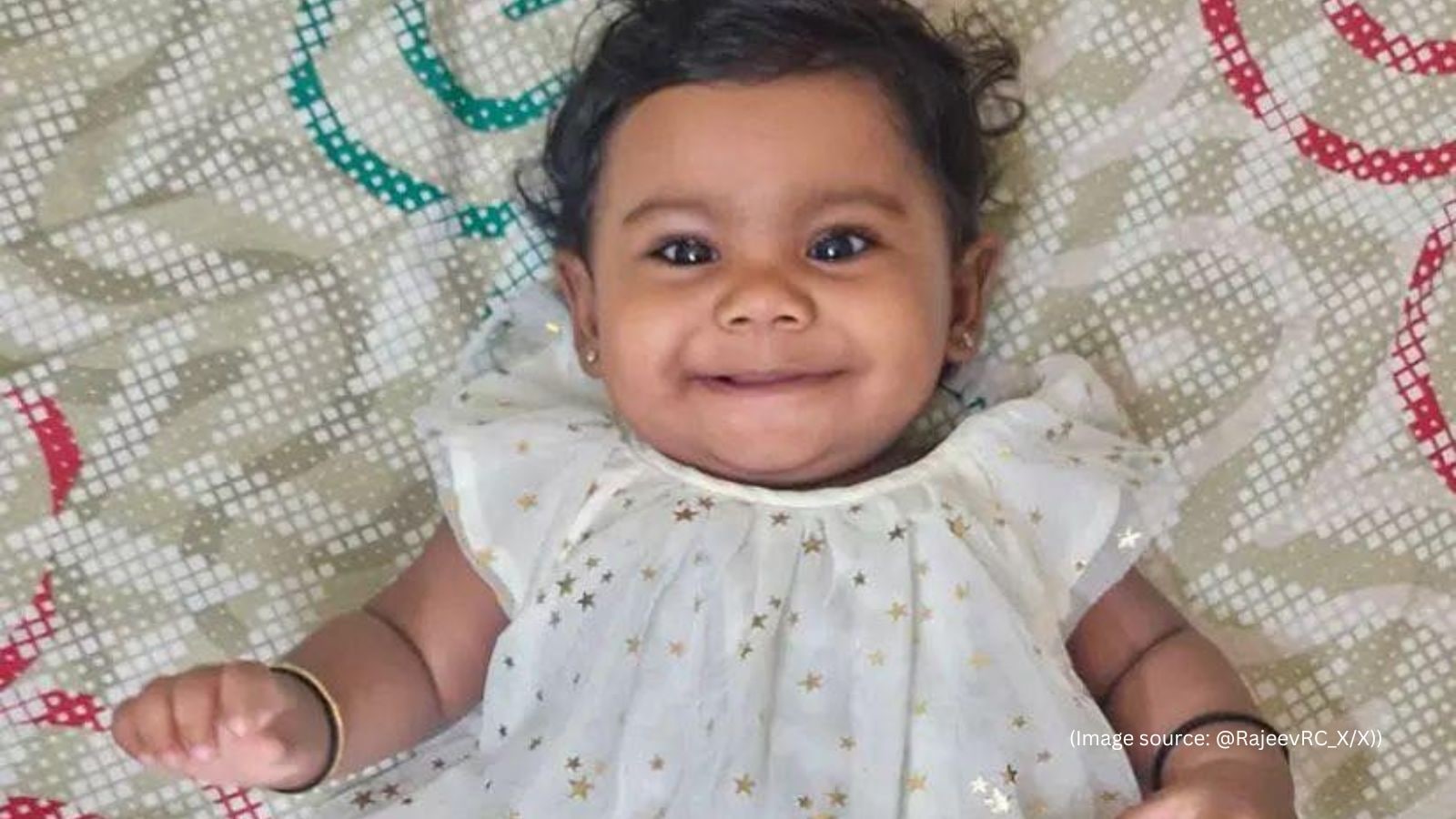
On a quiet Sunday afternoon in Mallappally of Pathanamthitta district in Kerala, the tiny white coffin of 10-month-old Aalin Sherin Abraham was lowered into the earth to the sound of muffled sobs and whispered prayers.
Hundreds gathered — neighbours, strangers, officials — not merely to mourn a life that ended far too soon, but to honour an act of extraordinary generosity: Aalin, declared brain-dead after a tragic road accident, became Kerala’s youngest recorded organ donor, her parents consenting to donate her organs so that others might live.
In the days since her death, admiration has poured in from across the state — from health ministerial tributes to hundreds of locals lining the funeral route. Yet while Aalin’s story is one of compassion and selflessness, it also touches on a larger, complex tapestry of medicine, ethics, necessity, and criminality that surrounds the global system of organ donation and transplantation.
In the aftermath of the accident that claimed her life on February 5, Aalin’s parents — Arun Abraham and Sherin Ann John — made an agonizing but decisive choice. With the support of the Kerala State Organ and Tissue Transplant Organisation (K-SOTTO), her organs were retrieved with swift coordination from multiple medical facilities.
Liver: transplanted into a six-month-old infant at KIMS Hospital, Thiruvananthapuram — making this baby among the youngest known recipients of a posthumous infant liver donation in the state. Kidneys: donated to a 10-year-old girl, Sreya, at Government Medical College Hospital, Thiruvananthapuram. Heart Valve: sent to a cardiac surgery centre at Sree Chitra Tirunal Institute for Medical Sciences and Technology. Eyes (corneas): entrusted to an eye bank for future sight-restoring procedures.
Across the state, surgeons and organ recipients’ families have described the transplants as life-changing — or, in the case of organs like the corneas and heart valve, potentially life-saving. Aalin’s story, while remarkable in its youth, is not entirely without precedent. Across history and around the world, families who lose children to sudden death sometimes choose to donate available organs — particularly corneas — to reduce suffering and preserve a legacy of hope.
One of the better-known historical examples is Janis Anne Babson, a 10-year-old Canadian girl who died from leukaemia in 1961 and whose wish to donate her corneas helped spark broader public awareness of corneal transplantation.
Such cases are rare because infant donation is medically and ethically complex: organs must be viable, the donor must be declared brain-dead according to stringent medical criteria, and consent must come from grieving families. But they underscore both the possibility and impact of donation even at the earliest stages of life.
Globally, tens of thousands of patients die each year waiting for organs because of a chronic shortage. Even in countries with robust donation systems — such as the United States or much of Europe — waiting lists vastly outnumber available organs, and waiting times stretch for years. This shortfall has driven ethical debates and legislation promoting donation, including “opt-out” policies in several European Union nations where adults are presumed donors unless they register otherwise.
Despite ethical frameworks like the Declaration of Istanbul, which seeks to curb organ trafficking and transplant tourism by promoting equity and ethical consent, only a fraction of patients who need transplants ever receive them.
India, likewise, battles the dual challenge of encouraging voluntary donation while maintaining strict legal oversight under statutes such as the Transplantation of Human Organs and Tissues Act. Authorities track legal donation and transplants through registries, public awareness campaigns, and coordinated hospital networks — but progress remains uneven. For as many lives saved through ethical donation, there exists a shadowy underbelly of illegal organ trade — a global market that thrives on desperation and systemic shortfalls.
Despite almost universal legal bans on the sale of organs, black-market transplants are estimated to constitute a significant fraction of global procedures. Experts suggest that between 5% and 10% of global transplants involve illicit organs, with the trade valued at hundreds of millions of dollars annually and driven by organized criminal networks.
Well-documented scandals — such as the Medicus Clinic case in Kosovo, where doctors and brokers conducted unauthorized kidney transplants on impoverished donors, or allegations of narrow legal enforcement in countries spanning Asia, Africa, and the Middle East — reveal how criminals exploit gaps in regulation and patient desperation.
In India, law enforcement continues to clamp down. In a recent high-profile bust, the national anti-terror agency arrested an alleged organ-trafficking kingpin accused of funneling Indian citizens to Iran for illegal kidney transplants disguised as medical tourism. Similar investigations into brokers and corrupt practices show that fraud, coercion, and forged consent documents often lie at the heart of these illicit operations.
Illegal organ markets rarely operate in isolation. They often involve a complex network of recruiters, brokers, medical professionals, and middlemen, sometimes crossing international borders. Wealthy recipients in one region can pay handsomely for organs sourced from impoverished donors in another, with fake paperwork supplied to subvert legal safeguards.
In some places, clandestine clinics operate under the guise of legitimate practice. In others, organized crime syndicates and armed groups are alleged to have been involved in harvesting organs by force. One shocking reported case involved cartel networks in Mexico allegedly using extreme violence to harvest organs and exploit vulnerable women — underscoring the brutal depth the illicit trade can reach.
Faced with both the urgent need for organs and the persistent threat of illicit trade, governments around the world have adopted multi-pronged responses: United States: Aggressive enforcement of anti-trafficking laws under multiple federal statutes; cross-border cooperation to prevent transplant tourism; and public campaigns to increase donor registration. United Kingdom & European Union: Legal frameworks aligned with the Declaration of Istanbul, prosecution under modern slavery statutes for trafficking cases, and regular audits of transplant pathways. India: Enforcement of THOTA, national registries, and public awareness efforts to promote ethical donation while cracking down on brokers and illegal facilitators. China: After decades of controversy over organs from prisoners, official recent reforms claim to abolish such practices — but external watchdogs still caution that transparency remains limited. Each system faces the same core challenge: how to expand legal donations sufficiently to meet medical needs without allowing criminal enterprises to fill the gap.
In the end, Aalin’s death and her family’s choice transcended the news cycle. They remind us that organ donation — at its best — is an act of selfless human compassion. It binds communities across grief and gratitude, turning private loss into public hope. At her funeral in Kerala, mourners didn’t just grieve a brief life; they celebrated a legacy of transformative generosity that will echo in the lives of those she helped sustain.
Yet as the world grapples with achieving equitable access to life-saving transplants, her story also challenges us: to keep building transparent, ethical systems that honour dignity, protect the vulnerable, and ensure that the gift of life is never tainted by coercion, exploitation, or crime. (IPA Service)
** The author, T N Ashok, is a medical writer , has written a series of books on the Covid 19 pandemic under the titles – No Time to Hide dealing with the outbreak of the disease and its spread and how WHO and nations grappled with the problem to contain the disease and reduce the death count, No Time to Hide part 2 dealing specially with how US failed to contain and became the largest body counter and No Time to Escape , the last in the triology became an eye opener on the resurgence of the virus and its mutation history and how China became a model for zero tolerance.
His latest book Borrowed Time, Borrowed Hope, selling fast on Amazon, is yet another medical historical dealing with renal diseases, detection, symptoms, cure in dialysis, types, transplants and complications and success rates. Drawn from his own life experience of losing both his wives to kidney diseases and its complications from transplants and dialysis.






