By Tirthankar Mitra
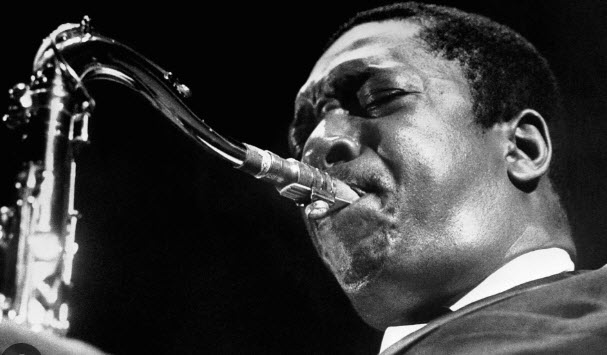
Few noted individuals are remembered after their passing, even if they reach the landmark of 100 years. But eminent jazz saxophonist, John Coltrane, belongs to a hardier tribe.
He is missed on his 100th birth anniversary, which passed by recently, though he was in his early 40s when he journeyed to the land of eternal sleep. Also known as “Trane”, he was still in his teens when made his professional debut in 1945.
Thereafter, there was no looking back. Pioneering the use of modes, he made his way to the front ranks of free jazz and recorded a piece he named “India”.
He had never visited this country. But its music and philosophy entered his imagination while listening to and collecting the records of Pandit Ravi Shankar.
He took lessons from the man synonymous with the sitar. He named his second son Ravi.
Coltrane later made the jarring ‘Om’. But in his composition ‘India’, he came closest to capturing Hindustani classical music.
He drew his share of criticism for his love of Indian music. He was called anti-jazz. However, Coltrane was looking beyond conventional jazz. Indeed, the man was ahead of times.
His critics seems to have overlooked that he started playing jazz as a teenager. “Trane” was a man immersed in the world of music. It could be the lifting notes of a saxophone. But it was never at odds with the soulful rendition of a sitar.
He led at least 50 recording sessions. He held his own in many albums by such leading musicians like trumpeter Miles Davis and pianist Thelonious Monk.
Coltrane worked in a sugar refinery after passing high school. At 17, he was gifted his first saxophone by his mother.
In mid-1945, he had his first professional performance. It was a “cocktail lounge trio” with a piano and a guitar.
Coltrane’s music increasingly took on a spiritual dimension as in A Love Supreme, his most acclaimed album. His experience of studying music and serving in the Navy towards the end of World War found expression in his works.
He joined the all-white band Melody Masters. Because of his colour, Coltrane was treated as a guest performer to avoid alerting his superior officers of his participation in the band.
Coltrane was never cut off from the harsh realities of life. His saxophone is patterned after Martin Luther King’s eulogy for four African American girls killed in a Klu Klux Klan bombing.
Once heavily into alcohol and heroin, the wakeup call led him towards spiritual music. It included music from India.
Coltrane absorbed sounds and ideas from different traditions. He made them part of a voice unmistakably his own.
His quest was cut short at 40 by liver cancer. But his music continues to be widely heard six decades after his passing. (IPA Service)