By T N Ashok
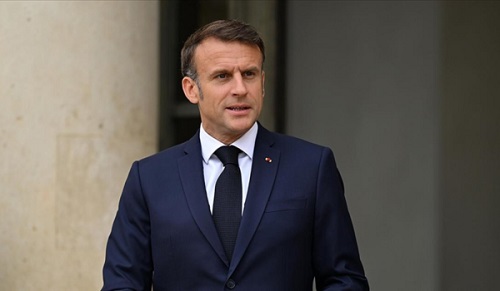
Indo-French relations will elevate to a higher level with the visit of French President Emmanuel Macron to India from February 17 to 19, 2026. The visit will underscore what both governments describe as a “maturing strategic partnership” that spans defense, technology, innovation and global diplomacy.
The visit comes against a backdrop of intensifying geopolitical competition — from China’s assertiveness in Asia to shifting Western alignments — and at a moment when New Delhi is fast emerging as a pivotal player in global commerce and security.
President Macron’s itinerary combines high-level bilateral talks with Prime Minister Narendra Modi, participation in the India–AI Impact Summit in New Delhi on February 19, and a joint launch of the India–France Year of Innovation 2026 in Mumbai.
The summit — the first global AI forum hosted in the Global South — builds on the two leaders’ co-chairmanship of an AI Action Summit in Paris last year and signals a mutual ambition to shape global norms on artificial intelligence and emerging tech.
The Horizon 2047 Roadmap, a long-term strategic framework adopted by India and France to chart bilateral cooperation through India’s centenary of independence, will form the conceptual anchor of their discussions. Topics will span defense, technology, trade, Indo-Pacific cooperation and multilateral coordination.
At the heart of the visit’s strategic subtext is defense cooperation, especially a move toward a make-in-India production base for French military aircraft. In the run-up to Macron’s arrival, India’s Defense Acquisition Council (DAC) is expected to consider approval for a massive procurement of 114 new Rafale fighter jets from France — a deal valued at roughly ₹3.25 lakh crore — with around 80 percent of the aircraft to be manufactured domestically under India’s defense industrialization drive.
This planned acquisition, which would follow earlier purchases of 36 Rafale jets for the Indian Air Force and 26 naval Rafale M aircraft for the Indian Navy, could be among the most consequential defense deals between the two partners in decades. While details remain under negotiation and institutional clearance, the proposal exemplifies the convergence between India’s strategic autonomy and France’s interest in deepening defense industrial ties with New Delhi.
The decision to build most of these jets in India reflects New Delhi’s intent to strengthen sovereign aerospace capabilities, create high-tech employment, and position itself as a regional hub for advanced military manufacturing. It also aligns with France’s broader push to diversify supply chains in defense production and to establish overseas manufacturing bases in friendly but non-aligned capitals.
India and France share one of New Delhi’s oldest and most resilient bilateral partnerships. Diplomatic relations were established soon after India’s independence in 1947, and strategic cooperation was elevated formally in 1998 — the first such Western partnership for India. France was an early Western partner willing to engage India across defense, nuclear energy and space technology when Cold War fault lines made other Western capitals cautious.
Over the decades, the bilateral agenda has broadened from defense and civil nuclear cooperation to encompass naval exercises (Varuna), air exercises (Garuda), space collaborations and joint research initiatives. Summit diplomacy has been robust: President Macron was chief guest at India’s Republic Day in 2024, and Modi has made several state visits to France. High-level meetings continue on the sidelines of the G20 and other multilateral forums.
In 2023, the two nations marked 25 years of their strategic partnership with adoption of the Horizon 2047 roadmap, envisioning cooperation through India’s centenary of independence. Core pillars of this vision cover not just security and defense but also digital transformation, climate action, space, energy and people-to-people exchanges.
Beyond defense, the India–France agenda increasingly embraces technology and innovation. The AI Impact Summit — a marquee feature of Macron’s visit — highlights cooperation in artificial intelligence as part of wider efforts to shape global governance standards and build shared capacity in critical technologies.
French firms and research institutions are also eyeing increased collaboration in areas such as rare earths, clean energy and digital infrastructure.
Trade between India and France has grown steadily, although France remains a relatively smaller investor compared with other European partners. Still, bilateral commerce and investment have been growing in sectors like aerospace, renewables, pharmaceuticals and financial services.
Updating tax treaties and investment frameworks has been part of a broader push to provide legal and economic certainty for French companies operating in India.
The India–France Year of Innovation 2026 — inaugurated in Mumbai — aims to elevate people-to-people links, cultural exchange, student mobility and business partnerships. It represents a more holistic view of bilateral ties beyond government-to-government diplomacy.
The deepening Indo-French partnership resonates beyond bilateral corridors into wider geopolitical dynamics.
First, for EU–India relations, France’s leadership in European diplomacy makes New Delhi–Paris ties an anchor for India’s engagement with the European Union. The EU and India have pursued a Strategic Agenda that includes trade liberalization, technology cooperation and maritime security.
A strengthened Franco-Indian axis could inject momentum into stalled EU trade negotiations and the EU-India Trade and Technology Council. India recently wrapped up a majorly EU India FTA, considered both historic and far reaching, benefits of which start flowing from Jan 2027 with reduction and evolution abolition of import duties both ways on a variety of commodities.
As Washington’s global trade posture becomes more volatile, Brussels sees India as a strategic partner that shares a commitment to democratic norms and a rules-based order — a narrative amplified in recent EU strategic reviews.
Macron’s visit underscores that European capitals view New Delhi as more than a market, but as a partner in security frameworks and supply-chain resilience.
Second, in the context of India–US relations, closer ties with France do not diminish New Delhi’s strategic partnership with
Washington, but rather reflects India’s insistence on strategic autonomy. India continues defense and technology cooperation with the United States, participates in the Quadrilateral Security Dialogue (Quad), and engages in joint exercises like Malabar.
The France partnership adds strategic depth and diversification — an approach India has long maintained rather than aligning with any single power bloc.
Third, India–UK ties, revitalized through a landmark 2025 free-trade agreement removing tariffs and boosting economic integration, complement India’s broader Western partnerships. While the UK focuses on trade, services and people-to-people ties, France brings strength in defense production and technology cooperation. Together, these relationships contribute to India’s multipolar diplomacy.
At the leadership level, the personal chemistry between Modi and Macron has been a feature of recent diplomacy. Their engagements at global summits and co-chairing of AI summits signal a level of mutual trust rare in bilateral ties. This bonhomie, coupled with substantive policy alignment, has helped sustain momentum even when broader geopolitical tensions — such as France’s engagements with other partners or India’s defense relations with Russia — complicate the landscape.
President Macron’s visit in February 2026 is more than ceremonial — it is a reaffirmation of a relationship that straddles defense, technology, trade and global governance. As India moves toward becoming the world’s most populous major economy, Paris offers a blend of strategic depth and European connectivity that New Delhi values.
The unfolding Rafale manufacturing agreement, the AI summit and the long-term vision under Horizon 2047 suggest that India–France cooperation is maturing into a more substantive and diversified partnership.
In a world of shifting alliances, France’s embrace of India reflects shared interests in sovereignty, technological leadership and a multipolar global order — one that New Delhi seeks to shape on its own terms. (IPA Service)