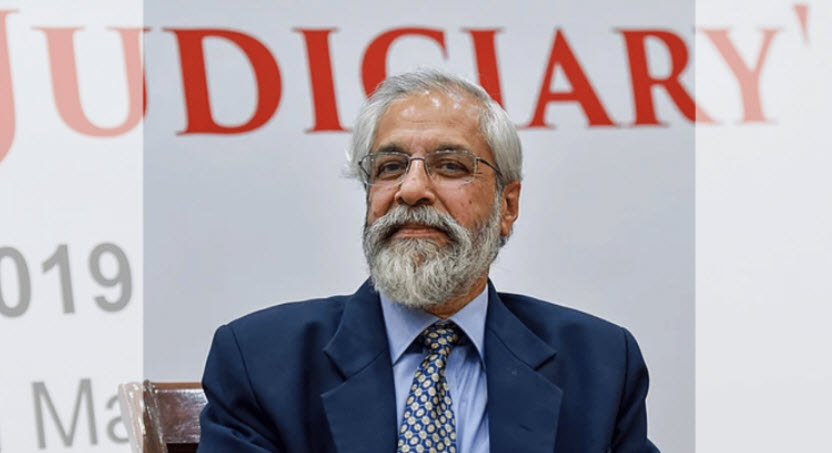
Former Supreme Court judge Madan B. Lokur will chair the Independent Commission of Former Judges on the Special Intensive Revision of Electoral Rolls. Its members are former Supreme Court judge A. K. Patnaik, former Jammu and Kashmir High Court Chief Justice Badar Durrez Ahmad, former Delhi High Court judge Rekha Sharma and former Patna High Court judge Anjana Prakash.
LAFC said the commission would function autonomously and examine the constitutional and statutory validity of the SIR, the methods used during the exercise and its impact on eligible voters. A central question will be whether eligible citizens remained on electoral rolls while entries that did not qualify were properly excluded.
The commission plans nationwide public hearings, using full and regional benches to receive testimony from affected citizens, civil society organisations and experts. A dedicated research wing will collate and analyse data on additions and deletions from electoral rolls and place its findings before the former judges.
A legal support team will examine legislation, Election Commission notifications and verification procedures to assess compliance with constitutional and statutory safeguards. LAFC said the commission would retain sole responsibility for its findings and recommendations, with sponsoring organisations and supporting committees having no role in determining its substantive conclusions.
The panel will receive strategic legal advice from senior lawyers including Kapil Sibal, Prashant Bhushan, Chander Uday Singh, Prashanto Chandra Sen, Raju Ramachandran, Rebecca Mammen John, Warisha Farasat and Vrinda Grover. A coordination team and an LAFC-based secretariat will provide operational support.
The inquiry comes as the SIR, undertaken in phases during 2026, remains under legal and political scrutiny over voter inclusion, documentation requirements and deletion procedures. The Election Commission has maintained that the exercise is intended to produce accurate electoral rolls by including all eligible electors and removing ineligible entries.
The Election Commission announced Phase III in May for 16 states and three Union Territories, saying it would take the exercise across the country except Himachal Pradesh, Jammu and Kashmir and Ladakh, where schedules were to be announced separately after considering census work and weather conditions.
According to the Commission’s Phase III schedule, more than 3.94 lakh booth-level officers were assigned to conduct house-to-house work involving about 36.74 crore electors, assisted by more than 3.42 lakh booth-level agents appointed by political parties. The Commission said the first two phases had covered 13 states and Union Territories with nearly 59 crore electors at the time their respective SIR orders were issued.
Questions surrounding the legal framework for intensive revision have also reached the Supreme Court. In a May judgment arising from the Bihar SIR, the court examined the constitutional and statutory setting governing electoral-roll preparation and stressed the importance of an electoral roll that is accurate, inclusive and legally valid.
The LAFC commission is separate from the Election Commission and from judicial proceedings. Its announced role is fact-finding and legal examination, followed by recommendations rather than binding orders. The association said it was created in response to concerns raised by citizens about the design, implementation and consequences of the SIR.
The proposed field research is intended to give the panel an empirical basis for examining patterns of inclusion and deletion rather than relying only on legal submissions. Testimony gathered through hearings will supplement that data, allowing the commission to consider how verification procedures operated in different regions and affected individual voters.
The inquiry’s scope therefore extends beyond aggregate changes in voter numbers. It will examine the processes used to verify electors, the legal basis for those processes and whether safeguards operated consistently. Public hearings are designed to provide a record of experiences that can be tested alongside electoral-roll data. The commission has not announced powers to compel evidence, and its conclusions will carry the status of an assessment.