


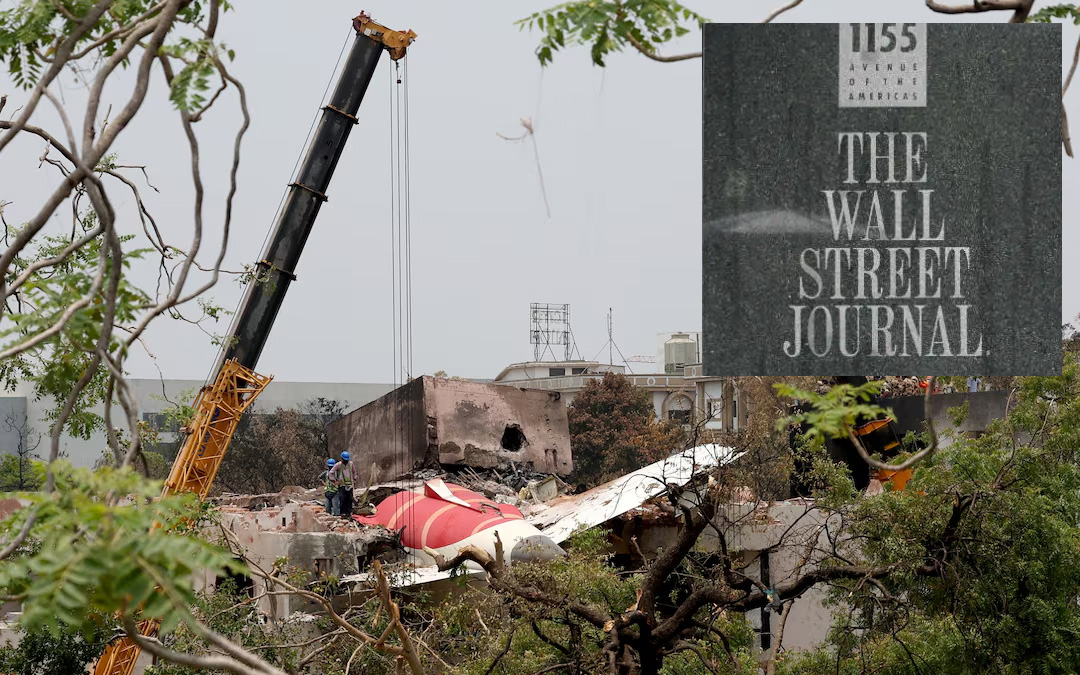
Investigators probing the June 12 crash of Air India Flight AI‑171 are now focusing on the aircraft’s tail section, where early signs of a contained electrical fire have emerged. The Boeing 787‑8 Dreamliner, which crashed shortly after take-off from Ahmedabad’s Sardar Vallabhbhai Patel International Airport, split into pieces in its descent, but the tail, or empennage, remained relatively intact—leading experts to believe it holds pivotal clues to the catastrophe.
Analysts have recovered components from the tail, including the Auxiliary Power Unit, stabiliser position transducer and rudder systems, and transported them to secure facilities in Ahmedabad for forensic analysis. These parts are seen as critical to determining whether an electrical fault occurred during take-off or if the damage was post-impact. Notably, flickering cabin lights reported by the sole survivor hint at possible power irregularities.
A particularly concerning finding is the discovery of a Pilot Defect Report, logged during the previous flight, highlighting an issue with the stabiliser position transducer, located in the tail. Investigators are exploring whether a malfunction in this transducer triggered a cascading electrical failure, disrupting data flow to the Engine Control Unit and inadvertently shutting fuel supply to both engines via FADEC prompts.
Initial AAIB findings confirm fuel control switches moved from “RUN” to “CUTOFF” within one second of take-off, leading the engines to lose thrust. Cockpit voice recordings reveal one pilot questioning the shutdown; the other denied responsibility. The dreamliner’s FADEC system is engineered to halt fuel supply when encountering faulty sensor inputs, raising the possibility of an automatic engine shutdown triggered by erratic electrical signals from the tail.
The rear black box, housed in the tail section and dependent on the aircraft’s electrical system, was recovered from the wreckage on the roof of the BJ Medical College hostel. However, it sustained severe thermal damage, with internal memory too damaged for standard data recovery. By contrast, the forward recorder contained 49 hours of flight data and two hours of cockpit audio, including the critical final moments.
Structural evidence underpins the electrical fault theory. The tail embedded in the hostel building remained shielded from post-crash fire and fuel damage, yet investigators noted a contained fire that did not spread—unlike the rest of the aircraft. This isolated fire strengthens the theory of an onboard electrical anomaly.
In response to ongoing findings, Air India has completed inspections of its Boeing 787‑8 fleet. CEO Campbell Wilson confirmed no mechanical issues were found so far. The Aircraft Accident Investigation Bureau, collaborating with US and UK counterparts, continues its probe. International aviation regulators and Boeing have lent technical assistance.
Meanwhile, the Federation of Indian Pilots, supported by pilot groups, has criticised reports suggesting human error—particularly those referencing unverified claims that the captain manually turned off fuel switches. It has taken legal action against media outlets including The Wall Street Journal and Reuters, denouncing such narratives as damaging and premature. The AAIB has labelled some media speculation as irresponsible, urging restraint until all evidence is analysed.
The disaster, which claimed 241 lives onboard and 19 on the ground, left only one survivor, British national Vishwashkumar Ramesh. The tragedy prompted calls to install cockpit video recorders and revamp safety protocols across the global Boeing 787 fleet. A full report from AAIB is expected within 12 months.








