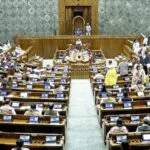

The meetings come a day before Parliament convenes for a special session on November 30, with divisions within the opposition INDIA bloc threatening to undermine its efforts to defeat a constitutional amendment linked to the expansion of parliamentary representation and implementation of women’s reservation.
The delegation is expected to reach Chennai on Sunday afternoon before travelling to Mumbai. Former West Bengal chief minister Mamata Banerjee and Communist Party of India (Marxist) general secretary MA Baby are among other opposition leaders expected to participate in the discussions.
The Congress initiative follows the Dravida Munnetra Kazhagam’s announcement on Saturday that it would support the revised delimitation proposals after securing assurances concerning Tamil Nadu’s parliamentary representation. The Nationalist Congress Party (Sharadchandra Pawar) has also indicated conditional support for the legislation.
Kharge announced after a meeting of opposition parliamentary leaders at his New Delhi residence on Saturday that the alliance would oppose the government’s legislative package. The Congress maintains that reserving one-third of parliamentary seats for women does not require an expansion of the Lok Sabha or the redrawing of constituencies.
Rahul Gandhi, Leader of the Opposition in the Lok Sabha, has argued that the proposed delimitation exercise could enable the Bharatiya Janata Party to redraw constituency boundaries for electoral advantage. The government maintains that its revised proposals would protect the relative representation of states while enabling greater participation by women in legislatures.
Stalin’s decision followed consultations with DMK parliamentarians at the party headquarters in Chennai. He maintained that his party had never opposed delimitation in principle but had resisted any exercise that would diminish the political representation of states that had successfully controlled population growth.
DMK parliamentarian Kanimozhi said the revised proposals addressed the party’s principal demands, including preserving Tamil Nadu’s share of parliamentary representation for another 25 years. The arrangement would increase the state’s Lok Sabha representation from 39 to 59 seats.
Former Union minister and senior DMK leader A Raja also maintained that the changes incorporated safeguards sought by the party. The assurances have provided the DMK with grounds to distinguish its position from that adopted by the Congress and several other opposition parties.
The position of Pawar’s party presents another complication for the Congress. NCP (SP) national spokesperson Jitendra Awhad announced on Friday that the party would support the legislation provided it ensured a uniform 50 per cent increase in parliamentary seats across states.
Party working president Supriya Sule has also emphasised the importance of examining the legislative provisions before determining its final position. Adequate opposition representation on the proposed delimitation commission remains among the considerations raised by the party.
The NCP (SP), which has eight Lok Sabha members, stayed away from Saturday’s opposition strategy meeting, exposing disagreements within the alliance over its parliamentary response.
The Union Cabinet approved the revised legislative proposals on Friday. The package includes the Constitution (132nd Amendment) Bill, 2026, the Delimitation (Second) Bill, 2026, and proposed amendments to legislation governing Union Territories.
The constitutional amendment seeks to raise the maximum strength of the Lok Sabha to 850 members, comprising up to 815 representatives from states and 35 from Union Territories. The existing elected strength of the lower house is 543.
The proposals envisage a 50 per cent increase in seats across states and Union Territories, corresponding increases in legislative assembly representation and safeguards protecting the revised distribution of parliamentary seats among states until 2051.
The government intends to facilitate implementation of the Nari Shakti Vandan Adhiniyam, which provides for 33 per cent reservation for women in the Lok Sabha and state legislative assemblies.
The constitutional amendment requires a majority of the total membership of each House and the support of at least two-thirds of members present and voting. Such requirements make the positions of regional opposition parties particularly significant. An earlier attempt to secure parliamentary approval for a constitutional amendment concerning delimitation fell short of the required majority in April.
Parliamentary affairs minister Kiren Rijiju has outlined the schedule for the special sitting, which will continue until December 3. The Lok Sabha will convene on Monday, while the Rajya Sabha is scheduled to assemble on December 2. Union minister Arjun Ram Meghwal is expected to introduce the legislation.