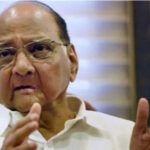

Singh, speaking on Saturday, questioned Gavai’s decision to seek presidential intervention, arguing that such a move could create an impression that the Bharatiya Janata Party-led government was attempting to influence appointments to constitutional courts.
The former High Court judge acknowledged the need to improve representation of women and candidates from Scheduled Castes, Scheduled Tribes, Other Backward Classes and minority communities, but questioned whether Gavai had done enough to address those concerns while heading the judiciary.
“However, there should be no political interference,” Singh said, warning against sending a message to society that the government could influence the selection of judges through the office of the President.
The criticism followed a three-page letter Gavai addressed to President Droupadi Murmu on Friday, alleging that the Supreme Court Collegium’s recommendations for judicial appointments and transfers increasingly favoured candidates belonging to a particular community.
Gavai also sent copies of the letter to Prime Minister Narendra Modi and Union Minister of State for Law and Justice Arjun Ram Meghwal, seeking intervention to ensure that constitutional responsibilities concerning diversity and representation were respected.
Singh questioned Gavai’s record on promoting diversity during his tenure as Chief Justice, particularly regarding the consideration of women for elevation to the Supreme Court. He also referred to the appointment of Gavai’s nephew to the Bombay High Court while discussing the need for wider representation.
Gavai, however, maintained in his letter that he had consistently sought to ensure balanced representation when participating in Collegium deliberations, taking account of candidates from disadvantaged communities alongside those from other sections of society.
The disagreement centres on the extent to which the executive should intervene when concerns arise over the functioning of the Collegium, the body responsible for recommending appointments and transfers within the higher judiciary.
Gavai invoked Article 124(2) of the Constitution, which provides for the appointment of Supreme Court judges by the President. He argued that the primacy accorded to Collegium recommendations through judicial pronouncements did not remove the constitutional responsibilities of the President.
He maintained that the executive shared responsibility for judicial appointments and transfers, noting that both Parliament and the government had previously encouraged the consideration of candidates from underrepresented communities.
Supporting his concerns with parliamentary figures, Gavai cited information furnished by the Union Law Ministry in March 2025 concerning 715 judges appointed to High Courts since 2018. Among them, 22 belonged to Scheduled Castes, 16 to Scheduled Tribes, 89 to Other Backward Classes and 37 to minority communities.
Approximately three-quarters of those appointed belonged to the general category. Gavai also referred to the ministry’s acknowledgement before a parliamentary committee that backward and minority communities were inadequately represented within the higher judiciary.
For appointments between January 2021 and January 2026, Gavai placed the proportion of candidates from forward communities at nearly 80 per cent, compared with less than 14 per cent for Other Backward Classes.
He further alleged that a community accounting for less than five per cent of the country’s population had secured representation exceeding 40 per cent in the Supreme Court. He did not identify the community in his letter and noted the absence of caste records for appointments to the apex court.
Gavai also questioned recommendations involving the transfer of High Court chief justices, alleging that considerations unrelated to professional merit had influenced certain decisions.
He cited the case of a chief justice recommended for transfer to a prominent High Court after serving in progressively smaller courts, alleging that another deserving chief justice had been disadvantaged by the proposed arrangement.
Neither judge was identified in the letter. Gavai argued that such decisions could undermine morale among members of the judiciary, particularly those belonging to marginalised communities.
The allegations concerning preferential treatment and the motives behind individual transfer recommendations remain unproven. Singh’s criticism focused principally on Gavai’s proposed intervention and his own record of addressing disparities.
Appointments to the higher judiciary operate under a system in which the executive processes recommendations made by the Collegium and retains the ability to return recommendations for reconsideration, subject to established judicial procedures.
Gavai retired as Chief Justice on 23 November 2025 and was succeeded by Justice Surya Kant. During his tenure, Gavai headed the Collegium responsible for recommending candidates for appointment to the Supreme Court and considering recommendations for appointments and transfers involving High Courts.