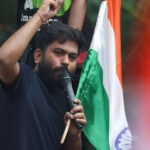
Limaye said the movement’s chronology, methods, ideological character and support network should be studied to understand how an examination-related campaign expanded into a nationwide political mobilisation. He made the remarks at an Akhil Bharatiya Vidyarthi Parishad event in Chhatrapati Sambhajinagar on July 30.
The RSS leader acknowledged that the protest began with a genuine grievance over the alleged leak of the NEET-UG examination paper. He maintained, however, that its character changed after student organisations, trade unions, farmers’ groups, women’s organisations, human rights bodies and political figures joined the campaign.
Limaye described the agitation as a case study in how democratic protests could be used to challenge established institutions. He invoked the writings of Italian Marxist thinker Antonio Gramsci and alleged that the campaign promoted the “subversion of democracy through democratic means”.
He also claimed that anti-Hindu and “anti-national” slogans were raised from the protest platform. No independently verified evidence supporting those specific allegations was presented in his speech.
The RSS leader traced the movement’s growth from CJP founder Abhijeet Dipke’s initial online campaign to demonstrations across several cities and the prolonged sit-in at Delhi’s Jantar Mantar. Dipke returned to the country in early June and began mobilising students before the protest established a permanent presence in the capital.
Limaye said the campaign attracted organisations including the All India Students’ Association and the Students’ Federation of India. He also referred to the participation of farmers’ unions, women’s collectives, minority organisations and groups working on civil liberties, environmental issues and legal rights.
His intervention marks an effort by the RSS to frame the agitation not merely as a protest over examination failures but as part of a larger ideological struggle. The comments also reflect growing concern within organisations aligned with the ruling establishment about the political potential of youth-led campaigns organised largely through social media.
Dipke rejected Limaye’s accusations and said the RSS lacked the moral authority to describe the movement or its participants as anti-national. He invoked the organisation’s history and referred to the ban imposed on the RSS after Mahatma Gandhi’s assassination, while naming Nathuram Godse as the country’s first anti-national.
The exchange has intensified the political debate surrounding the CJP, which began as a satirical online response to public anger among students and unemployed graduates. It later became the principal platform for protests demanding accountability over the NEET-UG leak, reforms in examination administration and the resignation of Education Minister Dharmendra Pradhan.
The Jantar Mantar agitation lasted for more than a month and drew participants from outside the medical entrance examination community. Aspirants preparing for other competitive tests, parents, lawyers, farmers, civil society activists and opposition politicians visited or supported the protest.
The campaign was withdrawn on July 25 after Pradhan resigned and the organisers said they had received assurances on several demands. Pralhad Joshi was subsequently given additional charge of the education ministry.
CJP leaders have since accused the government of failing to implement all the commitments discussed during negotiations. Dipke has said financial assistance promised for the families of aspirants who died by suicide has not been delivered. He has warned that protests could resume unless the outstanding demands are addressed.
The organisation has also questioned police action against demonstrators following clashes during a July 20 march towards Parliament. Protest leaders alleged excessive force, arbitrary detention and continuing harassment of students after the main agitation was suspended. Police authorities, meanwhile, raised concerns about crowd control and the presence of disruptive elements among demonstrators.
Both Limaye and Dipke have alleged that outsiders entered the protest, although they offered sharply different interpretations. Limaye suggested that organised political and ideological groups had captured a student movement. Dipke claimed unidentified elements were introduced to provoke disorder and discredit peaceful protesters.
(IPA Service)