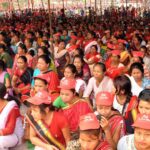
The protest, organised by the Cockroach Janta Party, brought students, job aspirants, parents and activists together to demand accountability for examination irregularities. Organisers also sought the resignation of Education Minister Dharmendra Pradhan and wider reforms to protect the integrity of competitive tests.
Sisodia, Singh and Atishi reached the demonstration after negotiating and, at points, climbing police barricades placed around the protest zone. Their participation gave the campaign greater political visibility as Parliament began its Monsoon Session under heightened security.
Sisodia had appealed on Sunday for people to join the mobilisation regardless of their political affiliation. He described the protest as an opportunity to support young people whose education and employment prospects had been affected by alleged paper leaks, delayed recruitment and administrative failures.
The former Delhi deputy chief minister said examination candidates should not be treated as members of competing political camps. He argued that safeguarding their future was a public responsibility and urged families, teachers and professionals to stand with the protesters.
Singh, an AAP member of the Rajya Sabha, accused the government of ignoring mounting anger among students. Atishi said the repeated disruption of examinations had placed an unfair financial and psychological burden on candidates who spend years preparing for limited university seats and public-sector jobs.
Tensions rose when groups of protesters attempted to move beyond the designated gathering area and advance towards Parliament. Security personnel blocked roads leading from Jantar Mantar and erected several layers of barricades. Police used batons and tear gas after sections of the crowd pushed against the barriers, while protesters alleged that women and students were among those struck.
Delhi Police disputed online claims about violence and detentions, saying the demonstration was being managed peacefully. The conflicting accounts circulated widely as videos showed scuffles, barricades being pushed and participants attempting to cross security lines.
The authorities had denied permission for an unrestricted procession to Parliament, citing security requirements and prohibitory orders governing public assembly in central Delhi. Police and paramilitary personnel were deployed around Jantar Mantar, Parliament Street, Mandi House and nearby metro stations.
Temporary closures and access controls at metro stations disrupted commuters as the authorities tried to prevent additional groups from entering the protest zone. Traffic movement was also affected around Connaught Place and roads connecting the demonstration site with the Parliament complex.
The Cockroach Janta Party emerged as an online youth movement before expanding into street mobilisation. Its name was adopted as an act of defiance after a judicial observation comparing sections of unemployed youth with cockroaches provoked anger among students and job seekers.
The group has linked examination leaks with unemployment, recruitment delays, coaching costs and student distress. Its supporters argue that failures in large national examinations can damage the prospects of millions of candidates while imposing heavy costs on families that pay for coaching, accommodation and repeated application fees.
More than two million candidates take the National Eligibility-cum-Entrance Test for undergraduate medical courses each year. Allegations surrounding compromised examination processes have intensified demands for stronger digital security, transparent investigations and fixed timelines for resolving disputes.
Environmental campaigner and education reformer Sonam Wangchuk has become a prominent supporter of the movement. He began a hunger strike on June 28 and was later taken to Safdarjung Hospital after his health deteriorated. Organisers said his intervention helped broaden the campaign beyond party politics and connect it with questions of institutional accountability.
CJP founder Abhijeet Dipke ended his indefinite hunger strike on Monday after Wangchuk asked him to protect his health and continue the campaign through other democratic means. The gesture came as movement representatives explored talks with senior government figures.
AAP’s decision to join the demonstration places it among the first established parties to visibly align itself with the campaign. The party has sought to position examination integrity and youth unemployment as central issues during the parliamentary session, while other opposition leaders raised the police action and student demands inside Parliament.