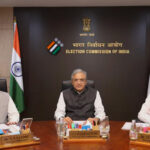
Kharge, who assumed charge of the Home Department after the new Cabinet formation under Chief Minister D. K. Shivakumar, referred to the RSS as a “body of individuals” and said any organisation functioning at scale in public life should be answerable under the law. His remarks came after the arrest of Sudhir Bangera, who is accused of issuing a death threat to him on social media.
The minister linked the matter to the BJP’s defence of the RSS, asking the party to advise what he called its “political superiors” to prepare registration papers. He said the issue was not merely about processions or public events, but about whether a large organisation with wide social and political reach could remain outside ordinary systems of disclosure.
The RSS has long maintained that it does not require registration because it functions as a voluntary organisation and is recognised as a body of individuals. RSS chief Mohan Bhagwat had made a similar argument in Bengaluru last year, saying the organisation was not unconstitutional and that registration was not mandatory for such a body.
Kharge’s intervention revives a long-running debate over the legal position of unregistered organisations, their finances, and the extent to which state governments can demand disclosures when such bodies hold public events, collect contributions, or influence political mobilisation. Under tax law, a body of individuals may be treated as a person for limited purposes even if it is not incorporated, but registration under specific laws can affect obligations relating to accounts, donations, property, and legal liability.
The BJP is expected to resist the move strongly, viewing it as a political attempt to target the RSS through administrative pressure. Party leaders have previously accused Kharge of using the registration issue to deflect attention from governance and law-and-order questions. The RSS and its affiliates have also argued that their activities are voluntary, cultural, and socially rooted, not equivalent to those of a political party or commercial organisation.
Kharge has repeatedly questioned the RSS on funding, overseas-linked networks, and transparency. Earlier this year, he alleged that organisations associated with the Sangh Parivar should be subject to scrutiny over donations and financial flows. Those remarks triggered sharp criticism from the BJP and the Vishva Hindu Parishad, which accused him of maligning nationalist organisations.
The confrontation has acquired added weight because Kharge now heads the Home Department, giving him administrative responsibility over policing, permissions for public gatherings, processions, and security assessments. His comments indicate that the state government may examine documentation requirements more closely when RSS-linked activities seek permission for route marches or public programmes.
The Chittapur MLA, son of Congress president Mallikarjun Kharge, has positioned the issue within a broader argument about constitutional accountability. He has maintained that groups active in public life cannot demand privileges while avoiding scrutiny. His critics argue that the Congress is selectively targeting organisations aligned with the BJP while ignoring bodies close to its own political ecosystem.
The immediate political spark was the alleged threat against Kharge. Police arrested Bangera after a social media post was flagged as threatening the minister. Kharge used the episode to argue that abuse and intimidation were being normalised by groups aligned with the BJP, a charge the opposition has rejected.
Karnataka’s political climate has been unsettled since the leadership transition from Siddaramaiah to Shivakumar and the subsequent Cabinet allocation. Several ministers and aspirants have been lobbying over portfolios, while the BJP has sought to portray the government as distracted by internal tensions. The RSS registration issue gives the Congress a sharper ideological line at a time when the new administration is trying to assert authority.
For the RSS, the controversy touches a sensitive institutional question. Founded in 1925, the organisation operates through shakhas and affiliated networks rather than formal membership rolls. Its defenders see that structure as central to its voluntary character. Its critics say the same structure limits accountability despite the organisation’s influence across politics, education, labour, student activity, religious mobilisation, and civil society.